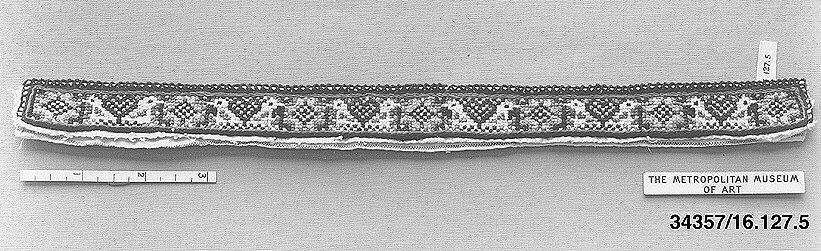
Strip: An Archaeology of Line and Light
Within the isolated context of aesthetic archaeology, the concept of the strip emerges not as a mere decorative motif, but as a foundational architectural principle in global dress. It is a study in contrast, rhythm, and the profound dialogue between concealment and revelation. This research artifact for Natalie Fashion Atelier deconstructs the classical elegance inherent in striped cotton—from the humble yet dignified marinière to the sophisticated geometries of Shibori-bound indigo—to project its reified essence onto the horizon of 2026 luxury silhouettes. Cotton, in its stripped form, becomes a canvas of tension, its inherent fiber integrity providing the perfect substrate for exploring structural rigor and fluid dissolution.
Deconstructing Classical Elegance: The Heritage of the Line
The elegance of the stripe is inherently technical. It is a managed contradiction. Historically, its application on cotton—a fiber of democratic origin and aristocratic potential—speaks to a complex heritage. The Breton stripe, born of utilitarian naval dress, achieved its classical status through a precise formula: 21 white stripes on an indigo ground, each representing one of Napoleon’s victories. This regimented order imposed upon a comfortable, body-conscious cotton knit created a uniform of effortless chic. Parallelly, in Japanese shijira-ashi shibori or West African woven strip cloth, the stripe is not merely printed but embedded into the material’s very structure through resist-dyeing or loom technology. Here, elegance derives from the slight, human imperfection in the alignment, the pulse of the artisan’s hand. The classical elegance of the cotton stripe is thus dualistic: it is both mathematical and melodic, imposing order while suggesting movement, using the inherent matte texture of cotton to soften its graphic impact into a wearable, tactile language.
Material Intelligence: The Cotton Substrate as Structural Agent
For 2026, luxury is synonymous with material intelligence. Cotton, particularly in high-count poplins, rugged canvas, and fluid voiles, offers a unique structural portfolio. Its ability to hold a sharp crease or drape with soft authority makes it indispensable for the coming silhouette revolution. The stripe acts as a built-in pattern-cutting guide, a directional map for the designer’s hand. A vertically striped cotton ottoman, for instance, naturally lends itself to architectural, columnar shapes that elongate the form. Conversely, a bias-cut gown in finely striped cotton jersey will see those lines distort into elegant, optical curves that follow the body’s topography, creating a second-skin mapping of movement. The 2026 approach treats the stripe not as surface decoration but as an internal skeleton, informing seam placement, dart trajectories, and the very grain of the garment. This is aesthetic archaeology applied: excavating the foundational principles of the stripe to engineer new forms from the inside out.
Projecting 2026: Silhouettes of Calculated Asymmetry and Modular Layering
Informed by this deconstruction, the 2026 luxury silhouette for Natalie Fashion Atelier will embrace calculated asymmetry and modular purity. The stripe provides the visual data to execute these concepts with precision.
The Asymmetrical Monolith: Imagine a single-shouldered column dress in heavyweight, vertically striped organic cotton canvas. The stripes are not centered; instead, they cascade from the single shoulder point, flowing uninterrupted to the hem but terminating in a sharp, off-center line on the bare side. The stripe pattern itself justifies the asymmetry, creating a silhouette that is both stark and rationally elegant. The cotton’s body provides the necessary drape and weight to maintain the garment’s graphic integrity without stiffness.
Modular Striping and Kinetic Layering: The heritage of global strip-weaving informs a system of modular dressing. Separate panels of cotton—a broad stripe of seersucker, a narrow pinstripe poplin, a section of ombré-dyed shibori—are engineered to connect via hidden hooks or ties along their selvedges. The client becomes the co-creator, assembling a tunic, skirt, or coat from these striped modules, creating a unique, personalized rhythm of lines. When in motion, these layered, slightly offset stripes create a moiré or beat frequency effect, a kinetic luxury that is perpetually unique to the wearer’s movement.
The Deconstructed Marinière: The iconic Breton sweater is dissected into its constituent lines. A bodice might retain the classic horizontal bands, while the sleeves explode into a cascade of separate cotton ribbon straps, each attached at the shoulder and wrist, suggesting the stripe pattern through negative space and layered texture. The cotton yarn, perhaps blended with a trace of silk for a subtle luster, maintains the comfort and nostalgia of the original while propelling it into a discourse on decomposition and reconstruction.
Conclusion: The Reified Line
The future of luxury lies not in abandonment of heritage, but in its deep, technical exhumation. Through the isolated study of the stripe, we unearth a universal language of line, contrast, and structure. Cotton, in its virtuous versatility, is the ideal medium to translate this archaeology into a contemporary vernacular. For 2026, Natalie Fashion Atelier will champion silhouettes where the stripe is the architecture, not the ornament. It will inform cuts that are at once rationally Parisian in their precision and globally resonant in their material storytelling. The classical elegance of the strip is thus reified: no longer just a pattern on cloth, but the generative principle for the garment itself, a testament to the enduring power of a simple line to define form, movement, and modern elegance.