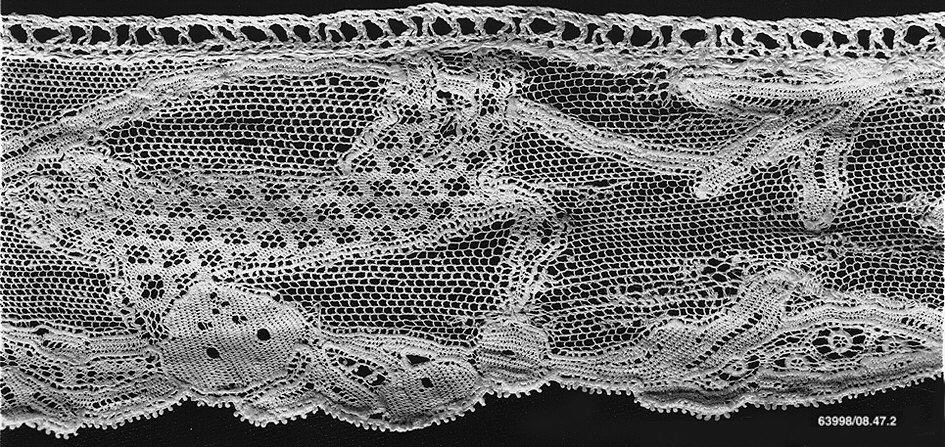
The Archaeology of the Edge: Bobbin Lace as Structural Lexicon for 2026 Silhouette Architecture
Within the hallowed archives of Natalie Fashion Atelier, the study of edging—specifically the intricate, hand-wrought discipline of bobbin lace—represents far more than a decorative footnote. It is an isolated aesthetic archaeology, a dig site where the tensile logic of thread, the geometry of negative space, and the paradox of rigid fragility converge. As we project toward the 2026 haute couture collections, the bobbin lace edge emerges not as a nostalgic trim, but as a foundational structural lexicon—a blueprint for redefining the luxury silhouette through principles of permeability, calibrated tension, and architectural transparency.
Deconstructing Classical Elegance: Beyond Ornamentation
To understand the 2026 application, one must first strip the bobbin lace edge of its conventional association with Victorian modesty or romantic nostalgia. The classical elegance of this craft resides not in its floral motifs, but in its engineering paradox. Unlike needle lace, which builds upon a foundation fabric, bobbin lace is generated ex nihilo—a network of threads twisted, braided, and pivoted around pins on a pillow. The resulting edge is not an addition to the garment; it is an autonomous textile event. Its elegance is derived from the tension differential between the solid cloth of the body and the porous, skeletal lattice of the border.
In the atelier, we deconstruct this elegance into three operative principles. First, the principle of gradient density: the lace edge acts as a transitional membrane, moving from the opaque, structured mass of the primary fabric to a state of pure line and void. Second, the principle of structural honesty: the edge does not conceal its construction; it celebrates the pin-hole marks and the subtle irregularities of hand-tension as evidence of human intention. Third, the principle of negative-space drafting: the elegance is defined as much by the absence of thread as by its presence. The holes are not gaps; they are positive design elements that modulate the skin-to-garment relationship.
The Materiality of Air: Bobbin Lace as a Tensile Membrane
The 2026 silhouette demands a radical rethinking of materiality. We are moving away from the static, molded forms of the past decade toward a kinetic architecture that responds to the body’s micro-movements. Bobbin lace, in its purest form, offers this kinetic intelligence. The linen or silk threads, when worked with high twist, possess a latent spring. When the lace edge is applied not as a flat trim but as a three-dimensional structural gusset, it functions as a tensile membrane. It can pull the bodice into a sharp, asymmetric drape, or it can flare the hem into a fragile, yet surprisingly resilient, bell shape.
Our archaeological research into 17th-century Flemish collars reveals that these edges were not merely decorative; they were engineered to stand away from the neck, creating a halo of shadow. Reinterpreting this for 2026, we utilize the bobbin lace edge as a stand-away architectural fin. By stiffening the lace with a micro-thin resin infusion—a process that respects the thread’s integrity while altering its drape—we can create edges that project from the shoulder or hip. The result is a silhouette that possesses the visual weightlessness of a hologram, yet the tactile authority of a corset bone. This is the new luxury: a material that feels like air but behaves like armor.
From Archive to Atelier: The 2026 Silhouette Translation
The translation from historical artifact to 2026 high-end silhouette is not a literal copy, but a parametric reinterpretation. The classical bobbin lace edge, with its repeating geometric ground (the réseau) and its denser floral motifs (the toilé), provides a perfect algorithm for digital pattern cutting. We have mapped the tension maps of historical lace pieces—identifying where threads are pulled tight to create curves and where they are left loose for flexibility. This data now informs our laser-cut and bonded seams.
Consider the “Fossilized Hem” silhouette for the Autumn/Winter 2026 collection. Here, the bobbin lace edge is not sewn onto a finished garment. Instead, it is the garment. The lace is worked in a continuous spiral, beginning as a dense, almost opaque fabric at the waist and gradually loosening its weave as it descends. The edge is the termination point, a ragged, incomplete-looking border that mimics the frayed end of an archaeological dig. This silhouette deconstructs the classical hourglass by replacing the rigid seam with a gradient of transparency. The eye reads the body not through a cut, but through a dissolution of material. The edge is no longer a boundary; it is a zone of transition, a liminal space between the constructed garment and the natural body.
The New Luxury: Imperfect Precision
In an era of mass-produced perfection, the bobbin lace edge offers the ultimate counterpoint: imperfect precision. Each pair of bobbins crossing is a micro-decision, a human gesture that cannot be replicated by machine. For the 2026 client, this is the definitive marker of haute couture. The luxury is not in the smoothness of the finish, but in the visible evidence of cognitive and manual labor. We are now employing lace artisans to work directly on the bias of bias-cut gowns, creating edges that ripple and undulate with the fabric’s natural fall. This is not edging as a border; it is edging as a dynamic contour line.
Furthermore, the 2026 silhouette incorporates the bobbin lace edge as a sonic and haptic signature. The micro-stiffened threads produce a subtle, high-frequency rustle—a whisper of craft that is audible only at close proximity. This is a deliberate departure from the silent, dead-drop of modern technical fabrics. The sound is a form of communication, a signal of authenticity. The haptic quality—the slight, granular resistance of the thread under the fingertips—anchors the wearer in a tactile reality, a counter-narrative to the digitized, screen-based existence of the contemporary elite.
Conclusion: The Edge as a Point of Origin
For Natalie Fashion Atelier, the bobbin lace edge is not a historical curiosity; it is a prophetic tool. The 2026 silhouette is defined by its edges—not its seams, not its volumes, but the precise, fragile, and yet structurally potent lines where the garment ceases to be. By excavating the techniques of the past, we have discovered that the edge is the most honest part of the garment. It is where the maker’s hand is most visible, where the material’s limits are tested, and where the body’s presence is most acutely felt. The new luxury is not about adding more; it is about the exquisite, calculated control of dissolution. The bobbin lace edge, with its inherent tension and release, its dance between solid and void, is the perfect metaphor and mechanism for the 2026 haute couture client: a woman who understands that true power lies not in the fortress of the fabric, but in the delicate, deliberate fragility of the line that defines it.