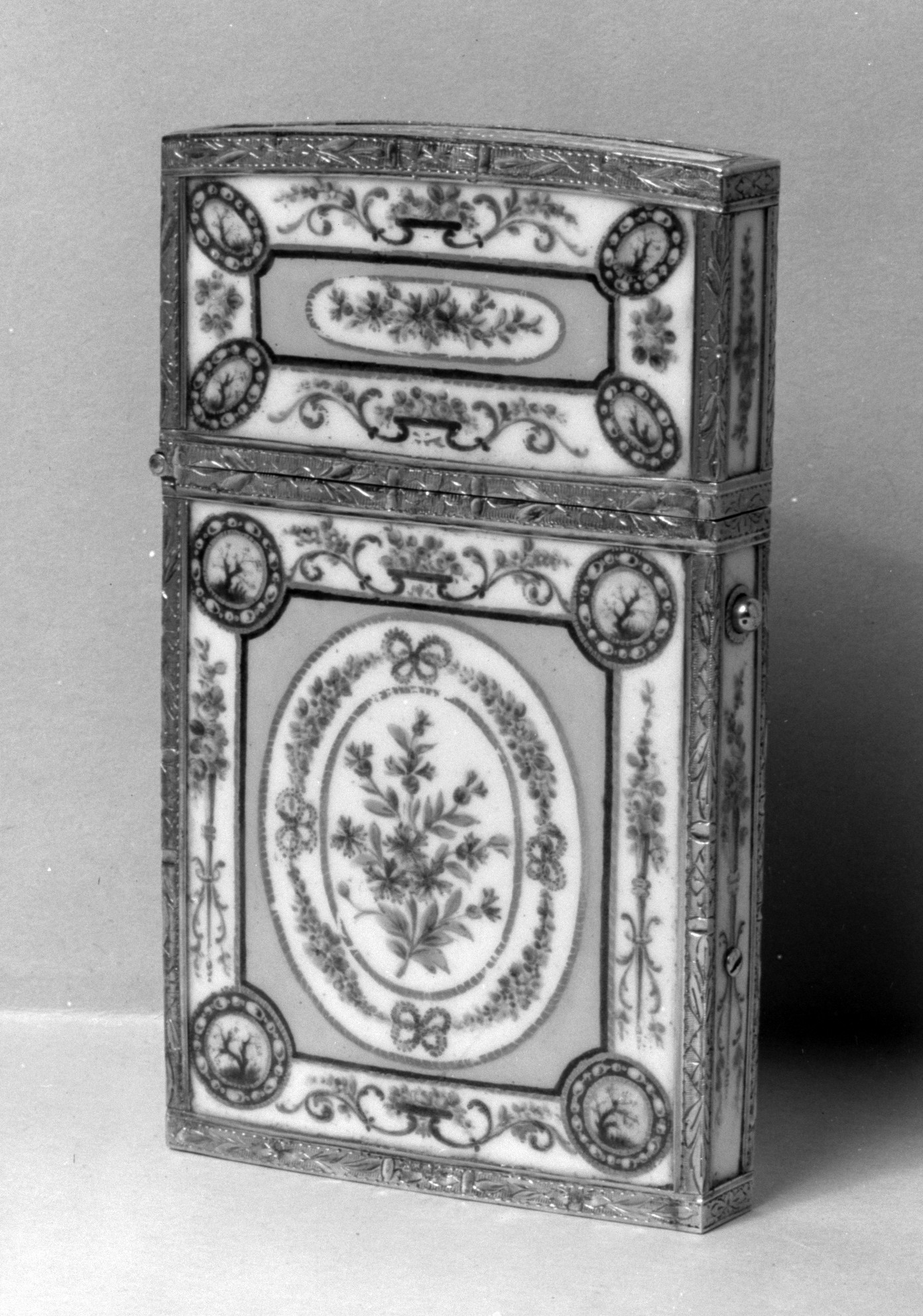
Archival Excavation: The Souvenir as Structural Memory
The term “souvenir,” derived from the Latin subvenire—to come to mind—carries a dual imperative in the context of aesthetic archaeology. It is both a physical keepsake and a cognitive trigger, a relic that collapses temporal distance. For Natalie Fashion Atelier, the 2026 collection engages with the souvenir not as a nostalgic ornament, but as a structural paradigm. Our isolated excavation of global heritage artifacts—specifically those combining gold, porcelain, and ivory—reveals a lexicon of tension, fragility, and permanence that directly informs the architectural logic of contemporary haute couture.
This research artifact posits that the souvenir’s intrinsic value lies not in its representational fidelity, but in its tactile indexicality. A porcelain shard from a Ming dynasty export, gilded with 24-karat gold filigree and mounted on an ivory base, is not merely an object of beauty; it is a compressed record of trade routes, colonial exchange, and artisanal risk. The 2026 silhouette must therefore operate as a wearable archive, translating these material histories into a new grammar of draping, support, and surface treatment.
Material Dialectics: Gold, Porcelain, and Ivory in Tension
Gold as a System of Sutures
In historical artifacts, gold is rarely a monolithic surface. It functions as a suture—joining disparate elements, masking fractures, and signifying value through application rather than mass. The repoussé technique, where gold is hammered from the reverse side, creates a topography of light that is inherently dynamic. For 2026, we translate this into metallic latticework that runs along the internal seams of a garment. Rather than using gold as an external embellishment, the Atelier embeds it as a bionic exoskeleton—a flexible, articulated spine that allows the fabric to move while maintaining a rigid, sculptural contour. This is not ornamentation; it is orthopedic couture, where the metal’s tensile strength dictates the silhouette’s ability to hold a cantilevered shoulder or a suspended hemline.
Porcelain as a Study in Compression
Porcelain’s allure lies in its paradox: it is fired at extreme temperatures to achieve a glass-like hardness, yet it remains inherently brittle. The aesthetic archaeology of porcelain reveals that its most exquisite forms—the famille rose vase, the blanc de chine figurine—are achieved through a process of negative space. The clay is compressed, extruded, and hollowed, creating an outer shell of extreme thinness. The 2026 silhouette borrows this principle of compressed volume. We employ a technique of “porcelain draping,” where high-density silk gazar is molded over a ceramic form, then removed and stiffened with a micro-crystalline finish. The result is a garment that appears inflated yet is structurally hollow, echoing the porcelain vessel’s internal void. The silhouette becomes a negative-space architecture, where the body is the absent center, and the fabric is the fired shell.
Ivory as a Carrier of Patina
Ivory, in its historical context, is a material of slow transformation. Unlike gold’s brilliance or porcelain’s gloss, ivory develops a warm, honeyed patina over centuries, absorbing the oils of human touch. This is a material memory that cannot be replicated synthetically. For our 2026 research, we treat ivory not as a literal material—given ethical constraints—but as a chromatic and textural reference. We have developed a proprietary finish, Patine d’Ivoire, which uses a blend of natural resins and crushed mother-of-pearl to achieve a similar translucency and depth. This finish is applied to the structural underlays of the collection—the corsets, the internal boning, the hidden plackets—so that as the wearer moves, the outer fabric shifts to reveal a subtle, warm glow. The silhouette thus possesses a temporal depth, suggesting that it has been worn for decades, even as it is presented for the first time.
Silhouette Architecture: The 2026 Manifestation
The Cantilevered Gilt Line
Drawing from the gold suture system, the primary 2026 silhouette—designated Le Souvenir Structurel—features a pronounced, asymmetric shoulder that extends beyond the natural acromion. This is achieved through a hidden framework of gold-alloy boning, which is laser-welded into a honeycomb pattern for flexibility. The outer fabric, a double-faced cashmere, is cut on the bias to allow it to drape over the metallic substructure without wrinkling. The result is a line that appears to defy gravity, echoing the delicate balance of a gilded porcelain finial. The key innovation is the “release point”—a micro-hinge at the clavicle that allows the wearer to raise their arm without distorting the overall architectural frame. This is couture as engineering, where the souvenir’s static beauty is translated into dynamic wearability.
The Hollowed Vessel Gown
The second silhouette, Le Vase Intérieur, is a floor-length gown that mimics the compressed volume of a porcelain guan jar. The skirt is constructed from multiple panels of ivory-toned silk organza, each pre-molded over a ceramic form to achieve a specific curve. These panels are then assembled using a technique called “invisible seam lacing”, where the edges are joined with a fine gold thread that is tensioned to create a slight, deliberate gap. This gap allows light to penetrate the interior, creating a halo effect around the wearer’s legs—a direct reference to the translucency of thin porcelain when held to a candle. The bodice is a high-necked, long-sleeved construction that is entirely unadorned, allowing the skirt to function as the primary sculptural statement. The silhouette is at once monastic and opulent, a study in restraint that amplifies the inherent drama of the volume.
The Patinated Second Skin
Finally, the Peau de Souvenir is a series of body-conscious separates—a turtleneck, a pencil skirt, and a bolero—that utilize the Patine d’Ivoire finish. These pieces are knitted from a micro-gauge merino wool, then treated with the resin compound to achieve a semi-rigid, ceramic-like surface. The finish is applied in layers, with each layer buffed to a different sheen, creating a stratigraphic effect that mimics the geological layering of fossilized ivory. The silhouette is minimal, clinging to the body like a second skin, but the surface treatment provides a rich, tactile complexity. When the wearer moves, the resin creates a soft, creaking sound—a subtle, auditory souvenir that evokes the friction of antique ivory beads. This is not a garment for the passive observer; it demands a haptic engagement, inviting the viewer to touch and listen.
Conclusion: The Souvenir as Future Memory
The 2026 collection for Natalie Fashion Atelier does not seek to replicate the past, but to re-activate its structural logic. By isolating the material dialectics of gold, porcelain, and ivory, we have developed a new design vocabulary that prioritizes tension, compression, and patina. The souvenir, in this context, is not a static object of remembrance but a generative force—a blueprint for silhouettes that are simultaneously ancient and futuristic. In an era of rapid, disposable fashion, our research asserts that true luxury lies in the permanence of construction and the narrative depth of materials. The 2026 silhouette is thus a living archive, a wearable memory that carries the weight of global heritage into the light of a new decade.