The Cape Reconstructed: An Aesthetic Archaeology of Draped Authority for the 2026 Silhouette
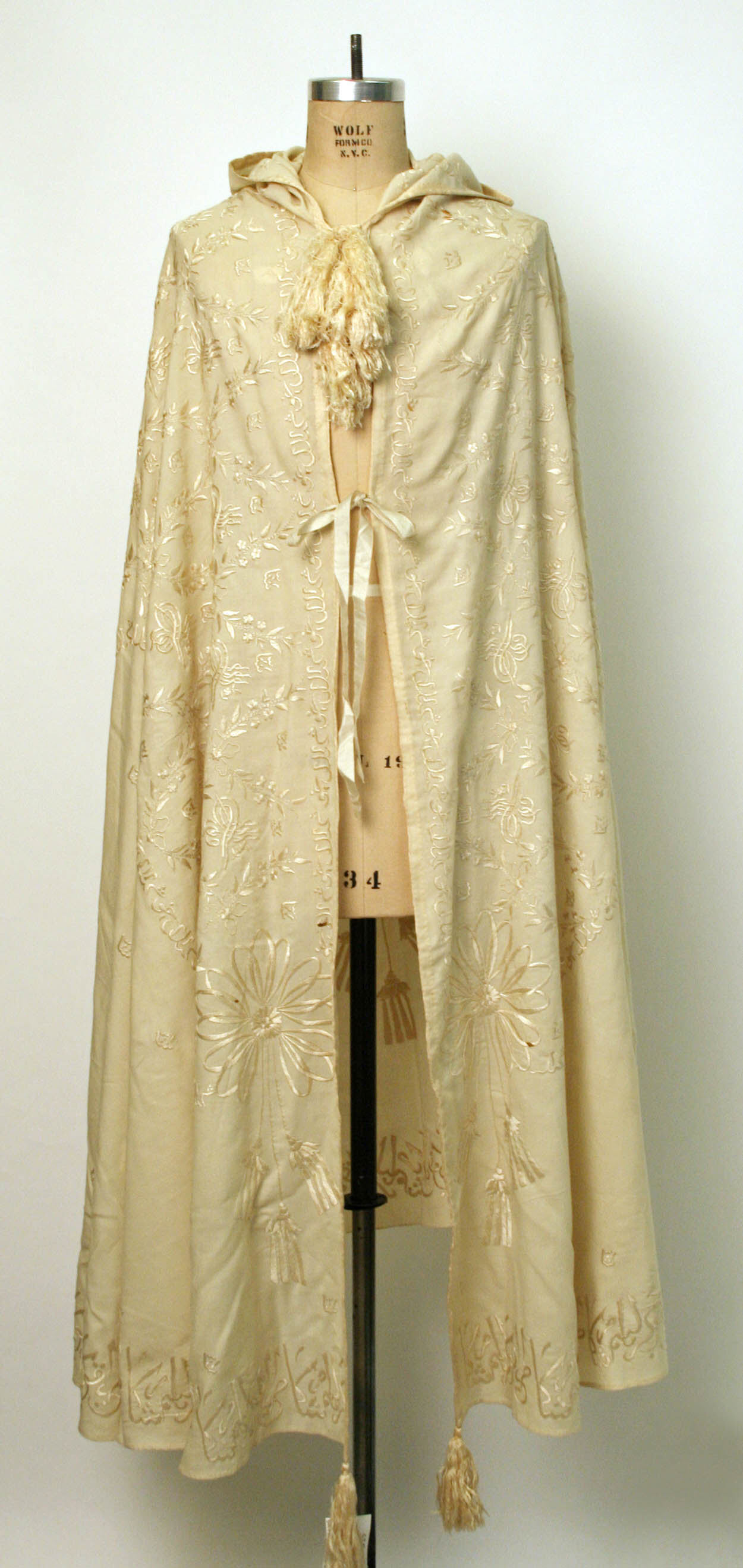
Within the hallowed archives of Natalie Fashion Atelier, the cape exists not as a mere garment, but as a foundational text in the language of sartorial power. Our current investigation, an exercise in aesthetic archaeology, isolates the cape from its historical continuum to dissect its anatomical principles. We are not concerned with nostalgia; rather, we extract the structural DNA of this archetypal form—its relationship to the body, its manipulation of volume, and its dialogue with movement—to inform the architectural rigor of our 2026 haute couture proposition. The subject of this technical memorandum is a specific archival prototype: a cape constructed from a rigid yet fluid wool, lined with a whisper-weight silk, and punctuated by an intricate, hand-embroidered cartography. This piece serves as our primary case study for redefining classical elegance in a contemporary context.
Deconstructing the Archival Prototype: Material Dialectics
The genius of the historical cape resides in its paradoxical materiality. Our prototype employs a double-faced wool, chosen for its ability to hold a sculptural silhouette while simultaneously yielding to the body’s kinetic energy. This is not a passive drape; it is an engineered volume. The wool’s dense, felted surface provides the compressive strength necessary to create a clean, architectural line from shoulder to hem, echoing the severity of a mid-century Balenciaga cocoon but with a softer, more organic fall. In direct opposition, the internal silk layer introduces a principle of dynamic friction. As the wearer moves, the silk’s low-friction coefficient allows the outer wool shell to glide over the underlayer, creating a subtle, almost imperceptible shift in the garment’s topography. This internal movement is the garment’s secret life—a silent, luxurious counterpoint to its static exterior.
The embroidery, far from being mere ornamentation, functions as a structural webbing. Executed in a tonal silk thread, the pattern is not applied to the surface but is integrated into the wool’s weave via a technique reminiscent of broderie anglaise, yet inverted. The stitches pull the fabric at precise intervals, creating a micro-topography of tension and release. This is a form of textile engineering that pre-dates modern bonding agents. The embroidery acts as an external skeleton, allowing the cape to curve away from the body without collapsing, forming a self-supporting shell that defines negative space with authority. It is this deliberate manipulation of tension—the push and pull between the wool’s rigidity and the silk’s fluidity—that we identify as the primary aesthetic archaeological find.
From Archival Form to 2026 Silhouette: The Principle of Controlled Volatility
The 2026 luxury silhouette, as forecasted by our atelier, rejects the passive minimalism of the past decade in favor of a controlled volatility. The wearer is no longer a mannequin for a dress; she is an active agent whose movement activates the garment’s architecture. The archival cape informs this shift by teaching us how to construct volume that is not static but responsive. Our new silhouettes will not merely drape the body; they will orbit it.
From this principle, we extrapolate three technical directives for the forthcoming collection. First, the Shoulder as Fulcrum. The historical cape’s power is anchored at the shoulder line. For 2026, we are re-engineering this fulcrum to project forward, creating a crescent-shaped volume that frames the face without overwhelming the torso. This is achieved through a radical re-cutting of the armhole, moving it from the anatomical shoulder to a point two centimeters posterior. The result is a silhouette that suggests a protective canopy, a modern-day chlamys reimagined for the urban environment. The wool’s inherent memory ensures the shape holds its integrity from morning boardroom to evening soiree.
Second, we introduce the concept of the Negative Space Collar. In our archival piece, the collar is not a separate element but a folded continuation of the main fabric. For 2026, we will exploit this by creating a deep, inverted pleat that, when the cape is worn, forms a sculptural cowl that stands away from the nape of the neck. This void—the space between the silk lining and the skin—is a deliberate design feature. It allows for a micro-climate of air, a luxurious sensation of weightlessness that contradicts the garment’s substantial outer appearance. This is elegance as an intellectual exercise, where absence is as potent as presence.
Materiality as Narrative: The Embroidered Cartography of Self
In the 2026 context, the embroidered elements of the archival cape are not revived as floral motifs or rococo flourishes. Instead, we abstract them into a geometric lattice of personal data. Our embroidery will trace the wearer’s individual posture, mapped during the initial fitting. Using a proprietary digital-to-hand technique, we will translate the client’s unique spinal curvature and shoulder slope into a bespoke pattern of silk thread. This is not mass customization; it is aesthetic biometrics. The embroidery becomes a visible, tactile record of the individual’s physical identity, turning the garment into a wearable document of self. The wool provides the neutral ground, the silk the hidden narrative, and the embroidery the explicit, declarative statement of uniqueness.
This approach redefines luxury from mere opulence to ontological precision. The 2026 client does not purchase a cape; she commissions a structural interpretation of her own form. The historical mastery of the craft—the patience of the hand-stitching, the knowledge of fiber behavior—is not discarded but recalibrated. We honor the past’s technical prowess by applying its logic to a new, hyper-individualized aesthetic. The cape, once a symbol of institutional authority, becomes a tool for personal sovereignty.
Conclusion: The Cape as a Temporal Vessel
The aesthetic archaeology of the wool and silk cape reveals that its true luxury lies not in its material cost, but in its temporal complexity. It is a garment that takes time to create, time to don, and time to appreciate. In an era of rapid, disposable fashion, the 2026 silhouette must offer a counter-narrative of permanence and deliberation. Our new capes will be slow objects, designed to be lived in, to acquire the patina of the wearer’s life. The interplay of wool’s solidity and silk’s ephemerality, anchored by the embroidered lattice, creates a garment that is at once a fortress and a whisper. It is this dialectic—between structure and flow, between history and the future, between the garment and the self—that defines the new classical elegance. The cape is not a relic; it is a blueprint for the next century of couture.