Edging as Architecture: The Bobbin Lace Imperative in 2026 Couture
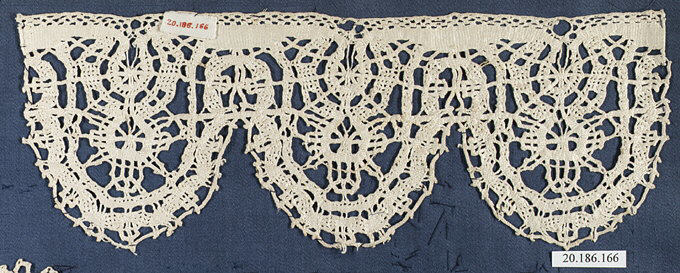
Within the hallowed archives of Natalie Fashion Atelier, the study of edging transcends mere trim. It is an act of aesthetic archaeology, a forensic excavation of the line where fabric meets air. In the 2026 haute couture season, the silhouette is no longer defined solely by its mass, but by its termination—the precise, fragile, yet unyielding boundary that frames the body. This research artifact isolates the heritage of global bobbin lace, not as a nostalgic relic, but as a technical blueprint for a new architectural language in luxury dress. The bobbin lace edge, in its classical form, is not a decoration; it is a structural conclusion, a micro-architecture of tension and void that directly informs the draped, suspended, and cantilevered volumes of the coming year.
The Archaeology of the Edge: From Flanders to the Global Atelier
Bobbin lace, born from the sun-drenched courtyards of 16th-century Flanders and refined across the convents of Italy, France, and the Iberian Peninsula, represents a singular moment in textile history. Unlike needle lace, which builds loops upon a ground, bobbin lace is constructed ex nihilo, from a multitude of threads twisted and braided in situ. The edge—the gimp, the picot, the cordonnet—is the final, decisive act of this process. It is the point where the structural logic of the net converges into a thickened, tactile boundary. In our archive, we isolate these edges from their original contexts: a 17th-century Flemish collar, a 19th-century Chantilly shawl, a 20th-century Chinese guipure panel. Removed from their garments, these edges become pure objects of study—linear sculptures that reveal the fundamental principles of negative space and tensile integrity.
The global heritage of this craft is not monolithic. The heavy, corded edges of Genoese lace speak of maritime robustness; the airy, floral picots of French lace whisper of courtly artifice; the geometric, dense tape lace of Eastern Europe suggests a pragmatic, almost brutalist approach to ornament. This diversity is our lexicon. For 2026, we do not replicate these regional dialects; we extract their grammatical rules. The rule of the cordonnet—a thicker thread outlining the motif—becomes a principle of optical compression at the hem. The rule of the picot—a tiny looped protrusion—becomes a method of creating micro-shadow and dimensional relief against the skin.
Materiality as Method: The Physics of the Void
The 2026 silhouette is predicated on a paradox: it must appear monumental yet weightless, structured yet fluid. Bobbin lace offers the solution through its inherent materiality. The lace edge is not a solid border; it is a series of perforations, a rhythm of holes and threads. This is the aesthetic of the void, where absence defines presence. In our atelier, we apply this principle to modern luxury textiles—engineered silk organza, micro-sanded cashmere, and bio-sourced polyamides—by laser-cutting or hand-fraying their edges to mimic the irregular, organic rhythm of bobbin lace. The result is a silhouette that does not end abruptly but dissolves, pixelates, and breathes.
Furthermore, the structural role of the bobbin lace edge is paramount. In historical garments, the lace was often the only rigid element, providing support to a falling collar or a cuffed sleeve. We have translated this into 2026's cantilevered hems and floating trains. By integrating a dense, lace-inspired edging—constructed from horsehair braid fused with micro-corded silk—we achieve a self-supporting structure that projects away from the body. The edge becomes a chassis, a load-bearing element that allows the main fabric to drape with deceptive nonchalance. This is not decoration; it is engineering.
Deconstructing Classical Elegance for the Modern Form
Classical elegance, in the context of bobbin lace, is often perceived as symmetrical, demure, and ornamental. Our deconstruction for 2026 subverts these assumptions. We isolate the asymmetrical picot—a deliberately irregular edge from a Flemish piece—and scale it to monumental proportions across a bias-cut gown. The edge no longer frames the hem; it crawls up the side seam, creating a diagonal line of tension that visually elongates the torso and disrupts the static verticality of the garment. This is the new elegance: an elegance of controlled imbalance, of deliberate interruption.
The cordonnet principle is also reimagined. Instead of a fine, raised thread, we use a sculptural, tubular edging—a rolled, padded silk cord that mimics the weight of the original gimp. This thick, tangible boundary creates a chiaroscuro effect, casting a deep shadow against the fabric and the wearer's skin. It frames the body like a charcoal line in a fashion sketch, defining the silhouette with graphic intensity. This is not the soft, romantic edge of the 19th century; it is a decisive, architectural mark.
2026 Silhouettes: The Edge as the New Center
In the forthcoming collection, the bobbin lace edge informs three distinct silhouette archetypes. First, the Archival Column: a floor-length, narrow sheath in matte crepe, terminated by a wide, hand-knotted fringe that echoes the dense, braided edge of a 17th-century collar. The fringe is not limp; it is stiffened with a micro-wax finish, creating a static, architectural fringe that moves as a single unit, like the teeth of a comb. Second, the Suspended Cocoon: an oversized, sculptural coat where the hem is finished with a laser-cut pattern derived from a Russian tape lace motif. The cut edge is then heat-sealed and bonded to a micro-thin layer of metallic mesh, creating a rigid, yet flexible, border that allows the coat to stand away from the body, creating a dramatic, negative-space volume. Third, the Liquid Mosaic: a cocktail dress composed of hundreds of individual silk petals, each edged with a hand-rolled, picot-like loop. The cumulative effect is a shimmering, scale-like surface where every edge is a point of light and shadow, referencing the granular, repetitive construction of bobbin lace.
These silhouettes are not merely garments; they are arguments. They argue that the edge is not the end of the fabric but the beginning of the form. They argue that heritage is not a museum piece but a dynamic, generative force. By isolating the bobbin lace edge from its historical context, we have liberated its technical DNA, allowing it to inform a new era of haute couture that is at once intellectually rigorous and sensually profound. The 2026 woman does not wear a dress; she wears a boundary, a line of force, a meticulously engineered void—the ultimate expression of Parisian savoir-faire.