Deconstructing the Lame: The Multi-Plate Helmet as a Blueprint for 2026 Structural Silhouettes
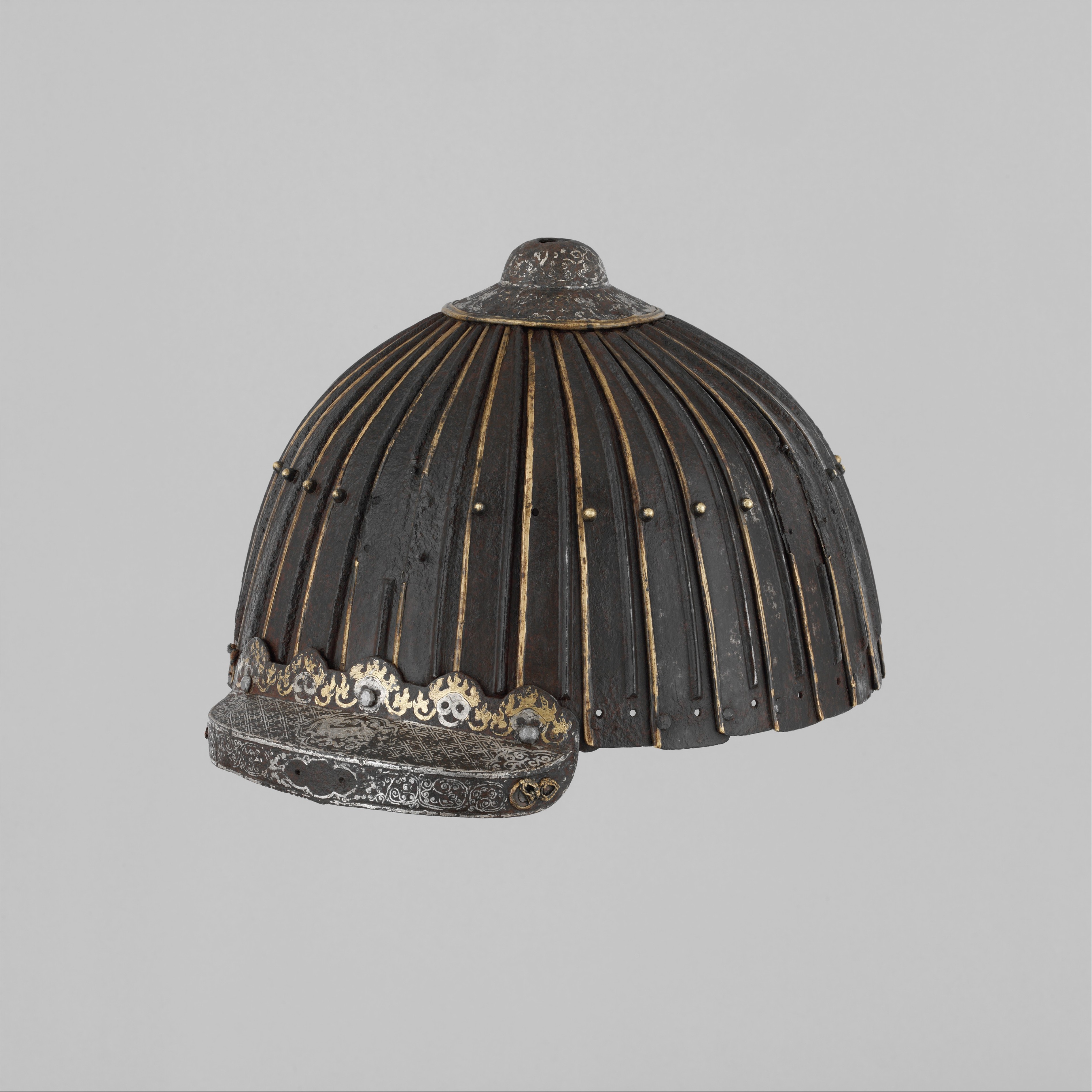
Within the silent vaults of aesthetic archaeology, certain artifacts transcend their martial origins to become pure, distilled studies in form. The Multi-Plate Helmet of Thirty-Two Lames, attributed to the high plateaus of Mongolia or Tibet, is one such object. Constructed from a formidable symphony of iron, silver, gold, and brass or copper alloy, this piece is not merely defensive armor; it is a masterclass in modular architecture, tensile strength, and the poetry of articulated movement. For the atelier of Natalie, this helmet serves as a profound technical reference point. Its construction logic—a series of overlapping, curved metal segments riveted to a leather or textile substructure—offers a revolutionary paradigm for the 2026 luxury silhouette, proposing a new language of form that is simultaneously rigid and fluid, protective and revealing.
Material Dialectics: The Alchemy of Alloyed Preciousness
The helmet’s materiality is its first and most potent narrative. The primary structure, forged in iron, establishes a foundational gravity—a sense of unyielding strength and dark, matte substance. Yet, this austere base is deliberately interrupted by the application of silver, gold, and copper alloys. This is not mere ornamentation; it is a strategic hierarchy of value. The gold, applied in thin sheets or as gilded accents, catches the light at the apex of the form, drawing the eye upward. The silver, often inlaid as intricate scrolling patterns or Buddhist symbols, creates a secondary rhythm of luminosity across the surface. The copper alloy, with its warm, roseate undertones, introduces a subtle thermal contrast, preventing the piece from becoming a cold monolith.
For the 2026 collection, this dialectic translates directly into fabric and finish. We move beyond the binary of matte versus shine. The new silhouette demands a layered materiality where a heavy, felted wool (the iron) is juxtaposed against a liquid-metal jacquard woven with silver Lurex (the silver). A structured, gunmetal-grey technical faille (the brass) provides the architectural base, while panels of burnished, copper-toned leather (the copper alloy) are inset to create warmth and depth. The golden accents are reserved for strategic points of tension—a clasp at the shoulder, a structural seam at the waist—guiding the observer's gaze along the lines of the garment’s power. This is not about metallic fabrics; it is about the orchestration of metallic identities to create a complex, multi-faceted surface that shifts with movement and light.
Articulated Architecture: The Logic of the Thirty-Two Lames
The genius of the helmet lies in its segmentation. A single, solid dome would be immobile and vulnerable to a single, decisive blow. The thirty-two lames, individually curved and shaped, are arranged in overlapping horizontal bands. This system allows for a remarkable degree of flexibility, enabling the helmet to conform to the skull’s contours while maintaining a smooth, continuous exterior. Each lame is a discrete architectural element, yet it is rendered meaningless without its neighbors. The rivets, often of a contrasting alloy, serve as the visible points of articulation, creating a delicate, repetitive pattern that is both functional and decorative.
This principle of segmented articulation is the core innovation for our 2026 haute couture structures. We propose a silhouette built on the concept of the "soft carapace." A jacket or a gown is no longer a single, draped piece of fabric. Instead, it is constructed from a series of engineered, pre-curved panels—our modern lames—crafted from high-performance materials like molded horsehair, rigid organza, or heat-set technical knits. These panels are then joined with a visible, deliberate seam, echoing the helmet's rivets. This seam is not hidden; it is celebrated as a point of structural intelligence. The result is a garment that moves with the body in a series of fluid, articulated shifts, rather than a single, sweeping motion. A skirt, for instance, might be composed of twelve overlapping panels that flare and contract with each step, offering the wearer a new form of kinetic elegance. The garment breathes, bends, and responds to the body’s biomechanics, just as the helmet responded to the warrior’s head.
The Contour of Protection: Reinterpreting the Dome
The helmet’s profile—a smooth, sweeping dome that tapers to the neck—offers a compelling study in negative space and containment. It does not merely cover the head; it creates a powerful, protective aura around it. This concept of the protective aura is translated into 2026 through the use of exaggerated, sculptural collars and cowls. We are not designing collars that sit on the shoulders; we are designing architectural frames that rise to cradle the jaw and the nape of the neck, creating a sense of shielded elegance. These structures, built from the same segmented panel system, will be finished with a rolled, piped edge in a contrasting alloy-toned leather, mimicking the helmet's rim. The silhouette is one of powerful concealment, where the vulnerability of the neck is transformed into a statement of controlled strength.
From Armor to Adornment: The 2026 Silhouette Realized
The translation from battle artifact to haute couture is not a literal one. We do not seek to create armor. We seek to capture its structural ethos. The 2026 Natalie Fashion Atelier silhouette, inspired by this helmet, is defined by three key principles:
1. The Modular Torso
The bodice becomes a complex, interlocking system of panels. A tailored jacket is re-engineered with a segmented waist that allows for unprecedented flexibility. The panels, cut from a stiffened silk gazar in a deep iron-grey, are joined by exposed, gunmetal-finished snaps. This creates a visual and functional rhythm, drawing the eye across the torso in a horizontal, architectural band. The effect is a powerful, grounded presence, a modern interpretation of the warrior’s core strength.
2. The Fluid Carapace Skirt
Moving downward, the skirt abandons the traditional A-line or bias cut. Instead, it is constructed from a series of overlapping, curved panels of a liquid silver-lamé. These panels are not sewn together but are attached to a sheer, high-tensile tulle base, allowing them to slide and shift independently. The result is a garment that shimmers with a metallic, scaly quality, echoing the overlapping lames of the helmet, while maintaining a surprising fluidity and lightness. The movement is not a simple sway but a complex, multi-layered cascade of light and texture.
3. The Gilded Point of Tension
Just as the gold on the helmet highlights its apex, the 2026 garment uses precious metal accents to define its points of structural stress. A single, sculptural clasp of gold-plated brass will secure the modular torso at the sternum. A fine chain of gold and copper alloy will trace the edge of the carapace skirt, adding weight and defining its movement. These are not decorative afterthoughts; they are the rivets of our modern construction, the visible markers of the engineering that allows the garment to function. They are the points where the garment’s strength is concentrated and displayed.
In conclusion, the Multi-Plate Helmet of Thirty-Two Lames is far more than a historical curiosity. It is a profound text on the relationship between structure and movement, between material and form. By deconstructing its classical elegance, we uncover a timeless architectural logic. For 2026, Natalie Fashion Atelier will not simply reference its silhouette; we will adopt its engineering principles. We will build garments that are articulated, modular, and protective, creating a new luxury that is defined by its intelligent construction and its powerful, quiet authority. The helmet’s legacy is not in the battles it once protected against, but in the new forms of elegance it now inspires.