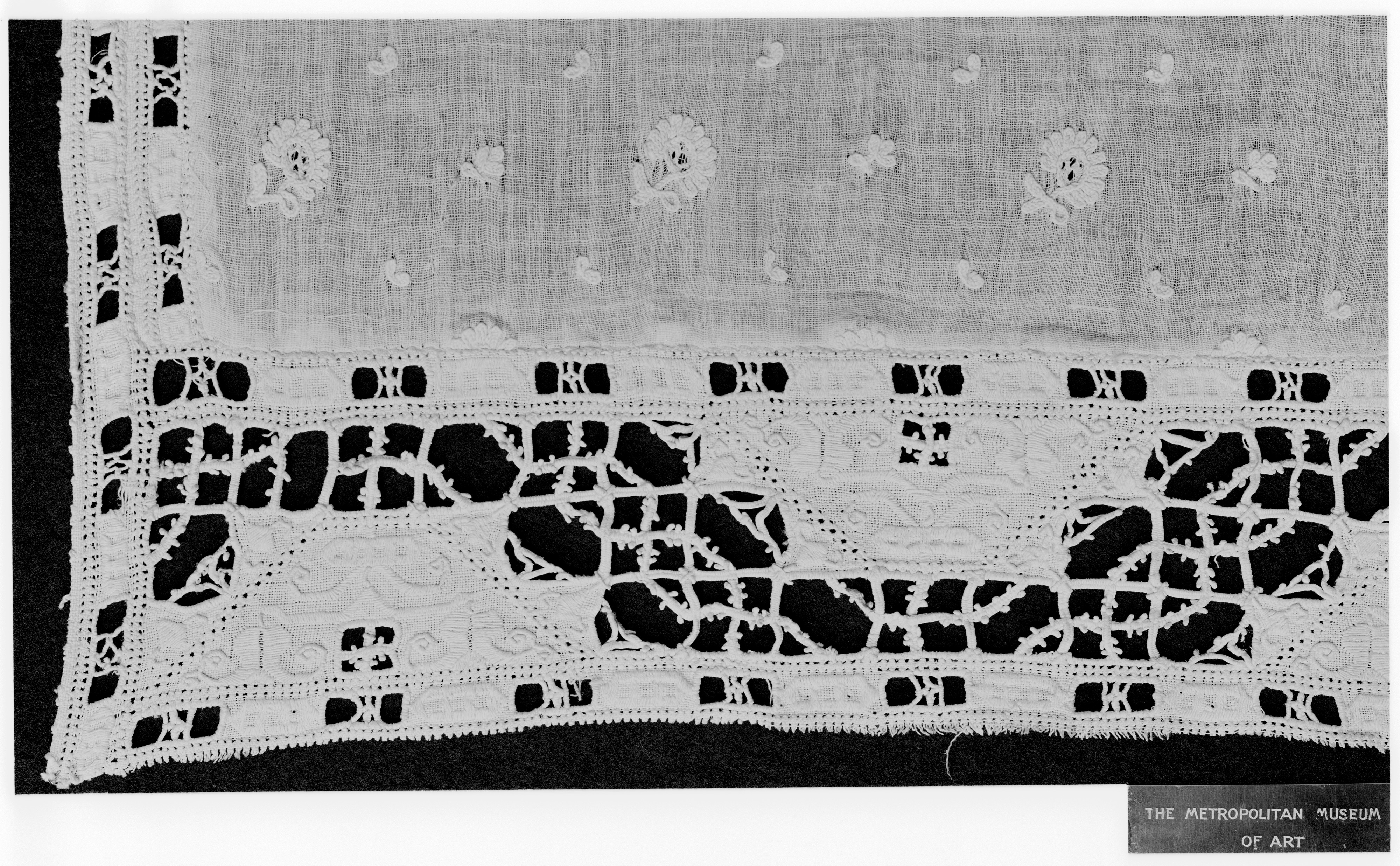
Archaeology of the Void: A Cutwork Pillow Slip as a Blueprint for 2026 Silhouettes
Within the isolated context of aesthetic archaeology, an object of profound technical and philosophical significance emerges: a single pillow slip, its surface transformed by the art of cutwork. This is not merely a domestic artifact but a crystallized manifesto of classical elegance, defined not by opulent addition but by calculated, exquisite subtraction. For Natalie Fashion Atelier, this piece of global heritage—transcending specific geography to embody a universal principle of craftsmanship—serves as a critical lens through which to project the 2026 luxury silhouette. The future of haute couture lies not in the baroque, but in the architectural, the ventilated, and the precisely deconstructed. This research artifact posits that the centuries-old techniques of cutwork—the creation of pattern through strategic void—provide the foundational logic for the next era of elegance: a silhouette of structural transparency and negative space as the ultimate luxury.
Deconstructing Classical Elegance: The Pillow Slip as Technical Manuscript
The classical elegance of this specimen is an elegance of paradox. Its beauty is achieved through a process of deliberate reduction. The ground fabric, typically a robust linen or cotton, is not a passive canvas but an active structural element. The elegance is born from the tension between the remaining, reinforced material and the created apertures. This involves a meticulous, multi-stage process: the design is drawn, areas are carefully cut away, and the raw edges of these voids are then overcast or buttonholed by hand—a technique known as broderie anglaise in its most refined form—to prevent fraying and to accentuate the pattern. The resulting elegance is one of contrast: of solid and void, of shadow and light, of structural integrity and ethereal delicacy. The pattern itself, often geometric or botanically inspired, is rendered not with thread but with air, making the negative space the primary decorative agent. This establishes a core principle: what is removed is as definitive as what remains.
Furthermore, the object’s identity as one side of a pillow slip is semantically rich. It represents a dialogue between the seen and the unseen, the external presentation and the hidden support (the pillow form). In couture terms, this prefigures the relationship between the garment’s exterior silhouette and the internal architecture—the corsetry, padding, and seams that remain unseen but define the visible form. The cutwork panel is a curated revelation, a window that hints at what lies beneath while maintaining a formal boundary. This duality is central to its enduring sophistication.
Material Intelligence: From Domestic Linen to Haute Couture Substrate
The materiality of cutwork demands a radical rethinking of fabric as a medium. The artisan does not work with a whole cloth, but with a cloth destined for strategic disintegration. This necessitates an intimate understanding of the textile’s behavior—its grain, its tensile strength, its propensity to fray. For the 2026 silhouette, this translates into material intelligence, where fabrics are engineered or selected specifically for their performance under deconstruction. Imagine duchesse satin with a fused, melt-resistant edge; technical jacquards woven with pre-determined "weakened" lines for precise laser-cutting; or double-faced wools that reveal a contrasting hue when cut. The heritage cutwork technique informs a modern material science where the focus is on edge integrity and the beauty of the section.
The hand-worked overcasting of the historical piece finds its haute couture analogue in a plethora of finishing techniques. Micro-hemming with invisible thread, sealing edges with biopolymer films to create a glossy, architectural rim, or using the laser-cut thermo-edge of technical textiles—all are evolutions of the original buttonhole stitch. The goal remains identical: to transform a raw cut into a definitive, decorative, and durable feature. The luxury is in the meticulous resolution of the detail born from absence.
Informing the 2026 Silhouette: The Architecture of Absence
The 2026 luxury silhouette, as informed by this research, will be characterized by an architectural leanness punctuated by strategic voids. The maximalism of recent cycles gives way to a refined, almost severe, elegance where interest is generated through composition and subtraction rather than accumulation. Silhouettes will embrace a cleaner, sharper line—evoking the pillow slip’s flat, graphic plane—but will be interrupted by windows of skin or underlay.
We foresee three key manifestations. First, the Ventilated Tailoring: sharp blazers and coat dresses featuring geometric cutwork panels at the scapula or along the princess seams, revealing flashes of the body or a silk lining beneath. The structure of the garment remains impeccable, but is "ventilated" by heritage-inspired patterns. Second, the Layered Transparency: building on the pillow slip’s dialogue between seen and unseen, dresses will be constructed from multiple layers of fine fabrics—tulle, organza, georgette—where laser-cut patterns on the outer layer frame glimpses of the contrasting layer beneath, creating dynamic, moiré-like effects with movement. Third, the Exoskeletal Corset: the supportive function of the pillow’s form is externalized. Bodices and bustiers will be crafted with cutwork-like apertures in rigid materials, such as resin-treated leather or technical lace, acting as an externalized architecture that defines the form through a framework of solids and spaces.
Ultimately, the legacy of this humble cutwork pillow slip is a philosophical blueprint for modern luxury. It teaches that in an era of sensory overload, clarity and restraint become the ultimate statements. It demonstrates that craftsmanship can be most eloquently expressed in the mastery of absence. For Natalie Fashion Atelier, the path forward is not through covering the body, but through framing it—using the disciplined, beautiful void of history to sculpt a silhouette of decisive, breathable, and profoundly elegant modernity for 2026.