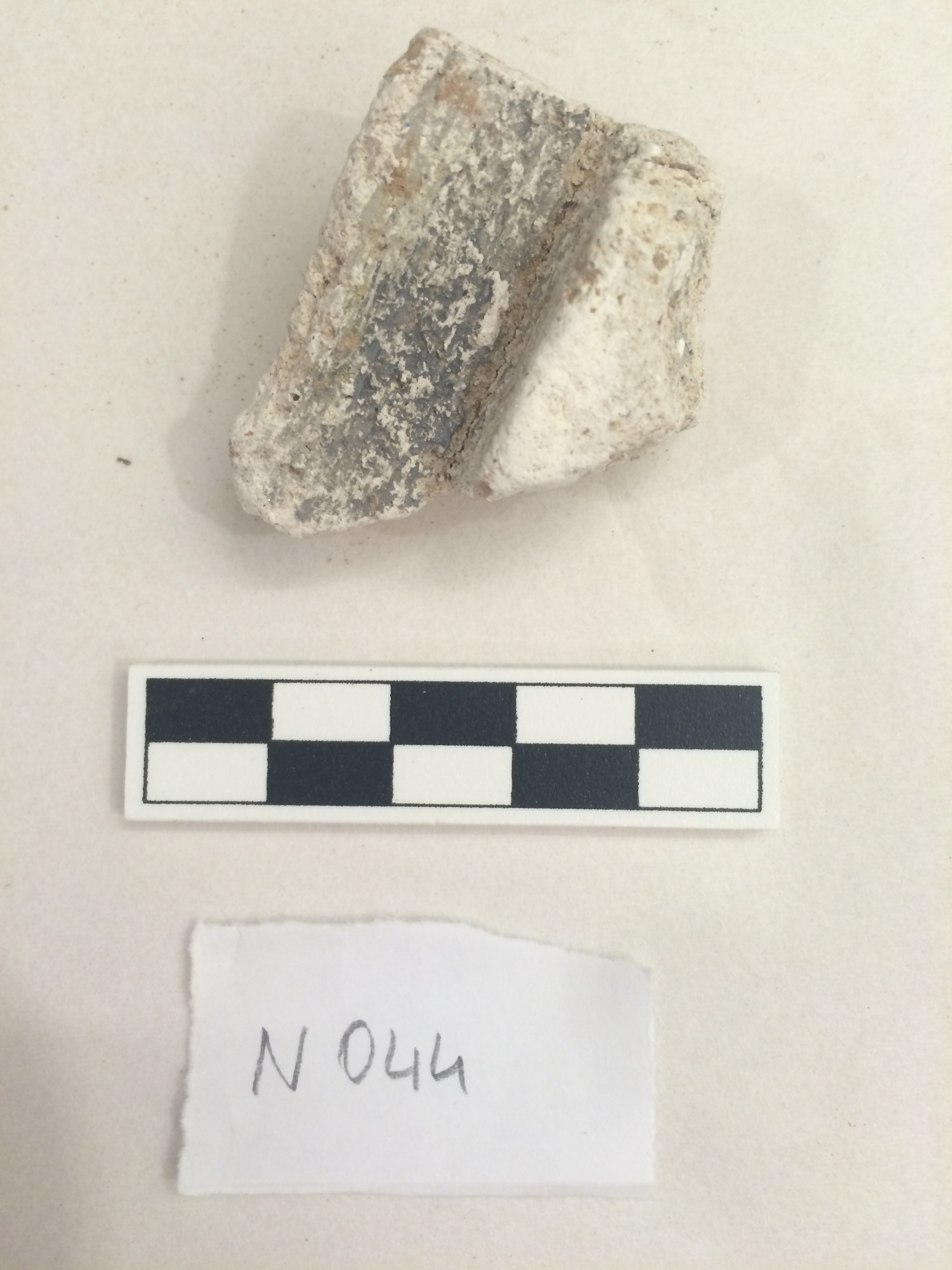
The Stucco Fragment as a Blueprint for 2026 Silhouette Architecture
Within the silent corridors of aesthetic archaeology, a stucco fragment—carved and painted—exists as a testament to the enduring dialogue between material restraint and ornamental ambition. For Natalie Fashion Atelier, this artifact is not a relic but a generative matrix. Its fractured edges, its layered pigments, and its tactile relief offer a sophisticated lexicon for the 2026 haute couture silhouette, translating architectural permanence into ephemeral garment construction. This research artifact deconstructs the fragment’s classical elegance to propose a new paradigm of structured fluidity, where the body becomes a living plinth for historical memory.
I. Material Dialectics: The Language of Carved Volume and Painted Depth
The stucco medium—a composite of lime, sand, and marble dust—achieves its nobility through paradox. It is at once malleable in execution and monumental in finality. The carved surface, with its undulating contours and precise undercuts, presents a study in negative space. For 2026, this translates directly into garment construction via a technique we term sculptural bas-relief. The silhouette is no longer a flat plane draped over anatomy; instead, it is built from internal architectural substructures—crinolines reimagined in carbon-fiber-reinforced silk organza—that create a deliberate projection from the body. The garment’s volume is not soft or yielding but carved, with sharp, deliberate recesses at the waist and pronounced, cantilevered peaks at the shoulder, mimicking the fragment’s broken profile.
Furthermore, the painted layer upon the stucco is not a superficial veneer. It is a stratigraphy of color, where each pigment application—from the initial gesso-like ground to the final mineral wash—creates a luminous patina. In the 2026 atelier, this informs a new approach to fabric finishing. We propose a pigment-imbued textile, where color is not dyed but painted directly onto the woven surface using a micro-spatula, allowing for tonal gradations that shift with movement. The haute couture client will not wear a color; they will wear a palimpsest of light and shadow, echoing the fragment’s weathered, yet regal, complexion.
II. Aesthetic Archaeology: Deconstructing Classical Proportion
The fragment’s classical elegance lies not in its original whole, but in its fracture. The broken edge is not a flaw; it is a narrative device. It suggests a history of loss, a moment of violent separation, and a subsequent state of dignified repose. For the 2026 silhouette, this principle manifests as asymmetrical tailoring that is neither casual nor arbitrary. The left side of a jacket may follow a rigorous, corseted line, while the right side dissolves into a faux-unfinished hem, raw-edged and weighted with internal lead thread to mimic the heavy fall of a broken cornice. This is not deconstruction in the postmodern sense; it is archaeological reconstruction, where the designer acts as a restorer, choosing which lines to complete and which to leave deliberately exposed.
The classical proportion of the fragment—its adherence to a hidden geometric canon—informs the golden-ratio cut for 2026. Using computational pattern-making, we derive panel widths and seam placements from the fragment’s measured intervals. The result is a silhouette that feels instinctively balanced, even when its external form is radically asymmetric. The neckline, for instance, may follow the curve of a carved acanthus leaf, while the sleeve head echoes the angle of a broken pediment. This is elegance as intellectual pursuit, a mathematical poetry that distinguishes the atelier’s output from mere trend-driven fashion.
III. From Fragment to Form: The 2026 High-End Silhouette Lexicon
Translating the stucco’s tactile relief into wearable form demands a new material hierarchy. We introduce rigid lace, a composite of metallic thread and molded resin, which can be shaped into three-dimensional, carved-like motifs that sit on the surface of a gown. These are not appliqués in the traditional sense; they are structural ornaments that bear weight, directing the drape of the garment beneath. The silhouette becomes a dialogue between the membrane (the primary fabric) and the crust (the carved ornament), mirroring the stucco’s relationship between its lime core and its painted shell.
For evening wear, the 2026 Grande Silhouette is defined by a monumental train that is not a trailing length of fabric but a rigid, hinged panel of sculpted textile. This train, when stationary, reads as a broken stele; when in motion, it articulates like a segmented exoskeleton, revealing flashes of a contrasting, painted under-layer. This is couture as performative archaeology, where each stride uncovers a new stratum of design. The palette is drawn directly from the fragment’s pigments: lime-wash white, oxidized copper green, and fresco ochre, all rendered in matte, chalky finishes to avoid any modern gloss.
IV. Technical Artifice: Engineering the Impossible Drape
The final pillar of this research is the engineering of stiffness. The stucco fragment’s immobility is its defining characteristic, yet couture demands movement. The 2026 solution is a hybrid construction we call articulated rigidity. By laser-cutting a structural underlayer with a pattern derived from the fragment’s craquelure, we create a garment that is stiff in compression but flexible in tension. The wearer experiences a silhouette that holds its architectural shape—a sharp, carved hip or a flared, columnar skirt—while still allowing for natural gait. This is achieved through micro-hinged seams, invisible to the eye, which allow the outer fabric to fold along pre-determined lines, much like a fresco panel that has been carefully cut and re-mounted on a flexible backing.
In conclusion, the stucco fragment, isolated in its archaeological context, serves as a profound masterclass in material honesty and formal ambition. For Natalie Fashion Atelier, the 2026 collection will not imitate the fragment’s surface, but will internalize its structural logic. The result is a silhouette that is simultaneously ancient and futuristic—a new classical form where the body is not merely dressed, but architecturally inhabited. The garment becomes a fragment of a larger, unseen monument, and the wearer, its living, breathing cornerstone.