The Archaeology of the Fragment: Bobbin Lace as a Structural Blueprint for 2026 Silhouettes
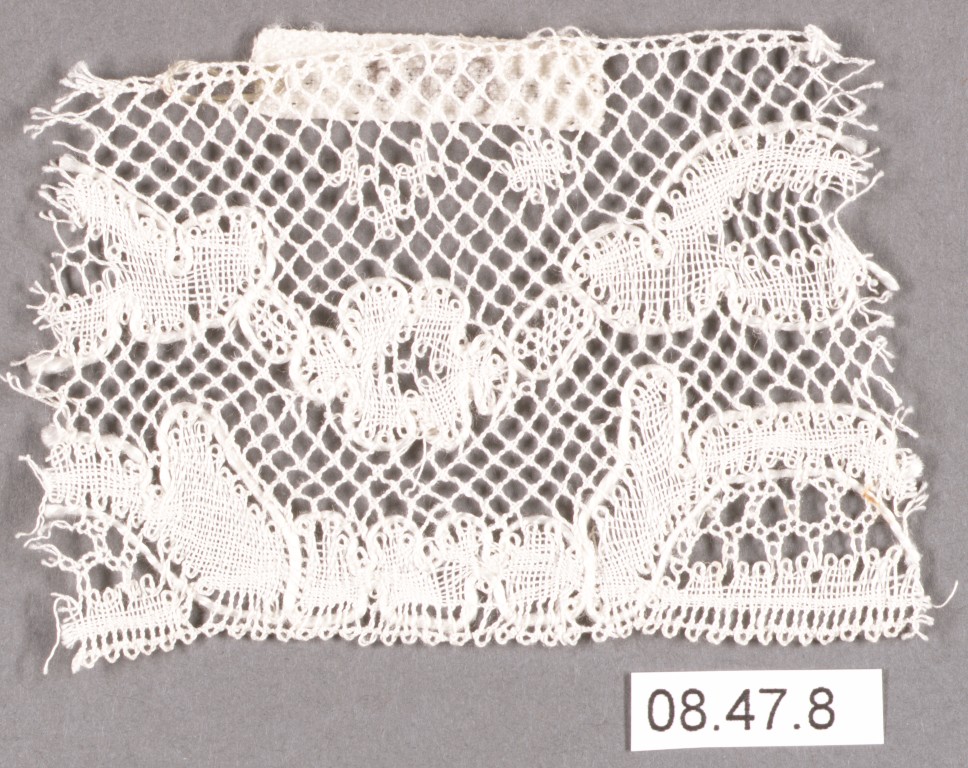
In the rarefied domain of haute couture, the fragment is not a remnant; it is a thesis. For Natalie Fashion Atelier, the study of an isolated bobbin lace artifact—a delicate, disembodied swath of geometric filigree—represents a profound act of aesthetic archaeology. This is not a nostalgic retrieval of a bygone era, but a rigorous deconstruction of the very principles that governed classical elegance. The bobbin lace fragment, stripped of its original garment context, reveals its true nature: a masterclass in negative space, tensile strength, and engineered opacity. As we project toward the 2026 luxury silhouettes, this fragment ceases to be a historical curiosity and becomes a foundational blueprint, informing a new architectural language for the female form.
Deconstructing Classical Elegance: The Fragment’s Intrinsic Logic
Classical elegance, particularly within the French couture tradition, has often been conflated with a certain volumetric opulence—the structured crinoline, the imposing corset, the layered cascade of fabric. The bobbin lace fragment challenges this orthodoxy. Its elegance is not derived from mass, but from the radical economy of its construction. The artisan, working with dozens of fine threads wound on bobbins, does not add material to create form; rather, they orchestrate a systematic crossing, twisting, and pinning to create a fabric that is simultaneously present and absent. The resulting textile is a study in controlled porosity, where the solid ground and the open mesh are in constant, dynamic tension.
This tension is the core of its aesthetic power. The fragment’s patterns—often botanical or geometric—are not printed upon a surface but are structurally intrinsic to the material itself. The motif is the structure. This represents a paradigm shift in our understanding of ornamentation. In the 2026 context, we reject the application of decoration as a superficial afterthought. Instead, we adopt the lace’s logic: ornamentation must be generative, emerging from the very construction of the garment. The fragment teaches us that true luxury is not the accumulation of fabric, but the intellectual and artisanal mastery over its absence.
Materiality as a Signifier of Mastery
The materiality of bobbin lace is unforgiving. Flax or silk threads, often no thicker than a human hair, demand an almost inhuman precision. A single misplaced pin compromises the entire grid. This inherent fragility, however, is paradoxically its greatest strength. The lace fragment’s durability across centuries is a testament to the structural integrity of its design. This principle of engineered fragility is a critical directive for our 2026 atelier. We are moving away from heavy, monolithic fabrics toward high-tenacity, ultra-fine yarns—microfilament silks, technical nylons, and bio-sourced polymers—that can be manipulated into lace-like configurations. The resulting material is not merely lightweight; it is load-bearing yet ethereal, offering the wearer a silhouette that is both protective and liberating.
From Flatwork to Form: Translating Lace Logic into Silhouette
The translation from a flat fragment to a three-dimensional silhouette requires a radical reinterpretation of tailoring. Traditional couture relies on darts, seams, and panels to shape fabric to the body. Bobbin lace, by contrast, is a single-plane construction. To adapt this for 2026, we must abandon the concept of the seam as a joining tool and embrace it as a structural articulation. The silhouette will no longer be cut and sewn; it will be grown and woven.
The Architecture of Negative Space
The first directive for 2026 is the silhouette of subtraction. Instead of designing the garment’s outer perimeter, we design the voids within it. The bobbin lace fragment shows us that the eye reads the pattern as much through the holes as through the threads. Applying this to a full-length gown, we conceive of a silhouette where the body is framed by a lattice of structural bands—akin to the thicker gimps and cords in the lace—while the skin is revealed through precisely calculated apertures. These are not random cutouts; they are strategic zones of porosity, mapped to the body’s kinetic points to allow for fluid movement while maintaining a sculptural, almost architectural, presence.
This approach directly informs the 2026 shoulder and waistline. The exaggerated, padded shoulder of the past is replaced by a cobweb shoulder—a three-dimensional, web-like structure that extends from the collarbone, offering volume and protection without the weight of a traditional sleeve. Similarly, the waist is not cinched by a belt but defined by a density gradient in the lacework itself. The threads converge and tighten around the midsection, creating a corset-like effect that is intrinsic to the weave, not an external constraint. This is a silhouette of inherent control, where the garment’s architecture performs the role of the corset while maintaining the breathability of a chemise.
Translucency and the Layered Gaze
The bobbin lace fragment also dictates a new protocol for layering. Historically, lace was worn over opaque undergarments to create a contrast between the pattern and the ground. For 2026, we invert this. The lace becomes the primary structural layer, and the underlayer is a technical skin—a bonded, seamless second fabric that provides opacity only where required. This creates a binocular vision for the observer: the eye first registers the intricate, tactile pattern of the outer lace, then penetrates to the smooth, matte surface beneath. This layered gaze is a sophisticated play on modesty and revelation, offering a silhouette that is intellectually engaging rather than overtly provocative.
Global Heritage, Future Craft
While bobbin lace is often associated with European courts—from Flanders to Venice—its principles resonate across global textile traditions. The geometric precision of Japanese Kumihimo braiding, the structural interlacing of Andean backstrap looms, and the openwork of Middle Eastern Mashrabiya screens all share a common DNA: the creation of form through the deliberate management of void. Our 2026 collection, therefore, is not a pastiche of European history but a synthesis of global structural intelligence. The fragment is a universal artifact, and its language is spoken in every culture that has mastered the craft of thread manipulation.
The atelier’s commitment to this aesthetic archaeology means that our 2026 silhouette is not a trend but a continuation. It is a dialogue with the anonymous artisans who, centuries ago, understood that elegance is not about what you add, but what you dare to remove. The bobbin lace fragment is our guide, and its legacy is a new era of couture that is intellectually rigorous, technically audacious, and profoundly beautiful in its skeletal purity. The future of luxury is not in volume; it is in the exquisite, deliberate structure of the void.