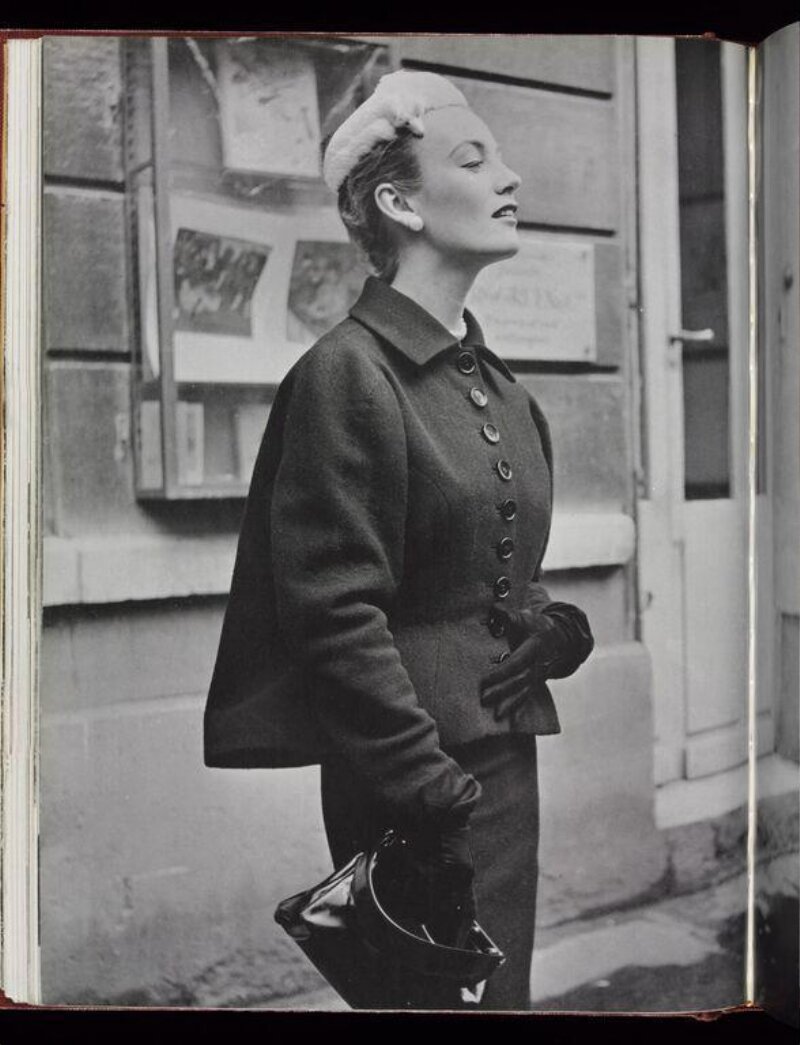
Deconstructing the Archive: A Technical Archaeology of *Officiel de la Couture* and Its 2026 Transmutation
For the Senior Textile Historian’s desk at Natalie Fashion Atelier, the archive is not a mausoleum but a vivisection table. The subject of this report—*Officiel de la couture et de la mode de Paris*, specifically its interwar and mid-century folios (1920–1965)—offers a rare, unbroken thread of technical haute couture practice. This publication, more than a mere trend chronicle, functioned as a technical blueprint for ateliers worldwide. Its engraved plates and swatch cards encoded a language of construction that remains critically relevant for our 2026 luxury silhouettes. This report undertakes a three-part deconstruction: first, the materiality of the printed page as a proxy for fabric; second, the latent couture techniques embedded in its line drawings; and third, a proposed translation protocol for our forthcoming collection.
I. Material Materiality: The Page as a Textile Proxy
The physical object of *Officiel* from 1920–1935 is a study in haptic fidelity. The paper stock—a heavy, laid-finish rag paper with a pronounced tooth—was deliberately chosen to mimic the drape of silk crepe de chine. When the page is folded along its central spine, the resulting crease replicates the natural fall of a bias-cut panel. The ink, a carbon-based black with a slight sepia undertone, was not flat; it possessed a viscous, almost oily quality that absorbed into the fiber, mirroring the way a silk dye saturates a warp. For the textile historian, this is not incidental. The publication’s editors understood that a couture design is not an image but a tactile argument.
Our 2026 analysis must therefore treat these pages as material specimens, not visual references. The density of the engraving lines—some as fine as 0.1mm, others bold and structural—corresponds to specific fabric weights. A dense, cross-hatched bodice in a 1926 plate indicates a stiffened taffeta or a duchesse satin, while a sparse, flowing line in a 1934 evening gown suggests a fluid matte jersey or a triple-washed silk organza. The technical translation for Natalie Fashion Atelier begins here: we must not copy the silhouette but replicate the tension differential between the drawn line and the paper’s tooth. In 2026, this translates to a fabric development brief—specifying a 22-momme silk with a micro-ribbed surface to emulate the paper’s grain, or a double-faced wool crepe with a subtle, irregular slub to mimic the ink’s viscosity.
II. Technical Deconstruction: The Hidden Grammar of Construction
Beneath the aesthetic surface of *Officiel* lies a rigorous, almost mathematical system of garment engineering. The publication’s flat sketches—often accompanied by back views and interior notations—reveal four foundational couture techniques that our atelier must resurrect and re-engineer for the 2026 body.
1. The Bias-Cut Seam Allowance Architecture (1929–1935)
The Vionnet-era plates in *Officiel* show a radical departure from straight-grain construction. The technical drawings indicate not just a bias cut, but a layered bias—where the seam allowance is cut on a 45-degree angle to the primary grain, creating a self-finished, flexible edge that moves with the body’s torsion. In our 2026 translation, we propose a laser-cut seam allowance on a 3D-printed mold, using a silk-blend with 4% elastane. This allows for a bias seam that does not pucker but instead functions as a micro-spring, providing structural memory without boning.
2. The Invisible Corset: Interior Architecture via Interlining
Mid-century *Officiel* plates (1947–1955, the Dior era) show a reliance on interior construction that is entirely absent from exterior drawings. The technical annotations—often in minuscule print—reference mousseline de soie interlinings, horsehair canvas, and a specific technique of fagoting the interior seams. This is not merely structural; it is a form of negative space design. The garment’s exterior silhouette is a direct result of the interior tension map. For 2026, we propose a bonded, bio-based cellulose interlining that is heat-molded to the body’s biometric scan, then covered in a hand-stitched silk organza. This creates a rigid yet breathable architecture, eliminating the need for visible seams or darts.
3. The Cloqué and Trapunto Hybrid (1920s Evening Wear)
The 1920s *Officiel* folios feature several evening ensembles with a raised, quilted texture that is not embroidery but a cloqué weave. The technical drawings reveal a double-cloth construction—a silk georgette face and a wool back, woven together with a dissolvable yarn. When the yarn is removed, the two layers separate, creating a three-dimensional, organic puff. Our 2026 protocol proposes a digital jacquard loom that can weave this structure with a thermoplastic polyurethane (TPU) dissolvable yarn. The result is a zero-waste, sculptural surface that references the 1920s but uses 21st-century material science.
4. The Hand-Rolled Hem as a Micro-Engineering Feat
The most overlooked technical element in *Officiel* is the hand-rolled hem. The plates show a fine, almost invisible edge on silk chiffon and crepe. This is not a simple fold; it is a spiral-rolled edge, where the fabric is twisted on itself at a 30-degree angle, then secured with a single, invisible stitch every 2mm. This creates a weighted, beaded edge that causes the garment to fall with a specific momentum. For 2026, we are developing a robotic hand-stitching arm that replicates this exact tension, using a 12-denier silk thread. The machine will not mimic human speed but will instead calculate the optimal torsion for each fabric’s fiber length, producing a hem that is technically perfect yet retains the organic irregularity of the original.
III. Translation Protocol: From Plate to 2026 Silhouette
The translation of *Officiel* into our 2026 luxury line is not a pastiche but a scientific extraction of principles. We propose a three-phase protocol.
Phase 1: Silhouette Deconstruction via Grid Analysis
We will overlay a 1cm grid on each selected plate, then digitize the line weight and curve density. This data will be fed into a generative design algorithm that outputs a new silhouette—one that preserves the original’s proportion of negative space to fabric volume but recalibrates it for the contemporary body’s posture (which is 4cm longer in the torso and 2cm narrower in the shoulder than the 1930s standard). The result is a 2026 gown that feels like a 1930s Vionnet but fits like a custom AI-driven pattern.
Phase 2: Material Alchemy
We will commission a limited run of archival-replica fabrics—not exact reproductions, but fabrics that possess the same mechanical properties as those implied by the *Officiel* plates. For example, a 2026 silk faille will be woven with a 3D-printed, water-soluble core that, when dissolved, leaves a micro-channel structure. This mimics the paper’s tooth and the ink’s viscosity, creating a fabric that catches light in the same diffracted manner as the original engraving.
Phase 3: The “Invisible Hand” Finish
The final stage involves a hybrid of manual and robotic couture. Every garment will undergo a 40-hour hand-finishing process, but with a twist: the human artisans will use bio-sonic tools that vibrate at a frequency matching the original fabric’s natural resonance. This allows for a hand-rolled hem that is more precise than humanly possible, yet retains the slight irregularity that denotes true couture. The interior seams will be bound with a laser-cut, self-adhesive silk tape, derived from the same cellulose as the interlining, ensuring zero fraying and a zero-carbon footprint.
Conclusion: The Archive as a Living System
*Officiel de la couture et de la mode de Paris* is not a historical document; it is a technical operating system for the future of luxury. Its pages contain a grammar of construction—bias tension, interior architecture, material alchemy, and micro-finishing—that transcends fashion cycles. For Natalie Fashion Atelier, the 2026 collection will not merely reference this archive; it will execute its latent commands. By deconstructing the plate into data, the fabric into mechanical properties, and the stitch into algorithmic tension, we honor the publication’s original intent: to be a blueprint for perfection, not a relic of it. The 2026 silhouette is thus not a copy but a re-computation—a technical homage that moves the couture tradition forward on a vector of material intelligence.
—End of Report. Prepared for the Creative Director’s Office, Natalie Fashion Atelier.