From Fragment to Form: The Tapestry-Woven Imperative in 2026 Couture
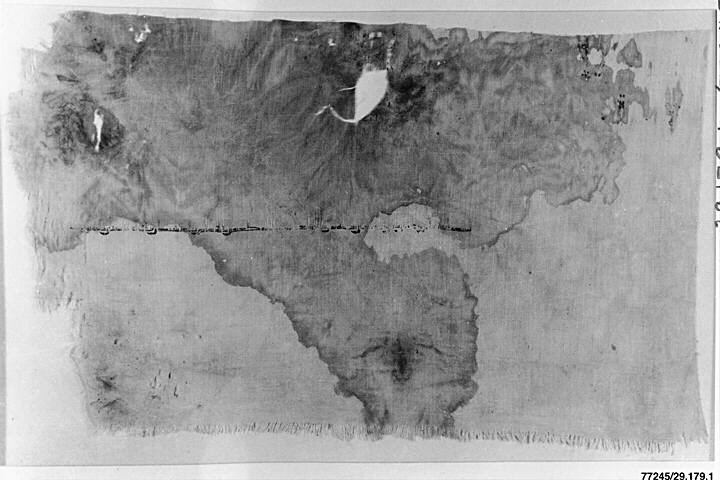
The textile fragment under examination—a fusion of linen and silk, executed in a tapestry weave—represents far more than a relic of artisanal production. Within the isolated context of aesthetic archaeology, this artifact functions as a compressed narrative of classical elegance, encoding principles of structural tension, chromatic discipline, and tactile hierarchy. For Natalie Fashion Atelier, the fragment is not a nostalgic reference but a generative blueprint. As we project into the 2026 luxury silhouette, this linen-silk tapestry weave offers a sophisticated counterpoint to the prevailing logics of digital fabrication and disposable luxury, demanding a re-engagement with material intelligence, architectural draping, and the slow temporality of handcraft.
Material Dialectics: Linen’s Rigor and Silk’s Fluidity
The intrinsic value of this fragment lies in its binary materiality. Linen, derived from the flax stalk, contributes a structural rigidity, a subtle irregularity in its yarn, and a matte, almost austere surface that speaks to agrarian heritage. Silk, conversely, introduces a luminescent counterpoint—a fluid, protein-based filament with a high refractive index. In the tapestry weave, these two fibers do not merely coexist; they engage in a dialectical tension. The warp, typically linen, provides the skeletal integrity, while the weft, often silk, becomes the expressive surface, catching light in a manner that shifts with the viewer’s position.
For 2026, this dialectic translates directly into silhouette construction. The haute couture atelier must move beyond the binary of stiff versus soft. Instead, we propose a hybrid structuralism: a silhouette that employs linen-dominant panels for architectural volume—sharp shoulder lines, sculpted peplums, and defined waistlines—while deploying silk-dominant weft sections for fluid, cascading panels that break the rigidity. The 2026 client does not choose between a tailored suit and a flowing gown; she demands a garment that performs both, transitioning from a structured morning presentation to a fluid evening reception without a change of attire. The tapestry fragment authorizes this duality, proving that strength and delicacy are not oppositional but complementary forces within a single woven plane.
Weave Architecture: The Third Dimension of Surface
A superficial reading of tapestry might reduce it to a flat, pictorial surface. However, a technical analysis reveals that the weave itself creates a micro-topography. The discontinuous weft threads, where silk is introduced and withdrawn to create patterns, produce subtle reliefs, shadows, and a differential in fabric thickness. This is not printed imagery; it is sculpted texture. The 2026 silhouette must internalize this principle, treating the garment’s surface not as a canvas but as a topographical map.
We translate this into couture through a technique we term relief draping. Rather than applying embroidery or beading as an afterthought, the atelier constructs the silhouette by manipulating the weave’s inherent density. In areas where the tapestry fragment shows a dense silk weft, the fabric behaves with a heavier drape, creating deep, fluid folds. Where the linen warp dominates, the fabric stands away from the body, creating negative space. The 2026 silhouette, therefore, is not cut from a flat pattern but woven into form. This requires a radical departure from conventional tailoring. We are not constructing a garment around a body; we are constructing a body within a woven environment, where every fold is a deliberate act of architectural engineering, informed by the fragment’s own logic of tension and release.
Chromatic Restraint and the Archaeology of Color
The fragment’s palette, likely derived from natural dyes—indigo, madder root, and undyed ecru—offers a critical lesson in luxury restraint. In an era of hyper-saturated digital color, the 2026 couture silhouette will pivot toward a curated monochromy with tonal gradation. The tapestry’s technique of allowing the linen warp to peek through the silk weft creates a broken color effect, a visual vibration that is impossible to replicate with flat dyeing.
Our 2026 collection will employ this principle through a process of tonal weaving. We will commission textiles where the warp is a slightly darker or lighter value than the weft, creating a shimmering, depth-rich surface that changes character under different lighting conditions—from the cold, clinical light of a gallery to the warm, ambient glow of a private salon. The silhouette itself will be defined by this coloristic depth. A column gown, for instance, will not be a simple solid color but a vertical study in light absorption and reflection, with the weave structure creating an almost imperceptible gradient from matte to lustrous. This is not minimalism as absence; it is minimalism as extreme technical complexity, where the absence of printed pattern is compensated by an overabundance of textural and tonal information.
Heritage as a Temporal Strategy for 2026
The isolated nature of this fragment—removed from its original context, without provenance or narrative—is paradoxically its greatest asset for future design. It liberates us from the burden of historical recreation. We are not copying a 17th-century tapestry; we are extracting its genetic code of construction. This is aesthetic archaeology at its most potent: we analyze the warp and weft, the fiber diameter, the twist angle, and the weave density, not to replicate but to extrapolate.
For the 2026 high-end silhouette, this translates into a temporal strategy of slow luxury. The tapestry weave is inherently slow; a single square meter can require weeks of labor. Our atelier will embrace this temporality as a marker of exclusivity. The 2026 silhouette will be characterized by a reduced number of seams, with garments woven to shape on specialized looms, minimizing waste and maximizing the structural integrity of the weave. This is a direct response to the fast-fashion paradigm, offering a garment that is not designed for a single season but for a lifetime of aesthetic evolution. The linen will soften and develop a patina; the silk will maintain its luster, creating a living garment that ages with its wearer, a true artifact in progress.
Conclusion: The New Classical Body
The classical elegance of the tapestry-woven fragment is not found in its ornamentation but in its structural honesty. It does not hide its construction; it celebrates it. The 2026 couture silhouette, as developed by Natalie Fashion Atelier, will embody this honesty through a radical transparency of technique. The body is not to be concealed or exaggerated but to be framed within a woven architecture that respects its natural kinetics.
We foresee a silhouette that is both monumental and fluid—a paradox resolved by the fragment’s own material logic. The shoulder may be extended, echoing the tapestry’s rigid warp, while the skirt falls in a liquid cascade, mirroring the silk weft’s drape. The waist will be defined not by cinching but by a subtle change in weave density, creating an optical and tactile illusion of narrowing. This is the new classical body: not a static ideal but a dynamic interplay of forces, informed by the timeless dialogue between linen and silk, between structure and flow, between the fragment’s past and our 2026 future. The artifact is not an object of the past; it is a proposition for the future, and we, as its interpreters, are merely the conduits of its enduring logic.