From Intaglio to Silhouette: Decoding the Circular Fur Hat and Its 2026 Resonance
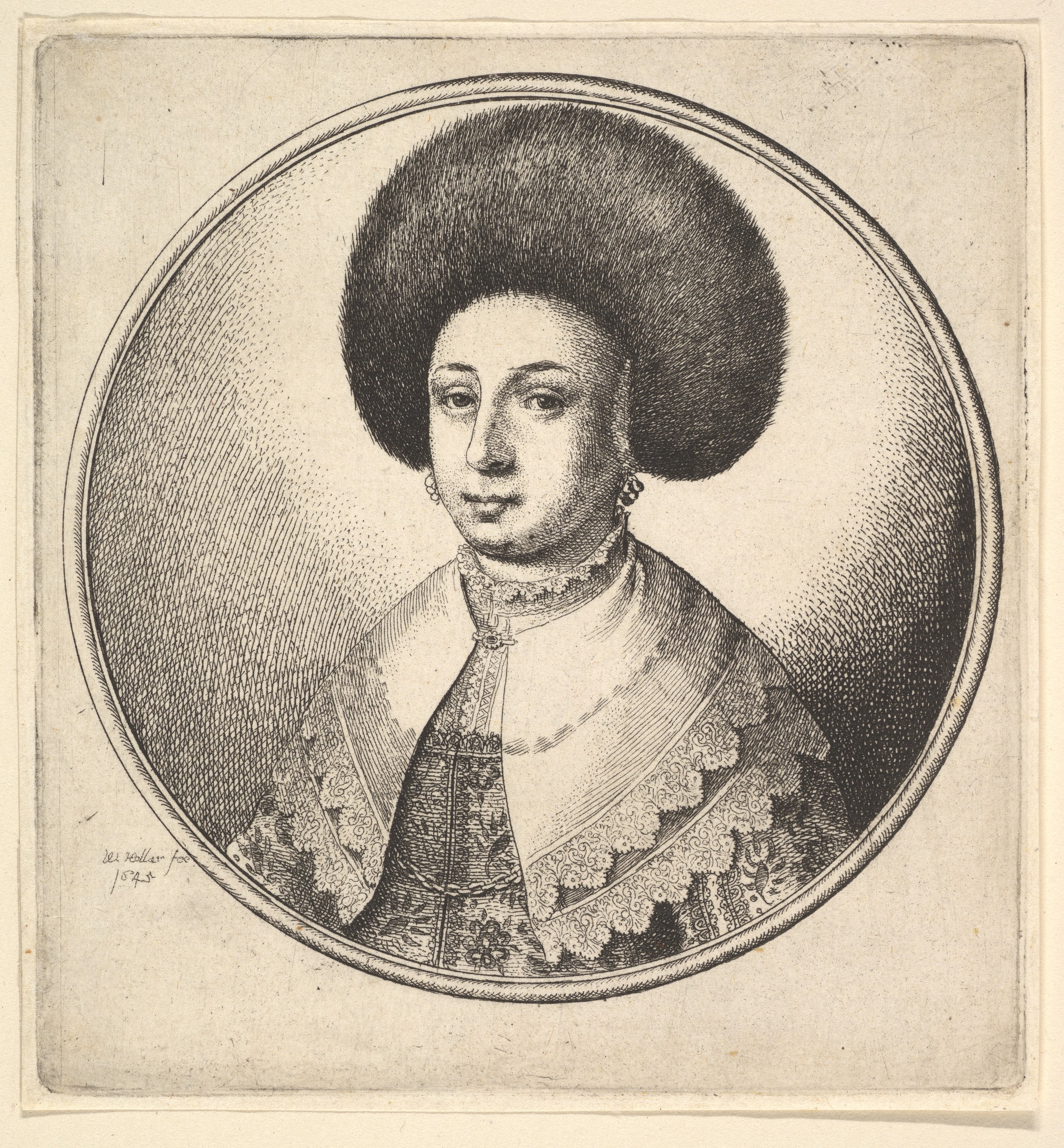
The archive presents a singular artifact: an etching, only state, depicting a woman adorned with a large circular fur hat and substantial earrings. Isolated from any series, this intaglio print functions as a pure aesthetic fossil—a moment of classical elegance frozen in copperplate. For the Natalie Fashion Atelier, this is not merely a historical curiosity but a technical blueprint. The etching’s deliberate geometry, its manipulation of volume, and its stark chiaroscuro offer a masterclass in structural contrast. As we project toward the 2026 haute couture season, this artwork becomes a pivotal reference for redefining the relationship between the head, the shoulder line, and the garment’s negative space. The following research deconstructs the etching’s formal language and translates its principles into concrete, luxury-ready silhouettes.
I. Aesthetic Archaeology: The Visual Syntax of the Etching
The etching’s power resides in its radical simplification. The artist has reduced the female form to two dominant masses: the expansive, near-perfect circle of the fur hat and the vertical, tapering column of the torso and neck. This binary composition creates a powerful visual tension—stability against elongation, mass against line. The earrings, rendered as dense, pendant-like forms, act as counterweights, anchoring the circular crown to the vertical axis of the neck. In technical terms, the etching establishes a primary horizontal datum (the hat’s brim) and a secondary vertical datum (the earrings and neck), creating a dynamic equilibrium that is both regal and austere.
1.1 The Circular Fur Hat as a Volume Generator
The fur hat is not an accessory; it is the architectural origin of the composition. Its circularity is absolute, suggesting a platter, a halo, or a celestial body. The fur’s texture, implied through fine cross-hatching, introduces a tactile irregularity against the smooth, unworked background of the paper. This contrast is crucial: the hat is a soft, volumetric mass that simultaneously frames and diminishes the face, creating an aura of mystery and authority. For 2026, this translates directly into a renewed exploration of the cowl and the halo collar. We are moving away from the sharp, tailored shoulder toward a softer, more enveloping top-line. The silhouette will borrow the hat’s geometry to create garments that begin with a circular, fur-trimmed or heavily draped neckline, effectively replacing the traditional shoulder pad with a torque-like volume that encircles the head and upper torso.
1.2 The Earrings as Structural Anchors
The earrings in the etching are not delicate; they are substantial, almost sculptural. They visually lengthen the neck and provide a vertical counterpoint to the hat’s horizontal expanse. In the context of garment construction, these earrings function as directional signifiers. They dictate the line of the collarbone and the fall of the décolletage. The 2026 interpretation will see the introduction of integrated metallic chokers and rigid, high-neckline frames that mimic this anchoring effect. These will not be separate jewelry pieces but structural components of the garment itself, sewn into the bias or fused onto the fabric to create a stiff, vertical axis that pulls the eye downward, elongating the figure and providing a stark contrast to the circular volume above.
II. Materiality and Craft: Translating Etching Techniques into Textile
The etching’s materiality—the ink’s density, the paper’s tooth, the line’s certainty—offers a direct analog for textile selection. The deep blacks and stark whites of the print suggest a palette of extreme contrast, which we will translate into matte black double-faced wool and ivory silk gazar. The fur hat’s texture demands a material that can hold a circular shape without collapsing, yet appears soft. We propose a hybrid of sheared mink and molded felt, where the felt provides the internal structure and the fur provides the tactile, organic surface. This is a technical challenge of thermoforming and hand-stitching, where the fur is applied in radial panels to maintain the perfect circle.
2.1 The "Only State" Principle: Precision Without Iteration
The phrase "only state" is significant. It implies a single, definitive execution—no revisions, no second proofs. This principle of absolute finality informs our 2026 atelier methodology. Each silhouette must be conceived as a complete, self-contained statement. There is no room for provisional draping or ambiguous seams. The construction must be architecturally precise, with every pleat, dart, and seam serving a singular purpose. This leads to a collection of monolithic garments—a coat that is a single piece of molded fabric, a gown that is a continuous spiral of bias-cut silk. The "only state" philosophy rejects the ephemeral and embraces the monumental.
2.2 Negative Space and the Redefined Shoulder
The etching’s background is empty, a void that emphasizes the figure. This negative space is as important as the positive form. In 2026, we will apply this principle by creating garments that sculpt the air around the body. The circular hat silhouette will be echoed in the capelet or the poncho, but with a crucial modification: the garment will not cover the shoulders entirely. Instead, it will create a void between the collar and the sleeve, a deliberate gap that exposes the collarbone and the base of the neck. This cutout, inspired by the etching’s empty background, will be a signature detail. It will be achieved through cantilevered construction, where the fabric is supported by internal boning or a lightweight metal frame, allowing the material to float away from the body, creating a shadowy, mysterious interval.
III. Silhouette Projections for the 2026 Haute Couture Season
Synthesizing the etching’s formal logic, we project three distinct, high-end silhouettes that will define the Natalie Fashion Atelier 2026 collection.
3.1 Silhouette One: "The Aureole"
This silhouette is a direct homage to the hat. It features a full, circular collar made of alternating bands of black sheared mink and black patent leather, radiating outward from the neck like a sun’s corona. The body of the garment is a severely columnar, floor-length coat in matte black vicuña. The coat has no visible fastenings; it is closed with internal magnetic clasps. The earrings are replaced by a single, rigid silver pectoral that extends from the collar’s underside down to the sternum, providing the vertical anchor. The overall effect is one of imperial stillness—a modern-day empress who commands space through sheer volume and restraint.
3.2 Silhouette Two: "The Intaglio Line"
This silhouette focuses on the etching’s line quality. The garment is a bias-cut gown in ivory double-faced satin, with the fabric folded and pressed to create sharp, incised lines that mimic the burin’s marks. The lines converge at the neckline, where they are gathered into a small, circular, fur-trimmed collar—a miniature version of the hat. The earrings are interpreted as long, flat, gold-tipped strips of the same satin that hang from the ears and extend down to the shoulder, creating a linear, calligraphic effect. The gown’s back is completely open, exposing the spine, which serves as the ultimate vertical line.
3.3 Silhouette Three: "The Counterweight"
This silhouette explores the tension between the hat and the earrings. It comprises a structured, off-the-shoulder bodice in black silk faille, with a single, exaggerated sleeve on the right side that is inflated into a circular, balloon shape, referencing the hat’s volume. The left side is completely bare, creating asymmetry. The earring is a massive, single piece of carved jet that hangs from the left ear, visually balancing the voluminous sleeve. The skirt is a straight, narrow column in black crepe, with a deep slit at the front. This silhouette is a study in dynamic equilibrium, where disparate elements—volume and line, mass and void—are held in perfect, precarious balance.
IV. Conclusion: The Eternal Return of the Circle
The etching of the woman with the circular fur hat is not a relic; it is a prophecy. Its stark geometry and material honesty provide a timeless grammar for luxury. As we move into 2026, the atelier will not simply replicate the image but will extract its underlying principles: the primacy of the circle, the power of negative space, and the necessity of structural counterpoints. The result is a collection that is archaeologically informed yet futuristically relevant. The circular hat becomes a collar, the earring becomes a pectoral, and the etching’s line becomes a seam. In this translation, we achieve what haute couture has always sought: the transformation of history into a living, breathing, and impeccably tailored present.