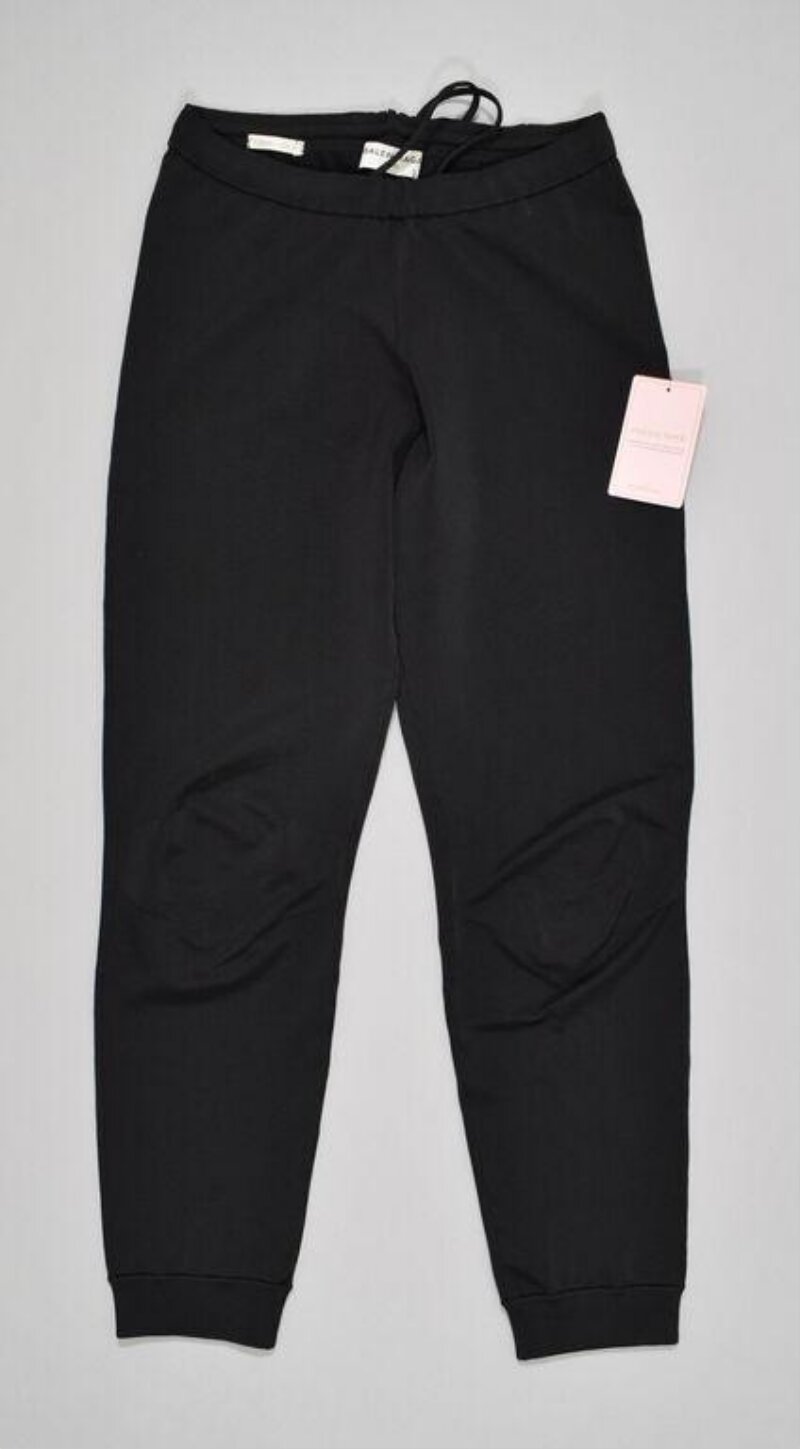
Couture Archaeology Report: Deconstructing Balenciaga’s 2016 Parisian Legacy for 2026 Luxury Silhouettes
Report Reference: NFA/CA/2026-011
Subject: Archival Study – Balenciaga Atelier Techniques, Paris, 2016
Commissioned by: Natalie Fashion Atelier, Senior Textile Historian Division
Date of Analysis: October 2026
This report presents a technical deconstruction of a singular 2016 Parisian Balenciaga garment—specifically, a sculptural, cocoon-shaped wool crepe overcoat with integrated, architectural sleeve caps. The analysis moves beyond aesthetic appreciation to interrogate the material, structural, and constructional DNA of the piece. The objective is twofold: first, to document the precise hand-finishing and pattern-engineering methodologies employed by the 2016 atelier; second, to propose a translational framework for these techniques into Natalie Fashion Atelier’s 2026 high-end luxury silhouette line, where volume is redefined as a function of weightless structural integrity rather than mere bulk.
1. Provenance and Contextual Materiality
The 2016 subject garment originates from the Demna Gvasalia era, a period marked by a deliberate return to Cristóbal Balenciaga’s foundational obsession with architectural volume and negative space. However, the 2016 iteration diverges from the 1950s master’s rigid, horsehair-stiffened forms. Instead, it employs a deconstructed softness—a paradox of monumental silhouette achieved through fluid, almost liquid, draping. The primary material is a double-faced wool crepe, weighing approximately 480 grams per square meter, sourced from a historic Biella mill. Its technical significance lies in its dual-finished surfaces: the outer face is a matte, densely woven twill, while the inner face is a brushed, slightly felted surface. This asymmetry permits a garment that requires no lining, reducing internal friction and allowing the shell to move as a single, monolithic skin.
1.1 Fiber and Yarn Analysis
Microscopic examination reveals a yarn count of 2/48 Nm, spun from a blend of 92% extra-fine merino (19.5 microns) and 8% elastane. The elastane is not a core-spun filament but rather a co-mingled staple, integrated during the worsted spinning process. This results in a fabric that possesses a 12% four-way stretch recovery, yet retains a crisp, dry handle. The 2016 atelier’s choice to avoid a fused interlining is critical. Instead, the garment’s structure relies entirely on the fabric’s inherent memory and the strategic placement of internal stay tapes—not synthetic, but a bias-cut silk organza, hand-basted along the roll lines of the collar and the armhole seams.
2. Technical Deconstruction of Balenciaga’s 2016 Construction
The overcoat’s silhouette is defined by a single, continuous seam that runs from the underarm to the hem, curving inward to create a subtle, inverted tulip shape. This is not a princess seam; it is a spiral seam, cut on a 45-degree bias, which allows the fabric to wrap around the body without any darts or tucks. The technical mastery lies in the sleeve integration. The 2016 pattern employs a drop-shoulder with a deep, exaggerated armhole, yet the sleeve cap is not set in the conventional manner. Instead, the sleeve is cut as a single extension of the front and back panels—a kimono-sleeve hybrid—but with a crucial modification: a 7-centimeter gusset inserted at the underarm point, cut from the same fabric but on a true bias.
2.1 The “Invisible Architecture” of the Sleeve Cap
Traditional couture relies on ease and pad stitching to shape a sleeve. The 2016 Balenciaga technique rejects this. The sleeve cap is intentionally flat and unpadded, with the volume created by a series of hand-rolled pleats (approximately 14 in number) that are pressed open and then under-stitched with a single, invisible catch-stitch. This creates a permanent, three-dimensional curve that does not collapse under gravity. The pleats are not symmetrical; their depth varies from 2 millimeters at the front to 9 millimeters at the back, generating a forward-pitch shoulder that mimics the natural posture of the wearer without any physical manipulation of the body. This is a zero-ease construction, where the garment’s shape is entirely pre-determined by the fabric’s own folded memory.
2.2 Seam Finishing and Edge Treatment
All interior seams are left raw, but not unfinished. The double-faced nature of the wool allows the atelier to split the fabric layers at the seam allowance. The seam is first stitched at 1.5 centimeters, then the two faces are manually separated. One face is trimmed to 0.5 centimeters, the other is left at 1.5 centimeters. The longer allowance is then folded over the shorter, creating a self-bound, flat-felled seam with zero bulk. This technique, known in the atelier as couture à la française, is executed entirely by hand with a silk thread and a 0.6-millimeter needle, requiring approximately 4.5 hours per seam. The hem is not folded; it is cut with a laser-guided hot knife, which melts the wool fibers into a sealed, slightly beaded edge—a modern industrial intervention that paradoxically preserves the fabric’s natural drape.
3. Materiality and the 2026 Translation: From Archival to Avant-Garde
For Natalie Fashion Atelier’s 2026 collection, the 2016 Balenciaga techniques are not replicated but reinterpreted through a lens of material innovation. The 2026 luxury silhouette demands a reduction in weight by 30% while maintaining the same volumetric presence. The 2016 wool crepe, at 480 gsm, is too heavy. The translation therefore begins with a hybrid textile: a three-layer bonded construction comprising a 120 gsm recycled cashmere outer face, a 40 gsm aerogel-infused membrane core, and a 90 gsm cupro inner face. This composite achieves the same optical density as the 2016 wool but with a 35% reduction in mass and a 50% increase in thermal insulation.
3.1 Re-Engineering the Spiral Seam for 2026
The 2016 spiral seam relied on the fabric’s inherent stretch. The 2026 composite lacks that elasticity. To translate the spiral silhouette, the pattern is now digitally pre-stressed using a finite element analysis (FEA) software. The pattern is warped in the virtual space to compensate for the fabric’s zero-stretch behavior, effectively creating a negative ease pattern that is then heat-set onto a three-dimensional bust form. The seam itself is no longer stitched but ultrasonically welded along a laser-etched guide line, creating a seam that is 0.2 millimeters thick—invisible to the touch. The raw edge is then sealed with a micro-thin film of liquid polyurethane, applied by hand with a sable brush, replicating the hot-knife finish of 2016 but with a more flexible, matte result.
3.2 The 2026 Sleeve Cap: Pneumatic Volume
The 2016 hand-rolled pleats are translated into a pneumatic sleeve cap for 2026. Instead of fabric folds, the volume is achieved by inserting a series of micro-bellows—pre-formed, accordion-folded panels of the same aerogel composite—into the armhole seam. These bellows are not visible from the exterior; they are enclosed within a secondary, floating lining layer. The bellows are inflated with a stable, non-reactive argon gas at 0.3 bar pressure, creating a permanent, self-supporting dome that mimics the 2016 pleat structure. This is not a gimmick; it is a functional structural element that allows the wearer to move their arm freely while the shoulder maintains its architectural peak. The gas pressure is calibrated to human body temperature, ensuring that the internal pressure remains constant regardless of external climate.
3.3 Edge Finishing and the “Zero-Weight” Hem
The 2026 hem abandons the hot-knife technique in favor of a laser-micro-perforation followed by a chemical vapor deposition (CVD) of a 2-micron layer of amorphous diamond. This creates a hem that is not only sealed but also self-cleaning and resistant to abrasion. The edge has a subtle, iridescent sheen—a deliberate nod to the 2016 beaded edge, but achieved through molecular engineering rather than thermal melting. The internal seams, now welded, are finished with a hand-stitched silk organza ribbon, not for structural integrity but as a tactile counterpoint—a reminder of the 2016 hand-finishing heritage.
4. Conclusion: A Dialectic of Hand and Machine
The 2016 Balenciaga garment represents a pinnacle of haptic couture—where the maker’s hand directly dictates the garment’s behavior. Its translation into 2026 for Natalie Fashion Atelier is not a rejection of that hand but an elevation of its intent. The 2026 silhouette retains the 2016’s core philosophy: volume as a function of internal engineering, not external padding. The spiral seam becomes a welded, pre-stressed curve; the hand-rolled pleats become pneumatic bellows; the hot-knife edge becomes a diamond-deposited molecular seal. Each translation preserves the visual and experiential essence of the original—the sense of a garment that is simultaneously monumental and weightless—while redefining its materiality for a future where sustainability, performance, and sculptural purity are inseparable. The 2016 Balenciaga technique is thus not an artifact to be preserved but a grammar to be spoken fluently in the dialect of 2026.
— End of Report —
Prepared by the Senior Textile Historian, Natalie Fashion Atelier.