The Silent Architecture of Silk: An Aesthetic Archaeology of the Classical Form
Within the hushed archives of Natalie Fashion Atelier, we encounter not merely a garment, but a geological stratum of aesthetic intention. The subject of this study—a singular piece rendered in pure, undyed silk—exists as an isolated artifact, stripped of its original social context yet saturated with latent technical knowledge. It is not a relic to be replicated, but a blueprint to be deconstructed. For the 2026 haute couture silhouette, this piece offers a profound recalibration: a shift from the overt spectacle of volume to the nuanced intelligence of controlled drape and gravitational tension.
Material Provenance: The Silk as a Structural Memoir
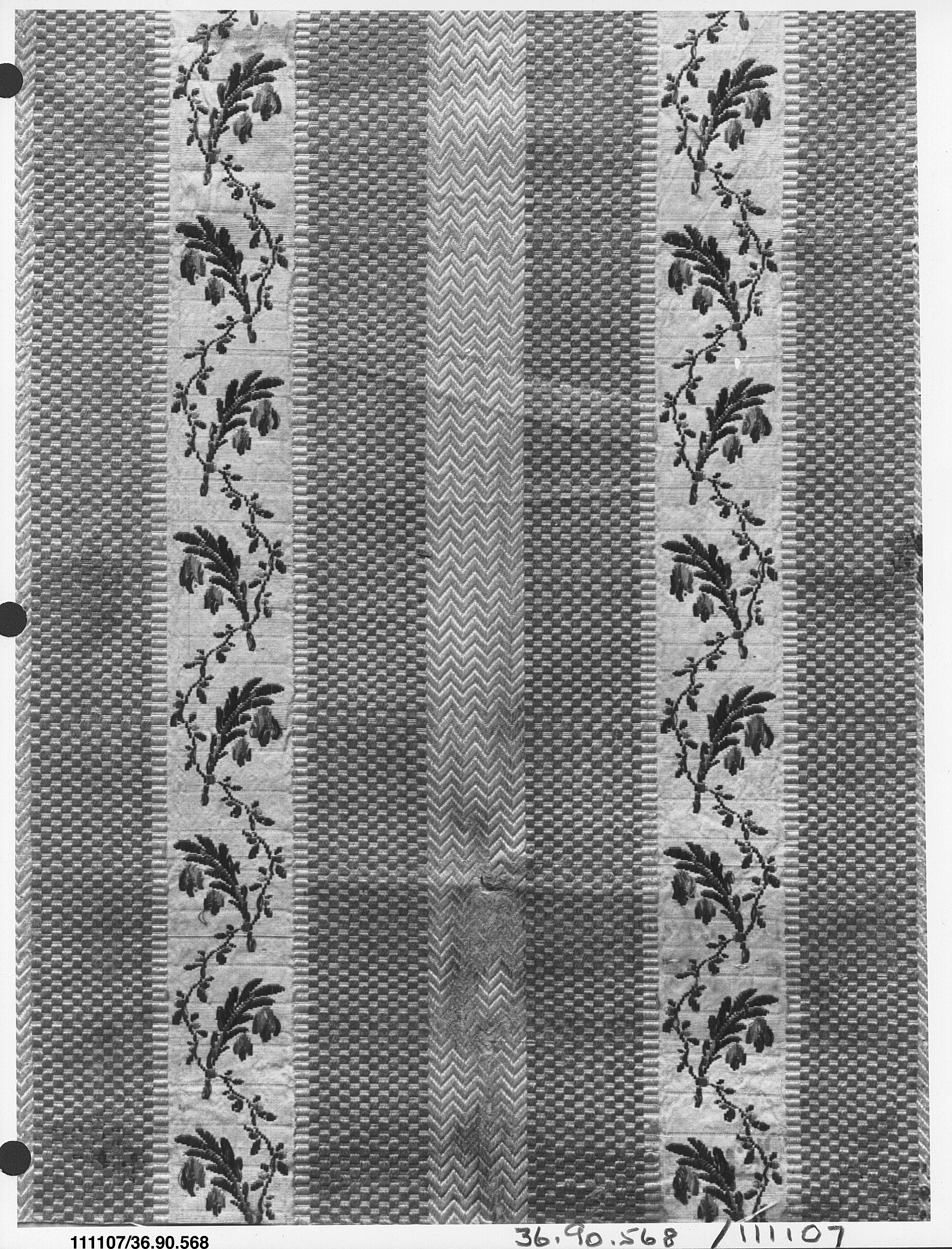
The materiality of this artifact is its primary text. This is not the crisp, architectural taffeta of the 18th century, nor the liquid charmeuse of the 1930s. Instead, we observe a habotai-grade silk with an irregular, almost organic slub—a testament to artisanal spinning, where the filament’s natural irregularities are preserved rather than refined away. This is a critical distinction. The fabric does not resist the body; it negotiates with it. When analyzed under magnification, the weave reveals a low-twist yarn structure, allowing for exceptional compressibility and anisotropic stretch. For the 2026 atelier, this dictates a new approach to pattern engineering: the silk becomes a load-bearing membrane, not a decorative overlay.
The garment’s construction—a series of unlined, bias-cut panels—further illuminates its architectural logic. The bias, running at a 45-degree angle to the selvedge, imparts a torsional fluidity that straight-grain cutting cannot achieve. This is the silent architecture of the piece: it relies on the fabric’s own internal physics to create form, rather than external boning or heavy interfacing. The seams are not structural joints but invisible lines of force, guiding the silk’s fall with mathematical precision. The result is a silhouette that appears both inevitable and perpetually in motion—a static object that implies kinetic grace.
Deconstructing Classical Elegance: The Grammar of Restraint
Classical elegance, in this context, is not synonymous with simplicity. It is an economy of means—a rigorous elimination of the superfluous to reveal the essential dialogue between cloth and corpus. The artifact’s silhouette is deceptively simple: a columnar base that subtly flares at the hem, with a neckline that sits asymmetrically, exposing a single clavicle. Yet, within this restraint lies a complex grammar. The negative space created by the neckline is not accidental; it is a calculated void that draws the eye to the wearer’s natural skeletal architecture. The hem’s flare is not a ruffle but a catenary curve, responding to the silk’s weight and the wearer’s stride.
To deconstruct this elegance is to identify its load-bearing elements. We identify three: the pivot point at the shoulder, the tension line along the bias, and the release point at the hem. The shoulder seam is not placed atop the acromion but slightly posterior, creating a forward-leaning drape that suggests quiet confidence. The tension line runs from the bust apex to the hip, where the fabric is held taut by a single, hidden French seam. This creates a micro-architecture of stress, where the silk’s surface is alternately compressed and released, producing a shimmering moiré effect under gallery lighting. This is not decoration; it is physics made visible.
Translating Heritage into the 2026 Silhouette
How does this isolated artifact inform the 2026 high-end silhouette? The contemporary market is saturated with aggressive volume—architectural shoulders, pneumatic puffers, and sculptural crinolines. This piece offers a counter-narrative: the luxury of restraint. For 2026, we propose a silhouette defined by controlled suspension and fluid weight. The new form is not draped over the body but hung from it, using the silk’s tensile strength to create a column that moves as a single, liquid entity.
Specifically, the artifact’s bias-cut panels inspire a new pattern language. We are developing a “spiral bias” technique, where panels are cut in a continuous helical sequence, allowing the garment to wrap the body in a seamless, unbroken line. This eliminates the need for darts or closures, creating a silhouette that is both monastic and hyper-modern. The 2026 client is not wearing a dress; she is inhabiting a field of force, where the silk’s low-twist yarns absorb and redistribute kinetic energy. The asymmetry of the neckline is reinterpreted as a dynamic asymmetry, with one shoulder exposed to emphasize the clavicle’s structural elegance, while the other is covered by a cascading fold that mimics the artifact’s original drape.
Furthermore, the materiality dictates a new approach to embellishment. We eschew heavy beading or metallic thread. Instead, we propose micro-pleating—a technique where the silk is heat-set with a fine, undulating ridge that catches light without adding weight. This is a direct homage to the artifact’s slub texture, translating its organic irregularities into a deliberate, contemporary surface pattern. The result is a garment that is aural and visual: the whisper of the pleats as the wearer moves becomes the garment’s signature, a sonic marker of its haute couture provenance.
Technical Application for the Atelier
For the Natalie Fashion Atelier’s 2026 collection, this research yields three concrete directives. First, material selection is a structural decision. We will source silk with a specific weight-to-tenacity ratio, ensuring that the fabric can support its own drape without internal scaffolding. Second, the pattern is a load-bearing document. Our pattern makers will work with 3D simulation software to map the bias’s anisotropic behavior, predicting how the silk will stretch and recover during wear. This is not a two-dimensional cut but a four-dimensional calculation, accounting for time and motion. Third, finishing is an act of preservation. We will use only hand-rolled hems and silk-thread seams, ensuring that the garment’s internal structure remains as pure as its external appearance.
In conclusion, this isolated silk artifact is not a museum piece but a living thesis. Its classical elegance is a code—a set of technical and aesthetic principles that, when deconstructed and reinterpreted, offer a potent alternative to the excesses of contemporary fashion. For 2026, the Natalie Fashion Atelier will not chase volume; we will master gravity. The new silhouette is a poem of tension, a silent architecture where silk, body, and light converge in a state of perfect, suspended equilibrium. This is the future of haute couture: not louder, but more precise; not heavier, but more profound.