The Woven Vessel: An Archaeological Reading of Wax and Wicker in 2026 Couture Silhouettes
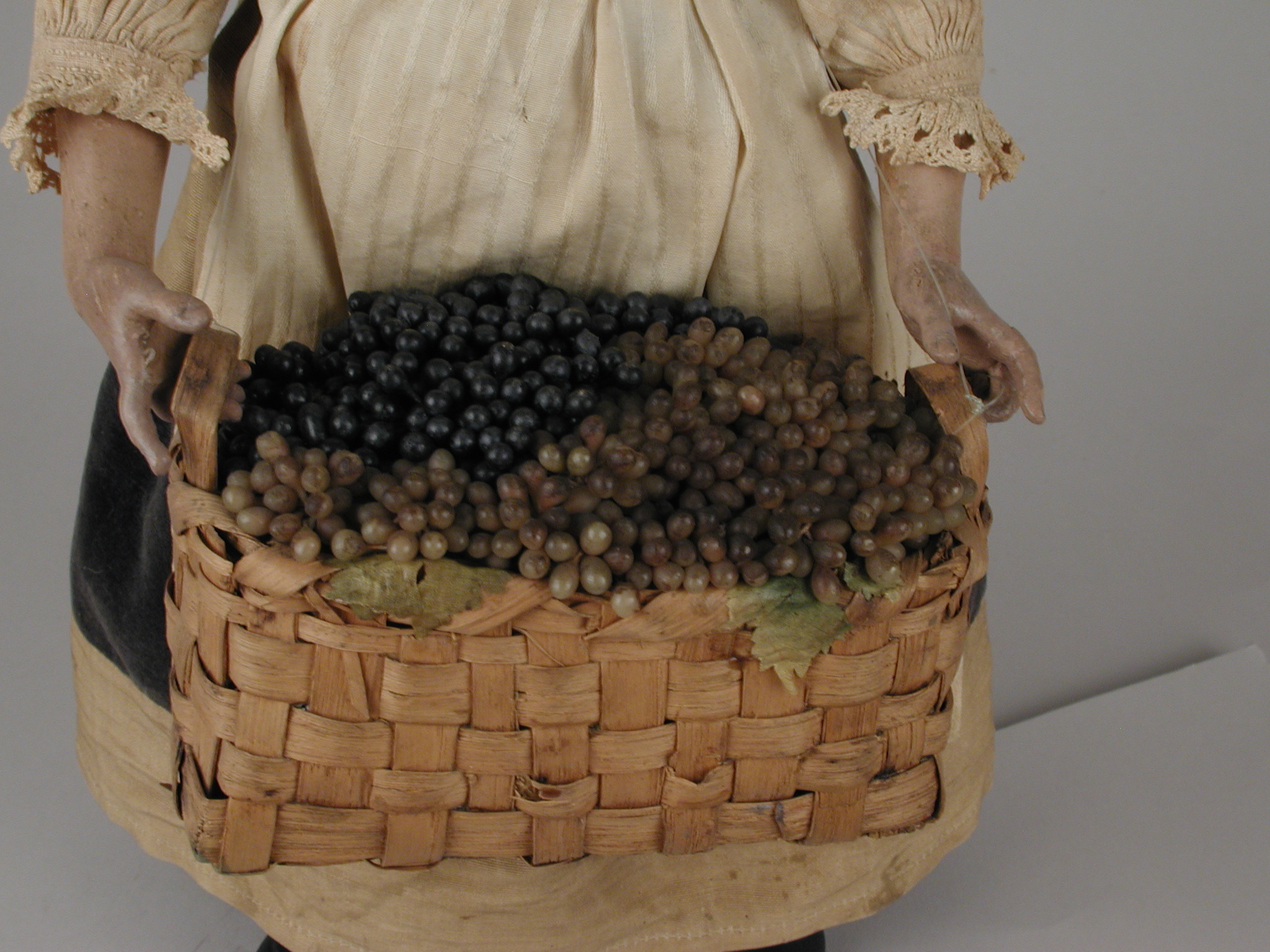
Within the isolated archive of Natalie Fashion Atelier, the artifact designated Basket of Grapes—a composition of waxed fruit nestled within a hand-woven wicker cradle—presents a singular provocation. Removed from its functional, agrarian context, the object emerges not as a relic of harvest, but as a masterclass in structural tension, material duality, and the poetics of preservation. For the 2026 haute couture season, this artifact demands a re-calibration of the silhouette, moving beyond mere inspiration toward a rigorous deconstruction of its formal and textural grammar. The wicker’s disciplined lattice and the wax’s organic, yet arrested, volume offer a dialectic between the rigid and the yielding, the ephemeral and the eternal—a dialogue that will define the atelier’s new architectural lexicon.
Deconstructing the Classical Elegance: The Grammar of the Artifact
The classical elegance of the Basket of Grapes does not reside in ornamentation, but in the profound honesty of its construction. It is a study in opposing forces, each material amplifying the other’s intrinsic character. To translate this into couture, we must first dissect its three primary formal components: the lattice, the cluster, and the void.
The Lattice: A Cartography of Restraint
The wicker basket is not a mere container; it is a cartography of restraint. Its woven structure—a rhythmic over-under sequence of pliable yet resilient fibers—creates a surface that is simultaneously permeable and protective. This is not a solid wall, but a screen, a filter that defines space through negative space. In 2026, this translates directly to the creation of structural cages and exoskeletons for the upper torso and hips. We move away from the heavy, boned corsetry of the 19th century toward a lighter, more geometric armature. Imagine a bodice constructed from laser-cut, rigidified silk organza, woven in a wide-spaced herringbone pattern, allowing the skin and underlayers to become part of the visual narrative. The silhouette is not merely shaped; it is screened, offering glimpses of what lies beneath, creating a modern, intellectual sensuality. The lattice informs a new sleeve architecture—one that is not sewn but interlaced, with panels of fabric woven together at the shoulder and elbow, creating a three-dimensional, sculptural volume that moves with a surprising, articulated fluidity.
The Cluster: The Weight of Abundance
In stark contrast to the basket’s linear discipline, the waxed grapes present a study in organic, clustered volume. Each sphere is a perfect, self-contained unit, yet their power lies in their aggregation. They hang in heavy, pendulous formations, their weight suggesting a ripeness that is both sensual and precarious. The wax medium arrests this moment of peak abundance, preserving it in a state of eternal, glossy perfection. For the couture silhouette, this informs the creation of modular volume and clustered draping. We eschew the single, monolithic bustle or pannier in favor of a distribution of smaller, distinct volumes. The skirt becomes a landscape of rounded, pebble-like forms, created through internal padding and strategic gathering, echoing the grape cluster’s irregular yet harmonious rhythm. The materiality of wax—its smooth, semi-translucent, and slightly tacky surface—suggests a new finish for high-end fabrics. We will explore lacquered silks and patent leathers that mimic this effect, creating garments that catch and reflect light with a wet, jewel-like intensity. The "weight" of the cluster is translated into the deliberate, weighted drape of a bias-cut gown, where the fabric is cut to pool and gather at the hip and thigh, creating a modern interpretation of classical chiton draping, but with a concentrated, almost gravitational pull.
The Void: The Architecture of Absence
The most sophisticated element of the artifact is the negative space—the void between the wicker strands and the interstices where the grape clusters meet. This is not emptiness, but active, structuring absence. It is the breath between the notes, the pause in the oration. In 2026, this principle guides our approach to cut and construction. We will introduce strategic perforations and cut-outs that are not merely decorative but serve a structural purpose, delineating the body’s architecture and creating a sense of visual lightness within substantial forms. A floor-length column gown, for instance, will feature a series of elliptical cut-outs along the spine and ribcage, echoing the basket’s weave. These voids are not random; they are calibrated to follow the body’s kinetic lines, allowing for movement and revealing the skin as an integral part of the garment’s design. The void also informs the silhouette’s relationship to the ground. We will design gowns that appear to hover, with hems that are cut away or constructed with sheer, invisible layers, creating a sense of weightlessness that contradicts the dense materiality of the primary fabric.
Materiality as Narrative: Wax and Wicker in the 2026 Atelier
The materiality of the artifact is not a superficial skin, but the primary carrier of its narrative. The wicker speaks of artisanal handwork, terrestrial roots, and sustainable structure. The wax speaks of alchemical transformation, preservation, and a glossy, almost artificial perfection. For 2026, the atelier will not merely imitate these materials but will translate their inherent properties into a new textile language.
From Wicker to Woven Metal and Resin
The wicker’s tactile warmth and structural clarity will be reinterpreted through fine-gauge metal meshes and bio-resin filaments. These materials will be woven on custom looms to create fabrics that possess the basket’s architectural integrity but with a fluid, luxurious hand. The result is a textile that can stand on its own, forming sculptural peplums and collars that do not require internal boning, or that can be draped to create a supple, metallic second skin. The color palette is drawn directly from the artifact: the sun-bleached honey, ochre, and deep tobacco tones of the wicker, contrasted with the amber, ruby, and deep violet hues of the waxed grapes. These are not flat colors but tonal, translucent layers, achieved through over-dyeing and the application of resinous finishes that mimic the depth and glow of the wax.
The Wax Finish: A Study in Arrested Light
The wax’s unique optical properties—its ability to diffuse and reflect light simultaneously—will be achieved through a proprietary finishing technique developed in our atelier. This involves the application of a micro-crystalline film over embroidered surfaces and woven textiles. The result is a fabric that feels almost dry to the touch, yet appears perpetually wet, with a deep, internal luminosity. This finish will be applied selectively, perhaps to a single sleeve or a panel of the bodice, creating a striking contrast between the matte, fibrous body of the garment and its glossy, waxed accents. This technique speaks to the artifact’s core tension: the organic form is frozen in a state of artificial preservation, a moment of perfection that is both beautiful and uncanny.
Conclusion: A New Silhouette for a New Era
The Basket of Grapes, through the lens of isolated aesthetic archaeology, is not a nostalgic object but a blueprint for a future silhouette. It teaches us that elegance is not found in the suppression of structure, but in its honest expression; that volume is most powerful when it is clustered and considered, not monolithic; and that the void is as essential to the garment’s architecture as the material itself. For 2026, Natalie Fashion Atelier will present a collection that is both grounded and ethereal, rigorous and sensual. The silhouette will be defined by woven exoskeletons, clustered volumes, and strategic voids, all rendered in materials that carry the weight of this ancient dialogue between the human hand and the natural world. The result is a couture that is not merely worn, but inhabited—a wearable archaeology of form, texture, and arrested time.