Deconstructing Classical Elegance: The Archaeological Revival of Crochet in 2026 Haute Couture
Within the hallowed archives of Natalie Fashion Atelier, the term “isolated aesthetic archaeology” denotes a specific curatorial methodology: the extraction of a singular craft tradition from its socio-cultural matrix, stripped of nostalgic sentiment, and subjected to rigorous formal analysis. The subject of this study—crochet—presents a particularly paradoxical case. Historically relegated to the domestic sphere, the vernacular, and the utilitarian, crochet nonetheless possesses a latent architectural complexity that renders it uniquely relevant to the luxury silhouettes of 2026. This paper deconstructs the classical elegance embedded within crochet’s structural logic, moving beyond its perceived quaintness to reveal a sophisticated system of tensile strength, negative space, and sculptural drape. Through this archaeological lens, we posit that crochet is not merely a decorative technique but a foundational blueprint for the next generation of high-end, body-conscious, and materially intelligent couture.
I. The Classical Grammar: Structural Integrity and Ornamental Discipline
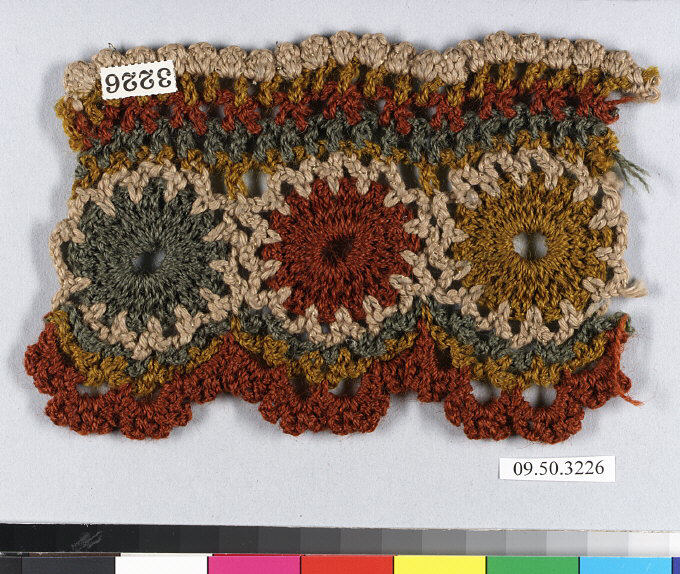
The foundational error in contemporary fashion discourse is the conflation of crochet with lace or embroidery. Lace is a composite construction, often requiring a ground fabric or multiple threads; embroidery is a surface application. Crochet, by contrast, is a mono-thread, self-generating topology. A single continuous filament is manipulated into a series of interlocking loops, creating a fabric that is simultaneously elastic and rigid, porous and structured. This inherent duality constitutes its classical elegance: the ability to hold a three-dimensional form while remaining visually weightless.
In the historical context of global heritage—from the intricate Irish crochet collars of the 19th century to the geometric, almost architectural motifs of the Middle East—we observe a consistent principle: the loop is a unit of tension. Each stitch (single, double, treble) acts as a structural node, distributing stress across the entire surface. For the Atelier, this translates into a sophisticated engineering paradigm. The 2026 silhouette no longer relies on internal boning or heavy interfacing; instead, the garment’s architecture is intrinsic to its fabrication. A fitted bodice, for instance, is not cut and sewn; it is grown from the thread, with the density of the stitches calibrated to provide compression and support where required, and to release into fluid, airy volume at the hem or sleeve.
The Aesthetic of the Void: Negative Space as Luxury
Classical elegance in crochet is not defined by opulent density but by the deliberate orchestration of absence. The open loops, the chains, and the picots create a lattice of light and shadow. In the context of 2026 haute couture, this translates into a radical redefinition of modesty and exposure. The silhouette is no longer about the revelation of skin, but the suggestion of form through an interstitial screen. A column dress in fine cotton crochet, for example, drapes over the body like a second skin, yet the skin is never fully visible—it is fractured, abstracted, and aestheticized through the geometric rhythm of the stitches.
This manipulation of negative space offers a distinct advantage in high-end design: optical illusion. By varying the scale of the motifs—from micro-scale, almost imperceptible loops at the waist to macro-scale, expansive openwork at the shoulders—the designer can sculpt the perceived silhouette. A wider, open stitch visually expands a surface; a tighter, denser stitch contracts it. This is a form of aesthetic mathematics, where the final silhouette is the result of a calculated interplay between solidity and void, opacity and transparency. The 2026 client is not purchasing a garment; she is purchasing a curated perception of her own form, mediated by a masterful control of light.
II. Materiality and the New Luxury: From Domestic Thread to Sculptural Filament
The isolated aesthetic archaeology of crochet demands a re-evaluation of its material substrate. Traditionally associated with wool, cotton, or silk thread, the technique’s true 2026 potential lies in its compatibility with non-traditional, high-performance filaments. The Atelier’s research focuses on the integration of metallic micro-fibers, bio-sourced polymers, and recycled technical yarns into the crochet lexicon. The loop structure, being inherently flexible, adapts to the stiffness or fluidity of the material without losing its structural coherence.
Consider a crochet evening coat in a metallic viscose blend. The material’s inherent sheen is amplified by the three-dimensional relief of the stitches, creating a surface that shifts from liquid silver to matte graphite depending on the angle of light. The silhouette is no longer a flat plane but a topographical landscape. This is the new luxury: not the flat, sterile perfection of a woven fabric, but the tactile, artisanal irregularity of a hand-controlled loop, elevated by cutting-edge material science. The garment becomes a wearable artifact, a testament to the fusion of ancient handwork and futuristic fiber technology.
Weight and Drape: The Engineering of Movement
One of the most significant technical challenges in haute couture is the management of weight. A heavily embellished gown can be physically burdensome. Crochet offers a radical solution: structural lightness. Because the fabric is composed of air and thread, it possesses an exceptional strength-to-weight ratio. A full-length, floor-sweeping gown can weigh less than 500 grams, yet retain a monumental presence. This allows for the creation of silhouettes that are both voluminous and ethereal.
The 2026 silhouette leverages this property to explore a new form of movement. A crochet gown does not swing like a woven skirt; it undulates, the loops acting as tiny hinges that allow the fabric to flex and compress. The effect is a sinuous, almost liquid motion that clings to the body during a stride and then springs back into its original shape. This dynamic behavior is the antithesis of static, rigid luxury. It posits that true elegance is kinetic, a continuous play of form and reformation. The designer’s role is not to impose a fixed shape but to choreograph a range of possible silhouettes within a single garment.
III. The 2026 Silhouette: A Synthesis of Archive and Future
In synthesizing these archaeological findings, the Natalie Fashion Atelier proposes a definitive 2026 silhouette archetype: The Architectural Cocoon. This form is characterized by a structured, almost sculpted shoulder and bodice, achieved through tightly packed, dense crochet stitches (reminiscent of historical amour-plating), which then dissolves into a fluid, open-work skirt that cascades with a weightless, ethereal quality. The waist is defined not by a seam but by a transition in stitch density, creating a visual and tactile cinch without any constrictive elastic or boning.
This silhouette is a direct descendant of the classical elegance found in historical crochet shawls and bedspreads, but it has been radically re-contextualized. The domestic has become the monumental. The ornamental has become the structural. The 2026 client is not wearing a nostalgic nod to her grandmother’s craft; she is wearing a piece of architectural engineering, a garment that is as intellectually rigorous as it is visually stunning. The crochet informs the silhouette not as a decorative afterthought, but as the very DNA of its construction, proving that the most profound innovations in luxury fashion often lie dormant within the overlooked archives of global heritage, waiting for the right archaeological eye to unearth their latent power.