Anatomy of the Effigy: Material Dialectics and the 2026 Silhouette
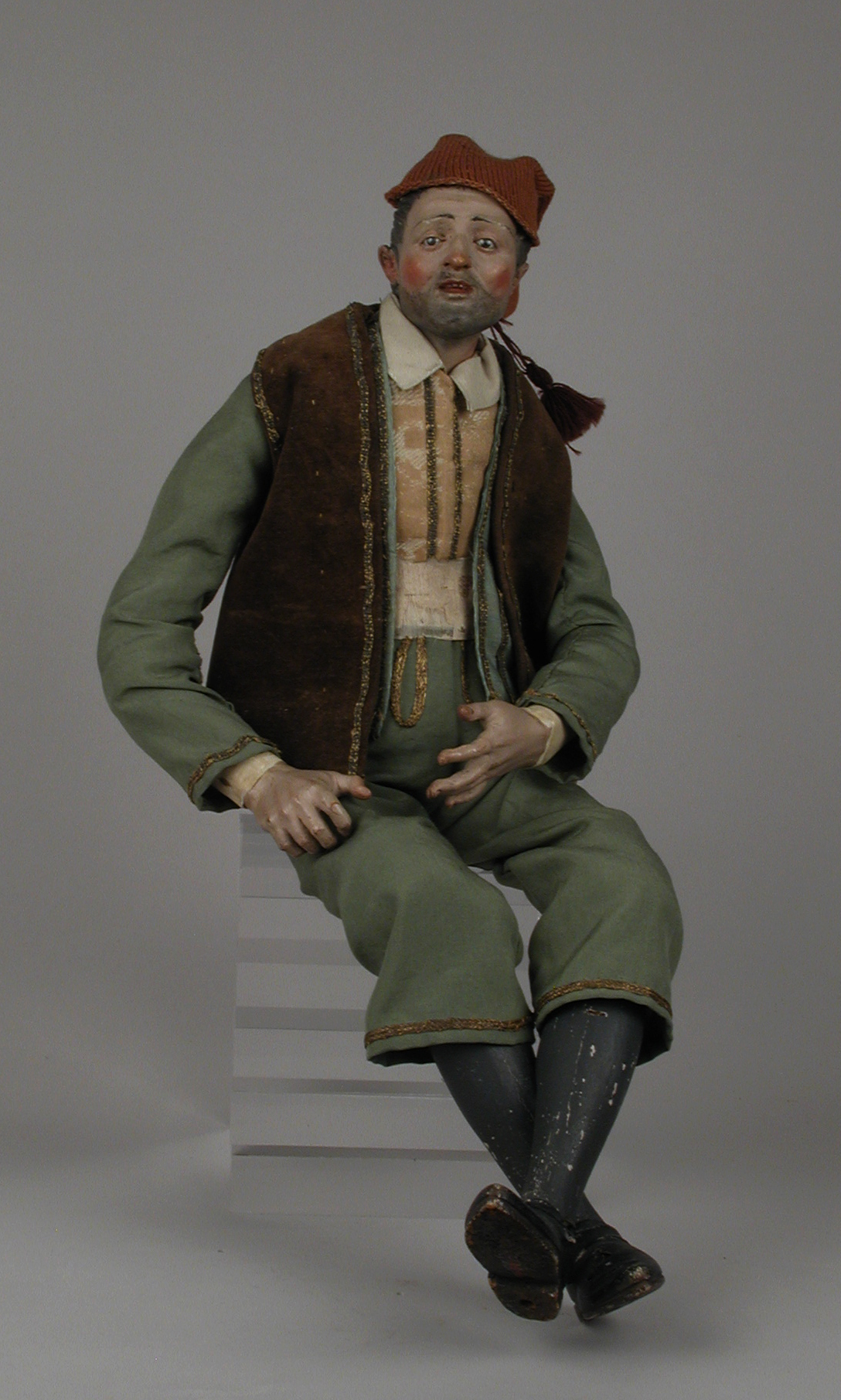
The study of historical dress artifacts often privileges the woven surface—the silk, the brocade, the embroidered panel—over the structural armature that grants them form. Yet, within the isolated archive of Natalie Fashion Atelier, a singular object demands a reversal of this curatorial gaze. This is not a garment but a composite effigy: a polychromed terracotta head, articulated wooden limbs, a torso of wire wrapped in tow, silk garments, and glass eyes. Its provenance is deliberately indeterminate—a fragment of global heritage, severed from geographic or temporal specificity. This aesthetic archaeology reveals a profound lesson for the 2026 luxury silhouette: the body is not a passive canvas but a constructed architecture, and elegance emerges from the tension between rigid substructure and fluid drapery.
For the contemporary atelier, this artifact functions as a technical manifesto. It deconstructs the classical ideal of the human form into its constitutive materials, each with a distinct behavioral language under stress, light, and movement. By isolating these components, we can extrapolate a new grammar for high-end menswear—one that moves beyond the binary of tailoring versus soft dressing toward a hybrid, engineered elegance.
I. The Polychromed Terracotta Head: The Face as a Fixed Monument
The head, rendered in fired clay and painted with mineral pigments, offers the first critical intervention. Terracotta is immutable; it does not yield to gravity or time. Its polychromy—the layered application of ochre, cinnabar, and azurite—creates a surface that is simultaneously matte and luminous, absorbing and reflecting light in a manner that synthetic dyes cannot replicate. In the 2026 silhouette, this translates to a renewed emphasis on the upper block of the garment—the shoulder line, the collar architecture, and the neckline—as a zone of sculptural permanence.
We propose the Terracotta Carapace: a structured over-collar or a reinforced yoke constructed from molded horsehair canvas and bonded micro-fiber, finished with a mineral-washed, matte coating. This element does not mimic the human neck but frames it, creating a deliberate, almost ceremonial distance between the face and the torso. The color palette for this zone must borrow from the artifact’s pigment archaeology: not the bright, saturated hues of contemporary sportswear, but the muted, chalky earth tones—burnt sienna, raw umber, and faded vermilion—that suggest age and permanence. The silhouette here is not soft; it is architectural, a fixed point from which the rest of the garment is allowed to flow.
II. Wooden Limbs and the Articulated Joint: Engineering Movement
The wooden limbs—likely carved from lime or fruitwood—are not anatomical replicas but functional levers. Their articulation points, the joints, are the loci of mechanical elegance. This is a critical departure from the organic, flesh-bound movement of the living body. The wooden arm moves with a distinct, slightly stilted precision, a choreography of pivot and swing rather than fluid muscular flexion.
For 2026, this informs the sleeve and trouser construction. We must abandon the notion of the garment as a second skin. Instead, we design for the joint as a hinge. The high-end silhouette will feature sleeves cut with a deliberate, exaggerated scye (armhole) that allows for a full, unimpeded rotation of the arm, but the sleeve body itself will be constructed with internal, articulated panels—think of a segmented sleeve where each panel is connected by a narrow, flexible gusset of technical jersey. This creates a visual and kinetic rhythm: the garment moves in discrete, controlled segments, echoing the wooden limb’s mechanical grace. Trousers, similarly, will feature a reinforced, slightly raised knee panel, not for protection but for articulation, creating a subtle, permanent crease that speaks of structure over spontaneity.
III. The Wire-and-Tow Torso: The Invisible Substructure
The most radical proposition of the artifact lies not in its visible surfaces but in its hidden core. The torso—a lattice of iron wire wrapped in coarse tow (the unprocessed flax fiber used for stuffing)—is a masterclass in invisible engineering. The wire provides tensile strength and posture; the tow provides volume and a soft, yielding resistance. This is the antithesis of modern, foam-based padding. It is a breathing architecture, one that responds to pressure and releases it, creating a dynamic, ever-shifting interior topography.
In the 2026 silhouette, this translates to a new form of internal corsetry for men, but one that is not restrictive. We introduce the Tow Chassis: a lightweight, semi-rigid understructure woven from recycled metallic threads and natural bast fibers, integrated into the lining of a jacket or coat. This chassis does not cinch the waist; it re-defines the torso’s profile from within, offering a subtle, elongated line from the chest to the hip. The result is a silhouette that appears effortless from the outside but is, in fact, a meticulously calibrated construction. The garment’s exterior fabric—be it a heavy vicuña or a fluid silk twill—is then draped over this chassis, creating a dialectic between the rigid and the fluid. The fabric is allowed to break and fold over the internal structure, producing a new, organic topography that is neither purely tailored nor purely draped.
IV. Silk Garments and Glass Eyes: The Surface as a Reflective Mirror
The silk garments adorning the effigy are not merely decorative; they are the interface between the static structure and the ambient environment. Silk, in its raw or lightly finished state, has a unique chameleonic property—it shifts in hue and sheen depending on the angle of incidence and the intensity of light. This is complemented by the glass eyes, which are not windows to a soul but highly polished, refractive lenses. They do not see; they reflect. Together, the silk and the glass create a surface that is perpetually in dialogue with its surroundings.
For the 2026 luxury silhouette, this demands a reconsideration of surface treatment. We move away from flat, dyed fabrics toward interactive, refractive textiles. Consider a double-faced silk organza, one side treated with a metallic nano-coating that mirrors the environment, the other left raw and absorbent. The garment is constructed so that the reflective side is revealed only during movement—a turn of the cuff, a lift of the arm—creating a fleeting, almost hallucinatory flash of light. The glass eye concept translates to strategically placed, polished hardware: not buttons or zippers in the traditional sense, but small, convex, mirrored discs—perhaps of oxidized silver or blackened steel—set at the points of articulation (the shoulder, the wrist, the ankle). These are not closures but observational nodes, drawing the eye of the beholder and reflecting the wearer’s environment back onto the garment itself.
V. Synthesis: The 2026 Silhouette as a Living Archive
The classical elegance of this artifact is not found in its harmony but in its productive dissonance. The hard terracotta against the soft tow; the mechanical wooden joint against the fluid silk; the opaque clay against the refractive glass. The 2026 silhouette, therefore, is not a monolithic shape but a layered system of contrasts.
We propose the Effigy Silhouette: a high-shouldered, narrow-hip line, anchored by a rigid, mineral-toned collar and a softly articulated sleeve. The torso is elongated via the internal Tow Chassis, allowing the exterior fabric to drape with a newfound, architectural weight. The overall form is one of controlled tension—a garment that holds its shape with the permanence of terracotta while moving with the segmented precision of wood, all the while reflecting the world through a lens of silk and glass. This is not nostalgia; it is a re-engineering of the human form as a site of material memory, where every element—from the invisible wire to the polished eye—contributes to a silhouette that is at once ancient and unequivocally of 2026.