The Porcelain Imperative: Deconstructing the Snuffbox for 2026 Silhouettes
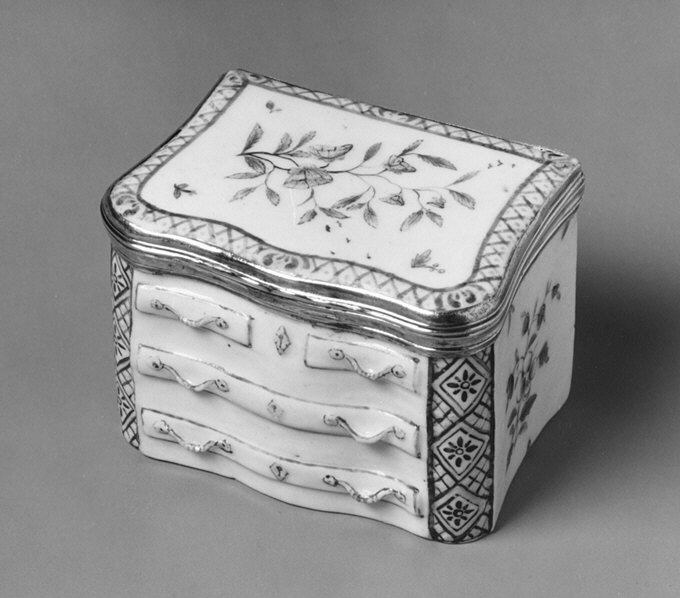
The snuffbox, a micro-architectural marvel of the 18th century, is rarely considered a primary source for contemporary haute couture. Yet, within its gilded hinges and powdered surfaces lies a masterclass in compression, contrast, and controlled opulence. For Natalie Fashion Atelier, the object—specifically a soft-paste porcelain body mounted in silver—serves not as a nostalgic relic, but as a technical blueprint. This research artifact isolates the snuffbox from its social history, treating it as pure aesthetic archaeology. The objective is to extract its structural logic and translate it into 2026 luxury silhouettes that prioritize tactile intelligence over visual noise.
Material Dialectics: Soft-Paste Porcelain and Silver
The chosen snuffbox presents a deliberate material friction. Soft-paste porcelain, unlike its hard-paste counterpart, possesses a creamy, unctuous tactility—a surface that absorbs light rather than reflecting it. It is a material of quiet, internal luminosity. The silver, conversely, is a conductor of light, sharp, and cool. This is not a simple juxtaposition; it is a dialectical relationship. The porcelain offers volume without weight, while the silver provides definition without bulk.
Translating Tactility to Textile
For 2026, this translates directly into fabric selection. The primary silhouette will be constructed from a double-faced cashmere-silk blend, treated with a matte, mineral-based finish to mimic the porcelain’s soft, non-reflective surface. The secondary material, for structural seams and architectural accents, will be a liquid metal organza—a silk organza woven with a micro-thin silver filament. The goal is not to imitate the materials, but to replicate their sensory opposition. The cashmere-silk provides a warm, almost powdery hand-feel; the organza provides a cool, crisp, and precise edge. This tactile dichotomy becomes the foundational principle of the entire collection.
Structural Grammar: The Hinge and the Lid
Beyond materiality, the snuffbox’s construction offers a profound lesson in kinetic architecture. The hinge is not merely a functional component; it is a point of tension and release. The lid, when closed, creates a sealed, hermetic volume. When open, it reveals a hidden interior—a moment of intimate disclosure. This binary of concealment and revelation is the collection’s primary narrative driver.
The "Hinge Seam" Silhouette
The 2026 signature silhouette, titled “La Charnière”, will feature a radical re-imagining of the shoulder and waistline. Instead of traditional darts or princess seams, the garment will be constructed with a single, articulated seam running from the scapula to the hip—a structural hinge. This seam is not sewn flat; it is engineered with a flexible, metallic interlining that allows the fabric to pivot and fold with the body’s movement, mimicking the snuffbox’s precise opening mechanism. The visual effect is a garment that appears rigid and sculptural when static, yet flows with an uncanny, mechanical grace in motion.
Furthermore, the "lid" concept is applied to the neckline and hem. A high, closed collar—reminiscent of the box’s sealed edge—will be constructed from the silver organza, forming a crisp, metallic frame around the face. The hem, conversely, will feature a detachable porcelain-toned underlay, creating a sense of a hidden second layer, a secret revealed only upon movement or a deliberate gesture. This is not mere decoration; it is a structural invitation to interact with the garment.
Proportion and Compression: The Micro-Macro Scale
The snuffbox is an object of extreme miniaturization. Its decorative motifs—often intricate floral sprays or mythological scenes—are rendered in a scale that demands a magnifying glass. This micro-level detail creates a paradoxical effect: the object feels both precious and monumental in its precision. For haute couture, this suggests a radical departure from oversized, amorphous shapes. The 2026 silhouette will embrace compressed, defined volumes.
The "Powdered Volume" Jacket
We propose a jacket silhouette that is deliberately short and boxy, terminating at the high hip. This is not a return to the 1960s mod cut; rather, it is a compression of the classical bar jacket. The sleeves will be set with a slight, deliberate forward pitch, echoing the rounded profile of the snuffbox. The surface will be entirely embroidered with a pattern derived from the porcelain’s painted decoration—but scaled down to a microscopic level. Using a combination of silk floss, micro-beads, and oxidized silver thread, the embroidery will read as a textured, almost abstract surface from a distance, but reveal its full, intricate narrative upon close inspection. This is where the "aesthetic archaeology" becomes literal: the garment is an artifact to be studied, not just worn.
Color Theory: The Soft-Paste Palette
The coloration of soft-paste porcelain is distinct: it is never stark white, but rather a warm, slightly ivory or celadon-tinted base. The silver mounts, over time, develop a patina—a subtle gradient from bright argent to deep, smoky grey. This temporal color shift is a critical design input.
Chromatic Sequencing for 2026
The collection will avoid primary colors entirely. Instead, it will employ a monochromatic spectrum of "porcelain neutrals": chalk, oyster, raw cream, and a faint, green-grey celadon. These will be punctuated by the "silver" accent—not a flat metallic, but a gradated, oxidized silver achieved through a combination of fabric dyeing and metallic foil application. The effect is a garment that appears to age and shift color as the wearer moves, mimicking the patina of the original artifact. This is a deliberate rejection of the hyper-saturated, digital-bright color palettes that dominate contemporary fashion. The 2026 Natalie Fashion Atelier woman does not shout; she insinuates.
Conclusion: The Artifact as Future
The snuffbox, isolated from its historical context, becomes a pure generator of form. Its lessons are not about nostalgia, but about precision, material honesty, and the poetics of closure. For 2026, the haute couture silhouette must be a sealed object—complete, intentional, and resistant to casual interpretation. By adopting the soft-paste porcelain’s tactile warmth and the silver’s structural rigor, we create garments that are not merely worn, but handled. The hinge seam, the compressed volume, and the patinated palette are not stylistic flourishes; they are the logical, technical conclusions drawn from a single, perfect object. This is the future of luxury: not louder, but more articulate.