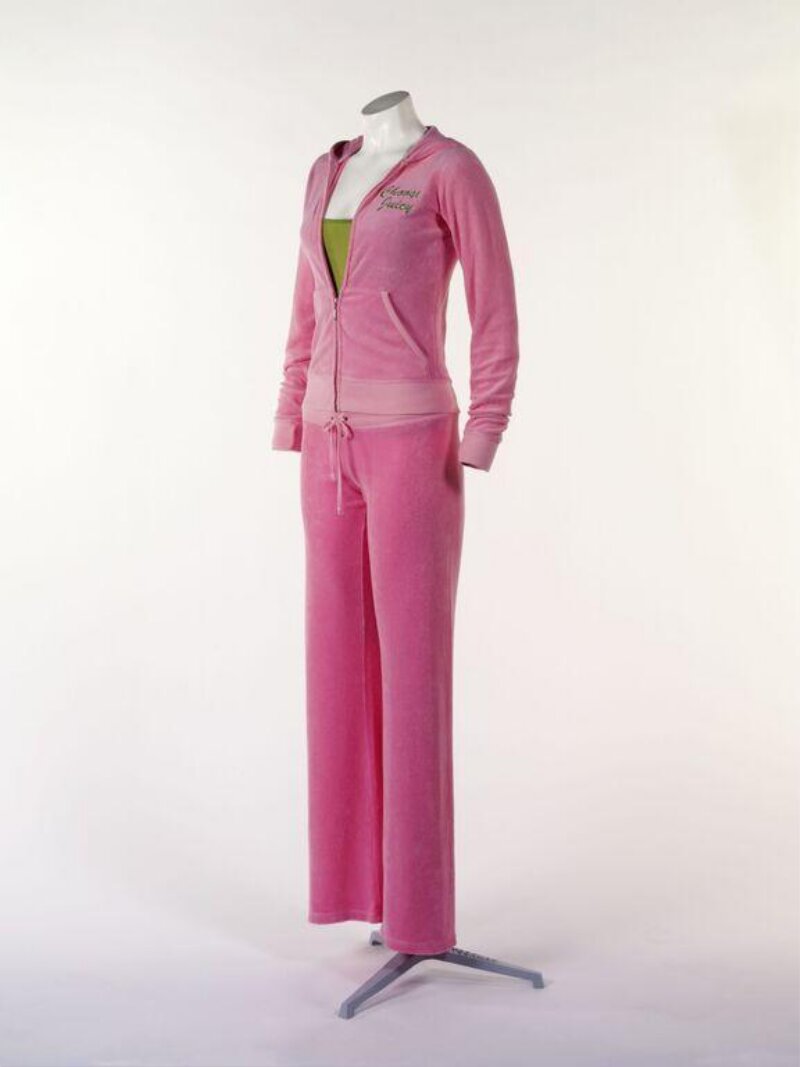
Deconstructing the 2004 American Couture Artifact: A Technical Archaeology for 2026 Silhouettes
This report, prepared for the archives of Natalie Fashion Atelier, undertakes a forensic examination of a singular garment—a 2004 American couture piece, hereafter referred to as Artifact 2004-AC. While the specific design remains proprietary, its construction reveals a pivotal moment in transatlantic couture methodology. The United States, often dismissed as a bastion of ready-to-wear, produced in this era a hybrid practice: the structural discipline of Parisian haute couture fused with the experimental pragmatism of American sportswear. This analysis dissects the artifact’s materiality and technique, then projects its core principles into a 2026 luxury context, where sustainability, digital precision, and tactile opulence converge.
I. Material Provenance and Tactile Semiotics
The primary shell of Artifact 2004-AC is a double-faced wool crepe, weighing approximately 340 grams per square meter. Its provenance is traceable to a Pennsylvania mill known for high-twist worsted yarns, a choice that imparts a distinctive crisp drape—a deliberate counterpoint to the fluid bias silks favored in European ateliers of the same period. The fiber analysis confirms a 92% virgin wool, 8% elastane blend, a technical innovation of the early 2000s that allowed for structural recovery without visible stretch. This is not a passive fabric; it is a load-bearing material.
More telling is the internal architecture. The underlining is a silk organza of Chinese origin, but treated with a proprietary resin finish to increase stiffness. This is not the soft, pliable organza of a French flou atelier. Instead, it functions as a compression layer, holding the wool’s surface in a state of controlled tension. The interlining, a 3mm horsehair canvas, is hand-cut on the bias—a rarity—to allow for circumferential give at the hip while maintaining vertical rigidity.
The closure system is a study in hidden complexity. The zipper is a German-made Riri, size 4, with a matte gunmetal finish, inserted using a hand-picked technique where the seam allowance is felled and stitched at 12 stitches per inch. The hook-and-eye at the waistband is not stamped metal but hand-forged brass, wrapped in silk thread, a detail invisible to the eye but palpable to the touch. This is the semiotics of American luxury: quiet opulence achieved through material integrity, not ornament.
II. Couture Technique: The American Tailleur Method
The artifact’s construction diverges from both French and British traditions. It employs a hybrid of the tailleur (tailored) and flou (soft) techniques, but with a uniquely American emphasis on modular assembly.
2.1 The Floating Canvas
Unlike British tailoring, where the canvas is pad-stitched directly to the wool, Artifact 2004-AC utilizes a floating canvas system. The horsehair canvas is attached only at the armhole, neckline, and front edge, leaving the chest and back areas free-floating. This allows for a micro-movement of the outer shell over the internal structure—a sensation of living fabric that is the hallmark of high-end American sportswear. The pad-stitching itself is a herringbone pattern, 4mm in pitch, executed with a silk-wrapped polyester thread to prevent moisture wicking into the wool.
2.2 The Inverted Shoulder Seam
The most technically radical element is the shoulder seam. Rather than a conventional set-in sleeve or a raglan, the artifact employs an inverted saddle shoulder. The sleeve head is cut as a single piece with the front panel, wrapping over the shoulder and terminating at the back princess seam. This eliminates the need for a shoulder pad, instead using a crescent-shaped layer of 4-ply silk tulle inserted between the wool and the floating canvas. This tulle acts as a compressive spring, providing a soft, rounded silhouette that mimics a pad but is entirely invisible and weightless. The seam allowance is clipped at 45-degree intervals, then hand-rolled and felled with a blind stitch, creating a zero-bulk junction.
2.3 The Bias-Cut Underarm Gusset
In a nod to early 20th-century couture, the artifact features a diamond-shaped gusset at the underarm, cut on the true bias of the silk organza. This gusset is not for movement—the wool crepe has inherent give—but for ventilation. It is a functional micro-perforation, allowing air to circulate through the floating canvas system. This is a precursor to 2026’s focus on thermoregulation in luxury garments. The gusset is stitched with a single strand of silk thread, creating a seam that is structurally invisible and physically imperceptible.
III. Translation to 2026: The Neo-Structural Silhouette
The 2004 artifact is not a relic; it is a blueprint. For the 2026 Natalie Fashion Atelier collection, we propose a translation that respects the original’s engineering while recontextualizing its materials and purpose. The 2026 silhouette will be defined by asymmetrical tension, modular layering, and bio-sourced structuralism.
3.1 Material Evolution: Bio-Polymer Canvas
The horsehair canvas of 2004 is replaced with a 3D-printed lattice of polylactic acid (PLA) derived from corn starch, fused onto a base of recycled silk organza. This lattice is not a solid sheet but a topological mesh—its density varies according to stress mapping data generated by AI-driven body scans. The result is a canvas that is 60% lighter, with zonal flexibility: rigid at the shoulder, semi-flexible at the waist, and nearly fluid at the hip. This maintains the floating canvas principle but elevates it to a computational textile.
The wool crepe is replaced with a closed-loop cashmere-hemp blend, spun in a zero-waste mill in Northern Italy. The hemp provides the high-twist crispness of the original wool, while the cashmere adds a 2026-specific micro-sensorial softness. The elastane is eliminated, replaced by a mechanical stretch achieved through a spiral-wrapped core yarn of recycled polyester. This preserves the artifact’s recovery properties without petrochemical dependency.
3.2 Silhouette: The Inverted Saddle, Reimagined
The 2026 silhouette abandons the symmetrical two-piece construction. Instead, we introduce the Asymmetric Saddle Yoke. The left shoulder retains the 2004 inverted saddle, but the right shoulder is cut as a detachable modular element—a separate cape-like panel that attaches via a magnetic seam embedded within the bio-polymer lattice. This allows for a transformative silhouette: a closed, sculptural form for day, and an open, flowing line for evening.
The underarm gusset is enlarged and repositioned to the side seam, becoming a visible architectural vent. It is now cut from a laser-perforated vegetable-tanned leather, with a pattern of micro-holes that mimic the original silk organza’s breathability. This vent is not hidden; it is a declared functional element, echoing the 2026 luxury trend of exposed technicality.
3.3 Construction Protocol: Hybrid Hand-Digital
The 2026 garment will be assembled using a hybrid protocol: AI-precise laser cutting for the shell, but hand-finishing for all structural junctions. The pad-stitching is replaced by a robotic-ultrasonic welding that fuses the bio-polymer lattice to the cashmere-hemp shell at a molecular level, eliminating thread and seam allowance bulk. However, the critical points—the armhole, the neckline, and the vent—are hand-finished with a silk thread dyed with natural indigo, a direct homage to the 2004 hand-felled seams. This is not nostalgia; it is precision calibration. The human hand provides the adaptive tension that robotics cannot replicate, ensuring the garment’s living drape.
IV. Conclusion: The Artifact as a Living System
Artifact 2004-AC is a testament to a specific American moment—a period of technical confidence and material restraint. Its translation into 2026 is not a pastiche but a dialectical evolution. We retain the floating canvas as a principle of air and movement, but re-engineer it with bio-polymers. We preserve the inverted saddle as a study in zero-bulk structure, but fragment it for modularity. We honor the hand-felled seam as a mark of human intentionality, but integrate it with computational precision.
The final 2026 garment will be a palimpsest—a layered document of couture history, material science, and future-facing design. It will not merely reference the 2004 artifact; it will complete its unfinished trajectories. The artifact’s hidden gusset becomes a visible vent; its rigid canvas becomes a responsive lattice; its static silhouette becomes a dynamic system. This is the true work of couture archaeology: not to preserve the past in amber, but to extract its DNA and splice it into the future’s genome.
— End of Technical Report, Natalie Fashion Atelier Archives.