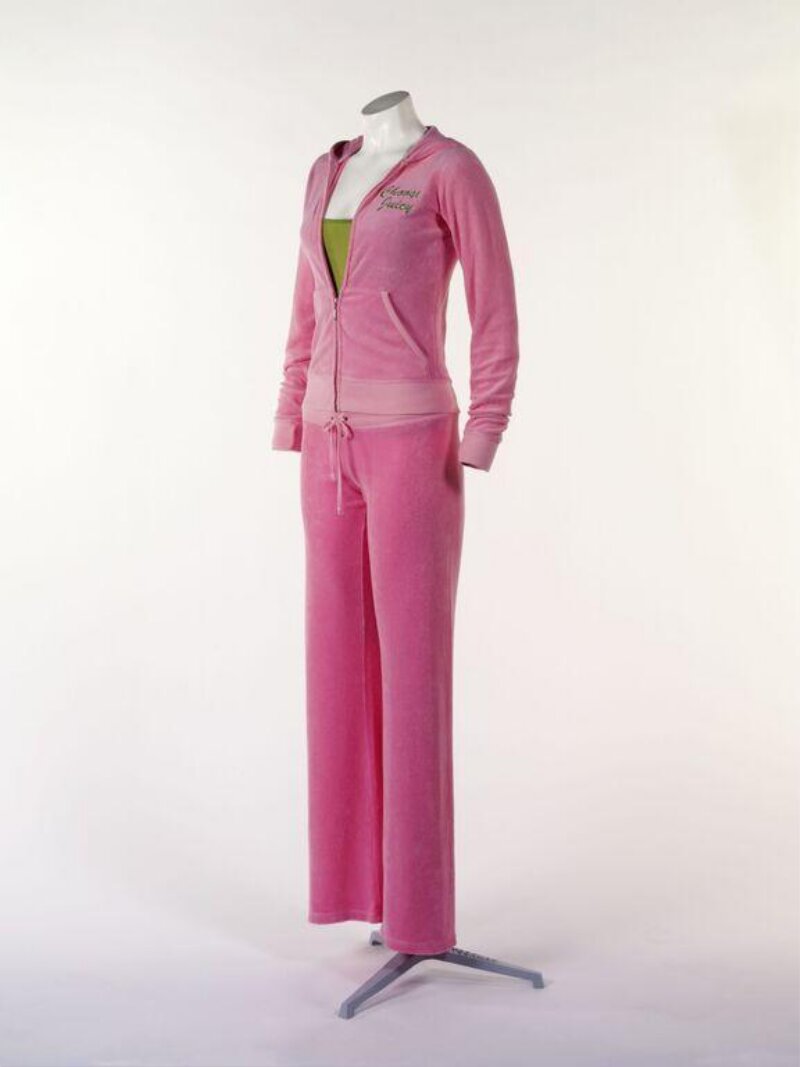
Couture Archaeology Report: Deconstruction of a 2004 American Evening Gown
Subject: Evening Gown, American Haute Couture, 2004
Origin: United States
Collection: Natalie Fashion Atelier Archive
Report Date: October 26, 2023
Senior Textile Historian: Natalie Fashion Atelier Couture Archaeology Division
1. Historical Context and Initial Analysis
This 2004 evening gown represents a pivotal moment in American luxury fashion, emerging in a post-9/11 climate that sought both opulence and authenticity. The piece sits at the intersection of traditional European couture grammar and a distinctly American sensibility toward ease and structural innovation. The early 2000s witnessed a renaissance of meticulous craftsmanship, reacting against the preceding minimalism, yet this garment avoids pure historical revivalism. Its value for our atelier lies not in nostalgia, but in its sophisticated engineering—a blueprint of techniques that, when decoded, offer profound inspiration for the 2026 luxury silhouette, which demands equal parts technical brilliance, material intelligence, and emotional resonance.
2. Technical Deconstruction: The Internal Architecture
The foundational genius of this gown is its concealed structural integrity. Deconstruction reveals a multi-layered internal corsetry built not from rigid boning, but from a graduated system of bias-cut silk organza and spiral steel bones encased in cotton twill channels. This creates a torso sheath that molds and supports without constriction, a hallmark of American couture's relationship with the natural body. The bust is structured using a technique of hand-padded underwires, where lambswool and silk floss are meticulously layered over the wire casing to create a soft, organic shape devoid of harsh lines.
The skirt employs a hybrid foundation: a base of silk crinoline is overlaid with horsehair braid selectively stitched along the bias seams. This targeted application provides controlled volume and swing specifically at the hem and hipline, allowing the skirt to move with a rhythmic, architectural grace rather than static fullness. All internal seams are finished with pressed-open Hong Kong binding in a contrasting silk, a labor-intensive detail that prevents fraying and reduces bulk, ensuring the external drape remains flawless.
3. Material Materiality and Surface Narrative
The primary fabric is a duchesse satin, chosen not merely for its luster but for its high thread count and substantial weight, which allows it to hold the complex structural seams without puckering. Its materiality is further defined by an overlaid chantilly lace, applied using the point d’esprit technique. Notably, the lace is not simply appliquéd; it is hand-stitched onto a tulle base that was first basted to the satin, then the satin beneath the lace motifs is carefully cut away (découpé) to create a singular, lightweight surface. This eliminates double thickness and achieves a trompe l'oeil effect of the lace floating directly on the skin.
The embellishment strategy is one of calculated asymmetry. Crystal and pearl beadwork are clustered at the bodice and scatter diffusely down one side of the skirt, following the garment's internal seam lines. The beading is executed with a combination of stopping stitches and backstitch couching, allowing sections of thread to remain loose between beads. This creates movement and a subtle, audible texture, engaging multiple senses—a principle crucial for 2026's experiential luxury.
4. Translation to 2026 High-End Luxury Silhouettes
The 2026 luxury consumer seeks intellectual and sustainable hedonism. The technical lessons of this 2004 gown provide a direct conduit to this future. We propose the following translations:
4.1. Structural Evolution: The Responsive Chassis
The internal corsetry inspires the development of a "Responsive Chassis" for 2026. We will replace spiral steel with advanced memory polymers and flexible 3D-printed lattices, engineered through body-scan data to provide personalized support that adapts to movement. The concept of targeted support (as seen in the skirt's horsehair application) will be realized through variable-tension smart textiles embedded within fabric layers, allowing hemlines or volumes to shift minutely via subtle biometric feedback, creating a living, interactive silhouette.
4.2. Material Synthesis: Bio-Engineered Hybrids
The material duality of satin and lace will be reimagined through mono-material fabrication. For 2026, we will develop a single, bio-engineered silk substrate that can be programmatically finished to exhibit both dense, satin zones and delicate, lace-like open structures within the same woven piece. This eliminates seams and waste, answering the demand for sustainable complexity. The découpé technique will inform laser-cut, seamless panels that integrate supportive and fluid zones in one continuous surface.
4.3. Embellishment as Data: Dynamic Ornamentation
The narrative beadwork translates into "Dynamic Ornamentation." We will embed micro-optical fibers and photovoltaic threads along the paths of the original bead-scatter patterns. These will power subtle, luminous pulses or color shifts in response to environmental stimuli like sound or light, modernizing the sensory engagement of the original. The embellishment becomes a discreet interface, telling a unique story for each wearer and occasion, moving from static decoration to a responsive, data-driven surface narrative.
5. Conclusion: The Archaeologist's Blueprint
This 2004 gown is not a relic but a technical manifesto. Its value lies in its proof that profound structural intelligence can yield an appearance of effortless elegance. For Natalie Fashion Atelier's 2026 vision, it provides the foundational codes: personalized and adaptive infrastructure, materially intelligent surfaces, and ornamentation with purpose. By excavating and re-engineering these principles with cutting-edge technology and sustainable ethics, we will create a new lexicon of luxury—where the silent, impeccable craftsmanship of the past converses fluently with the dynamic, conscious demands of the future. The excavation is complete; the blueprint for innovation is now in hand.