From the Orchestral Void: The Clarinet in A as a Blueprint for 2026 Silhouettes
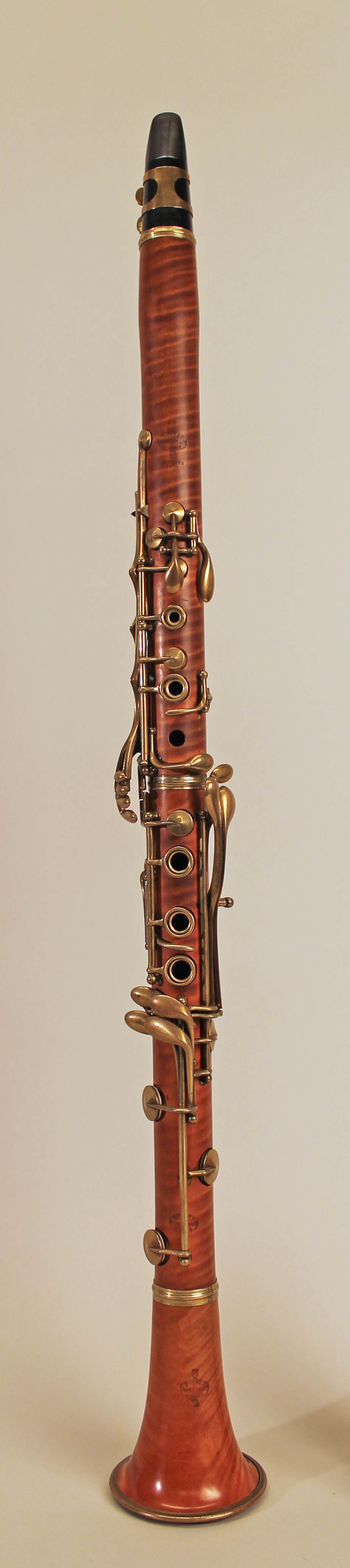
The archive presents a singular artifact: a Clarinet in A, French-made, circa 1890. It is not merely an instrument but a relic of aesthetic archaeology, a distillation of a specific moment in Parisian craftsmanship. Its materiality—unadorned boxwood, brass fittings, and a whisper-thin gold wash—offers a lexicon of restraint and precision that speaks directly to the structural ambitions of 2026 haute couture. For Natalie Fashion Atelier, this object is not a source of literal inspiration but a structural thesis on how volume, line, and surface interact to create a silhouette that is at once monumental and ethereal.
Deconstructing the Classical: Materiality as a Design Language
The Clarinet in A is a masterclass in hierarchical material composition. The boxwood body, with its warm, honeyed patina, provides a foundational softness—a visual and tactile warmth that is antithetical to the cold precision of modern industrial design. This is the primary mass of the garment: the body of the silhouette. In 2026, we translate this into sculpted, matte wool crepes and double-faced cashmere, cut with a bias that mimics the instrument’s gentle, organic taper. The wood’s subtle grain is echoed in the use of technical jacquards that replicate a micro-texture, visible only at close range, adding depth without disrupting the clean line.
The Brass Line: Architectural Skeleton
Contrasting the wood’s warmth is the brass. This is not a decorative afterthought but the articulation system of the object. The keys, levers, and rods form a complex, linear exoskeleton that dictates the instrument’s function and its visual rhythm. For the atelier, brass represents the structural seam—the exposed boning, the metallic zipper track, the lacquered piping that runs along a princess seam. In 2026, we propose silhouettes where this "brass" is not hidden but celebrated as an architectural feature. A column gown, for instance, is anchored by a continuous, gunmetal-finish brass rail that traces the spine, culminating in a sculptural, articulated collar. This line does not merely hold the garment; it conducts the eye, creating a visual melody from nape to hem.
The Gold Wash: Luminescence and Transience
The final layer—the thin gold wash—is the most intellectually provocative. It is not a solid, opulent gilding but a suggestion of value, a transient shimmer that catches light only at specific angles. This is the surface treatment of 2026: not embroidery for its own sake, but a strategic application of light. We interpret this as micro-sequin work in antique gold, applied only to the shoulder blades or the inner forearm, creating a mouvement that is revealed in motion. Alternatively, it manifests as a liquid-metal foil laminated onto sheer organza, used as an underlay. The gold does not shout; it whispers, offering a moment of quiet luxury that distinguishes the connoisseur from the casual observer.
Informing the 2026 Silhouette: A Tripartite Structure
The Clarinet in A offers a tripartite structural model for the haute couture silhouette: the Barrel, the Keywork, and the Bell. Each segment informs a distinct approach to volume and drape.
The Barrel: Controlled Cylindrical Volume
The upper joint of the clarinet is a near-perfect cylinder, but its elegance lies in its slight deviation from geometric perfection. This informs the 2026 sheath and column silhouettes. We are moving away from the aggressive, body-con compression of the past decade. Instead, the new silhouette is a fluid cylinder—cut with a zero-ease waist but with a subtle A-line flare from the high hip, achieved through a gored construction that mimics the instrument’s taper. The fabric is chosen for its "memory" and "drape," allowing the garment to hold a soft, cylindrical shape without clinging. The result is a form that is disciplined yet alive, a controlled volume that suggests the breath of the musician.
The Keywork: Asymmetric Articulation
The keys are not symmetrical; they are placed ergonomically to serve the hand. This asymmetry is a powerful tool for 2026. We propose asymmetric closures and single-sleeve constructions that disrupt the classical balance of the silhouette. A tailored jacket, for example, features a single, sculpted sleeve that extends into a pointed cuff, while the opposite arm is left bare, revealing a complex, brass-hinged harness underneath. This is not deconstruction for shock value; it is a functional articulation of the body’s movement, echoing how the clarinetist’s fingers dance over the keys. The garment becomes a partner in motion, not a static shell.
The Bell: The Flared Conclusion
The bell is the instrument’s most dramatic gesture—a sudden, parabolic flare that projects sound outward. In couture, this translates to the grand exit or the cape silhouette. The 2026 evening coat will feature a bell-shaped hem that flares from a fitted shoulder and waist, constructed with a hidden understructure of horsehair canvas and brass wire to hold its shape. The interior of this "bell" is lined with a gold-washed silk, so that with every step, a flash of luminescence is revealed—the instrument’s inner resonance made visible. This is not a train; it is a sonic volume made fabric, a final statement of presence that commands the room without a single note.
Synthesis: The Quiet Power of the Artifact
The Clarinet in A is a profound lesson in aesthetic economy. It achieves its grandeur not through excess but through the precise calibration of three distinct material voices. For Natalie Fashion Atelier, the 2026 collection is not a costume of an instrument but an embodiment of its logic. The boxwood teaches us the value of a warm, foundational mass. The brass teaches us the power of a visible, functional line. The gold wash teaches us that true luxury is a fleeting, intimate revelation.
The resulting silhouette is one of quiet authority—a column that breathes, a shoulder that articulates, a hem that flares with purpose. It is a garment for the modern virtuoso, the woman who understands that true elegance is not about volume or embellishment, but about the precision of the cut and the intentionality of every line. The clarinet, silent in the archive, becomes the loudest statement of 2026: a return to the discipline of structure, the poetry of material, and the timeless power of a well-considered silhouette.