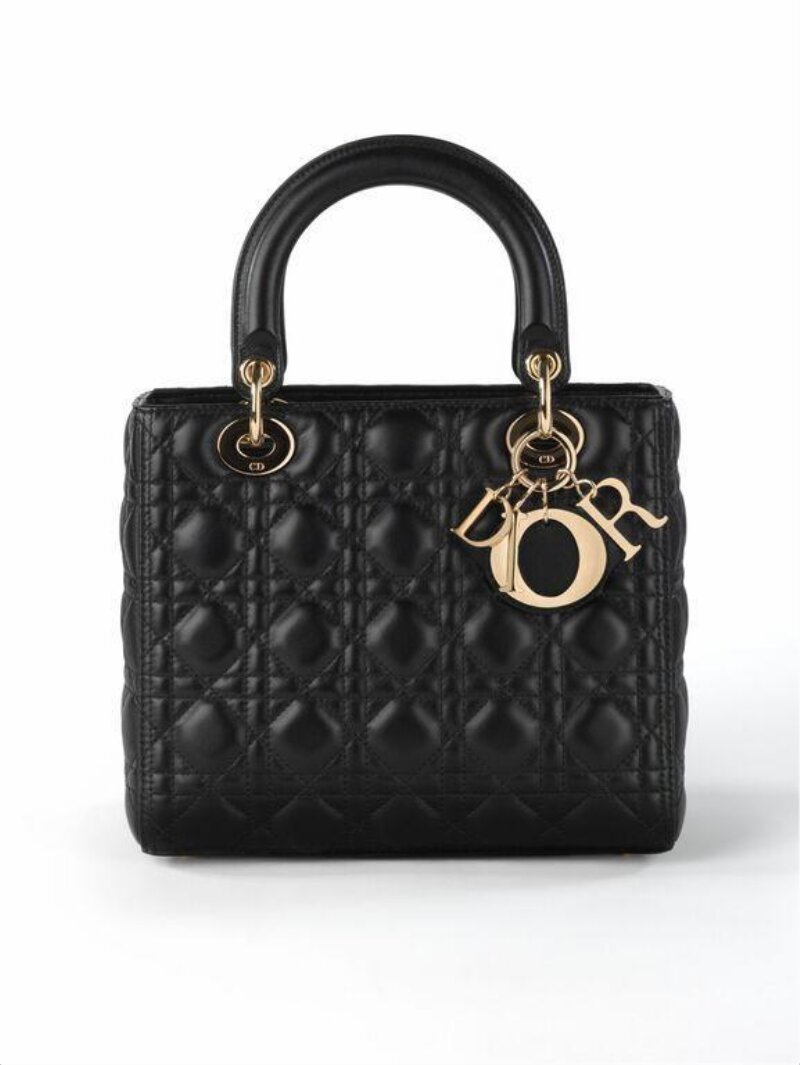
Couture Archaeology Report: The Lady Dior Handbag (2020) and Its Projection into 2026 Luxury Silhouettes
I. Introduction: The Artifact as a Technical Lexicon
Within the ateliers of Natalie Fashion Atelier, the study of historical luxury objects is not an act of nostalgia but a forensic discipline. The 2020 iteration of the Lady Dior handbag—a canonical piece of French leather goods—serves as a masterclass in material manipulation and geometric precision. This report undertakes a technical deconstruction of the bag’s construction, focusing on its signature cannage quilting, structural hardware, and the specific materiality of its calfskin. The objective is not to replicate the artifact but to extract its tactile and architectural DNA, translating these principles into forward-thinking silhouettes for the 2026 haute couture season. The Lady Dior is not merely a bag; it is a portable manifesto of Dior’s atelier logic—one that privileges tension, rhythm, and the illusion of softness over rigidity.
II. Technical Deconstruction: The Cannage Matrix and Material Integrity
The defining feature of the 2020 Lady Dior is its cannage quilting, a pattern inspired by the Napoleon III chairs used by Christian Dior for his 1947 fashion show. From a textile engineering perspective, the 2020 rendition is a study in controlled dimensionality. The pattern is not printed or embossed; it is achieved through a complex process of thermal pressing and multi-layer lamination. The outer layer is a grained calfskin, chosen for its natural tensile strength and its ability to hold a crease without cracking. Beneath this, a thin layer of polyurethane foam (approximately 3mm) is bonded to a cotton canvas backing. This composite is then subjected to a heated die that compresses the foam in a grid of diagonal lines, creating a raised, diamond-shaped relief. The result is a surface that reads as plush but feels firm to the touch—a paradox of softness and structure.
Critically, the 2020 model deviates from earlier iterations by using a softer, more pliable calfskin (often referred to as *veau lisse* or *veau grainé* depending on finish). This shift in materiality alters the bag's drape. The leather is tanned using a vegetable-based process, allowing for a subtle, organic patina over time. The stitch work is equally significant: the quilting is held together by single-needle saddle stitching using waxed linen thread, a technique that ensures longevity but also creates a visible, handcrafted rhythm. The thread tension is calibrated to compress the foam by exactly 40%, preventing the "pillow" effect seen in lesser imitations while maintaining a tactile bounce.
The hardware—the D.I.O.R. charms—are not mere decorative appendages. Each letter is die-cast in a zinc alloy, then plated with a palladium finish to achieve a matte, near-silver luster. The letters are hung on a single, seamless ring that is welded shut, not soldered, to prevent distortion. The handles are constructed from a rigid PVC core wrapped in the same calfskin, then hand-stitched to the bag’s body at precise 15-degree angles. This angular attachment is crucial: it distributes the bag’s weight evenly across the top rail, preventing sagging in the base. The base itself is reinforced with a hidden metal plate, but crucially, the leather is wrapped over the plate rather than glued, allowing for a clean, uninterrupted silhouette.
III. Materiality as a Narrative: From Calfskin to Sensorial Memory
In the context of high-end luxury, materiality is not just about durability; it is about sensory storytelling. The 2020 Lady Dior’s calfskin is selected from a single tannery in Tuscany, where the hides are sourced from European steers raised without barbed wire—a detail that ensures a pristine surface. The tanning process uses chestnut and mimosa bark extracts, which impart a subtle, earthy scent that persists for years. This olfactory dimension is often overlooked in technical analysis, yet it contributes to the object’s perceived value. The leather’s grain is not sanded or buffed to a high shine; instead, it retains a micro-texture that catches light at varying angles, creating a moiré effect when the bag is moved.
Furthermore, the interior lining of the 2020 model is a microfiber suede in a deep burgundy—a deliberate contrast to the exterior’s neutral tones. This hidden color choice is a signature of Dior’s atelier logic: the interior is a private space, designed for the owner’s tactile pleasure. The lining is bonded to a non-woven interfacing to prevent stretching, and the internal pocket is set at a depth of 12cm, optimized for modern smartphone dimensions. The zipper pull is a leather-wrapped tab, again using the same calfskin, ensuring a cohesive haptic experience from exterior to interior.
This materiality translates directly to 2026 couture silhouettes. The principle of “controlled softness”—where a material appears pliable but behaves structurally—can be applied to evening gowns and tailored jackets. For instance, a 2026 cocktail dress might employ a double-faced wool crepe that is thermally pleated in a cannage-like grid, creating a bodice that molds to the body without needing boning. The leather’s matte palladium finish inspires a new treatment for metallic threads: a brushed, low-luster lamé that absorbs light rather than reflecting it, producing a modern, understated opulence.
IV. Translation into 2026 High-End Luxury Silhouettes
The Lady Dior’s technical principles—geometric tension, layered composites, and hidden reinforcement—offer a blueprint for 2026’s haute couture. The first translation is the “Cannage Corset” gown. Here, the house will use a laser-cut, heat-set polymer mesh as the base, overlaid with bias-cut silk organza. The organza is pleated in a diagonal grid, echoing the bag’s quilting, but the pleats are heat-set to a depth of 2mm, creating a topographic surface. The gown’s silhouette is a column, but the cannage pattern is scaled up by 300%, turning the texture into a graphic, architectural statement. The waist is cinched not by a belt but by a rigid, leather-wrapped basque, mirroring the bag’s handle attachment. This basque is constructed from a 3D-printed titanium core, covered in the same vegetable-tanned calfskin, allowing for a perfectly smooth, unbroken curve.
The second translation is the “D.I.O.R. Harness” jacket—a cropped bolero that features oversized, detachable letter charms as functional fasteners. The charms are not merely decorative; they are engineered as magnetic closures, with each letter containing a rare-earth magnet that aligns with a corresponding socket on the jacket’s placket. This allows the wearer to reconfigure the jacket’s closure, shifting from a high-neck to a deep V-neck. The jacket’s fabric is a technical faille, woven with a high-twist yarn that provides a subtle, ribbed texture reminiscent of the bag’s leather grain. The shoulders are padded with a memory foam composite, similar to the bag’s internal layer, which returns to its original shape after compression—a nod to the bag’s resilience.
Finally, the 2026 “Palladium Evening” coat applies the hardware’s matte finish to a full-length silhouette. The coat is cut from a double-faced cashmere, but the surface is treated with a plasma-coating technique that deposits a micro-thin layer of titanium dioxide, creating a matte, metallic sheen without adding weight. The coat’s seams are not sewn but welded using ultrasonic technology, a method borrowed from the bag’s welded handle ring. This creates a seamless, sculptural form that moves like liquid but holds its shape like armor. The interior is lined with the same burgundy microfiber suede, creating a private, sensual experience for the wearer.
V. Conclusion: The Future as a Function of the Past
The 2020 Lady Dior is not a static relic but a living technical document. Its cannage pattern teaches us about rhythm and compression; its calfskin teaches us about the marriage of strength and softness; its hardware teaches us about precision and permanence. For Natalie Fashion Atelier, the translation into 2026 is not about copying a bag but about internalizing its atelier logic. The future of luxury lies not in novelty for its own sake, but in the intelligent reapplication of proven technical principles—where a handbag’s hidden metal plate becomes a gown’s invisible structural seam, and where a welded ring becomes a coat’s seamless silhouette. The Lady Dior, in its quiet, geometric perfection, remains a benchmark for what haute couture can achieve when materiality and mathematics converge.