The Étui as Architectural Blueprint: Translating Sealed Prestige into 2026 Silhouettes
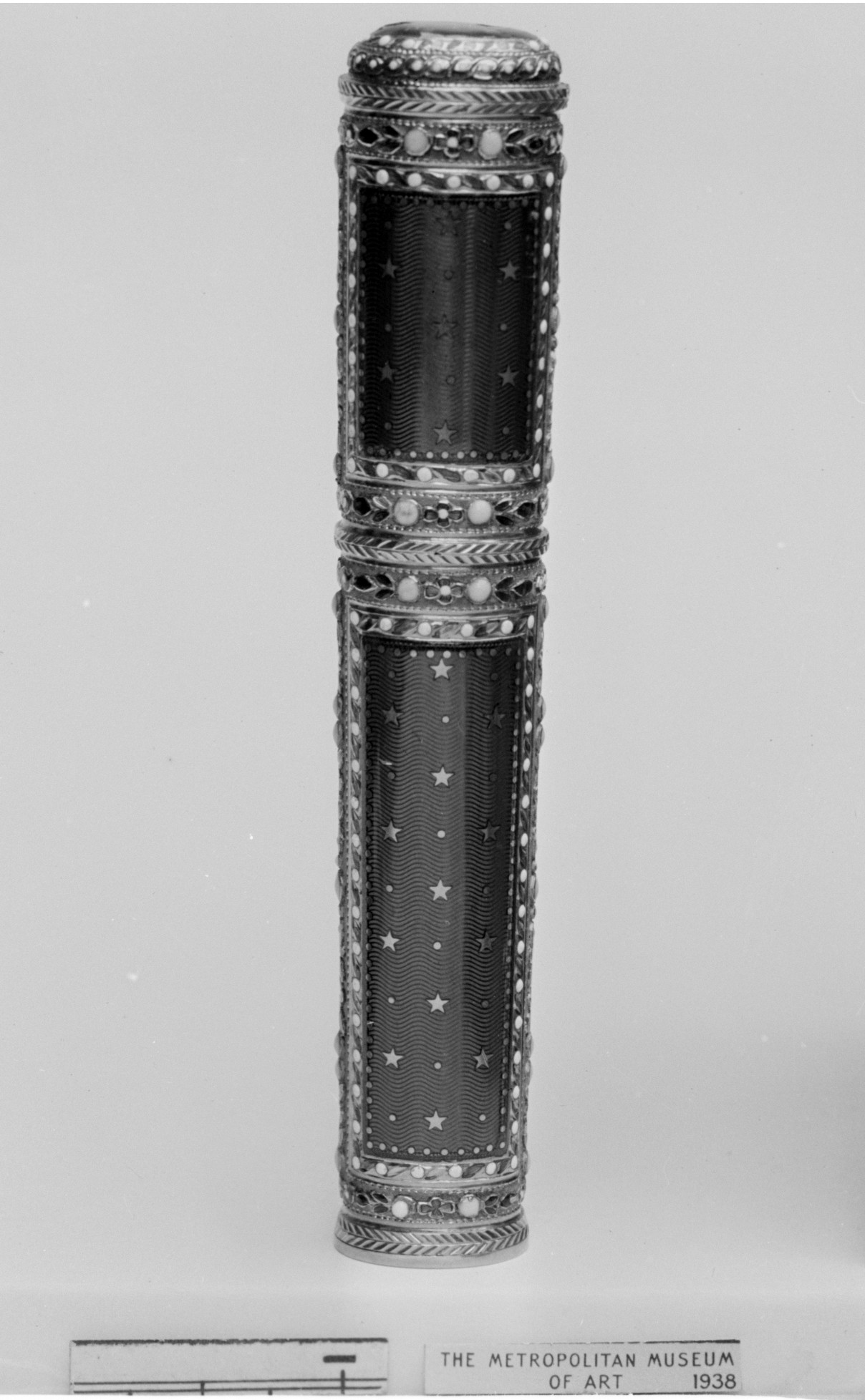
The sealing wax case, or étui, represents a pinnacle of micro-architectural luxury—an object whose entire raison d’être is the protection and ceremonial deployment of a singular, transformative substance. Crafted in gold and adorned with enamel, these portable caskets were not mere containers but portable declarations of sovereignty, compressing the ritual of authentication into a gesture of refined power. For Natalie Fashion Atelier, the 2026 collection draws upon this isolated artifact not for its nostalgic charm, but for its structural logic: the interplay of rigid metallic containment, the chromatic tension of fired enamel, and the ergonomic precision required for a single, decisive action. This research artifact deconstructs the étui’s classical elegance to extract a technical lexicon for high-end silhouettes that prioritize controlled volume, luminous surface, and ceremonial closure.
I. Material Dialectics: The Gold Scaffold and the Enamel Skin
The foundational dialogue within the étui is one of opposition and synthesis. Gold provides the unyielding armature—a material that does not age but accrues patina, signifying permanence and intrinsic value. Enamel, conversely, is a material of fire and fragility, a vitreous skin that captures light with a depth impossible in polished metal. In the 2026 silhouette, this dialectic translates into a dual-layer construction philosophy. The outer shell of a couture gown or tailored jacket must function as the gold: structured, architectural, and self-supporting, using high-tensile wools or metallic-shot silks that hold a precise, engineered line. The inner layer, visible only through strategic apertures or at moments of movement, becomes the enamel—a fluid, iridescent surface using liquid silk satins or hand-painted organza that shifts hue under varying light.
The technical innovation lies in the transition seam. Just as the goldsmith creates a delicate bezel to hold the enamel without fracture, the 2026 atelier employs a floating chassis technique. Here, the rigid outer fabric is connected to the inner luminous layer via a micro-channel of air, allowing for independent movement. This prevents the “enamel” layer from wrinkling while preserving the sculptural integrity of the “gold.” The result is a garment that breathes with the wearer yet maintains an unyielding, statuesque presence—a direct homage to the étui’s ability to appear immutable while being eminently portable.
II. Chromatic Strategy: The Enamel Palette as Narrative Device
Historical étuis employed basse-taille and champlevé enamel techniques to create gradients that mimicked the depth of gemstones. The 2026 palette is not decorative but semantic. We extract three primary chromatic archetypes from the artifact: the Imperial Bleu de Roi, the Vert Absinthe, and the Blanc de Limoges. These are not applied as flat colors but as luminous strata. For instance, a cocktail dress in the 2026 line will not simply be blue; it will be constructed with a base of deep indigo silk, overlaid with a translucent tulle printed with a micro-pattern of gold leaf, and finished with a high-gloss, resin-coated panel at the bodice that mimics the reflective quality of fired enamel.
This chromatic strategy extends to negative space. The gold of the étui often remains unadorned, serving as a visual pause that heightens the enamel’s intensity. In silhouette terms, this translates to strategic exposure of the underlayer. A high-neck, long-sleeve gown might feature a dramatic backless cut, where the exposed skin acts as the “gold” ground, while the front panel is a riot of enamel-inspired embroidery. The skin is not merely revealed; it is framed as a precious metal, elevating the human form to the status of the artifact itself.
III. Ergonomic Ceremony: The Silhouette of the Single Gesture
The étui’s ergonomic design is predicated on the ritual of the seal—the act of melting wax, applying it, and pressing the signet. This is a gesture of finality and authority. The 2026 silhouette borrows this principle through kinetic closures and articulated panels. We are developing a series of evening coats and gowns where the primary structural element—a train, a collar, or a sleeve—is designed to be released in a single, deliberate motion. The closure mechanism is not a hidden zipper but a visible, gold-toned clasp that echoes the signet ring’s profile. The act of unclasping becomes a performative moment, transforming the garment from a sealed, formal shell into a more fluid, expressive second layer.
This ergonomic focus also dictates the shoulder line. The étui’s profile is compact and rounded, with no sharp protrusions. Therefore, 2026 avoids the aggressive, padded shoulder. Instead, we employ a cocooned cap—a sleeve head that is internally structured with a horsehair canvas and externally smooth, creating a subtle, rounded dome that mimics the lid of the case. This provides a sense of imperial volume without bulk, allowing the wearer’s gesture to be the primary focal point. The waist is similarly defined not by cinching but by architectural negative space, using a peplum or a basque that is cut away to reveal the enamel underlayer, much like the gold filigree that exposes the enamel beneath.
IV. Temporal Patina: Designing for the Future’s Past
A final, critical extraction from the étui is its relationship with time. These objects were designed to be heirlooms, their value increasing with age. The 2026 haute couture silhouette must therefore reject the ephemerality of seasonal fashion. We achieve this through reversible construction and modular components. A gold-threaded jacquard gown can be worn with its enamel-toned lining exposed, effectively offering two distinct chromatic narratives. The gold elements—buttons, clasps, and structural boning—are crafted to be removed and reattached, allowing the garment to be reconfigured as the wearer’s aesthetic evolves.
Furthermore, we introduce the concept of designed patina. Unlike the accidental wear of fast fashion, our fabrics are treated with a micro-encapsulated finish that slowly develops a subtle, iridescent sheen over time, mimicking the gentle oxidation of gold. This is not a defect but a chronological signature, a deliberate aging process that aligns the garment with the historical gravitas of the étui. The 2026 silhouette is thus not a static object but a living archive, one that will bear the unique marks of its owner’s ceremonial gestures for decades. This is the ultimate translation of the sealing wax case: a vessel for authority, a canvas for light, and a monument to the single, decisive moment.