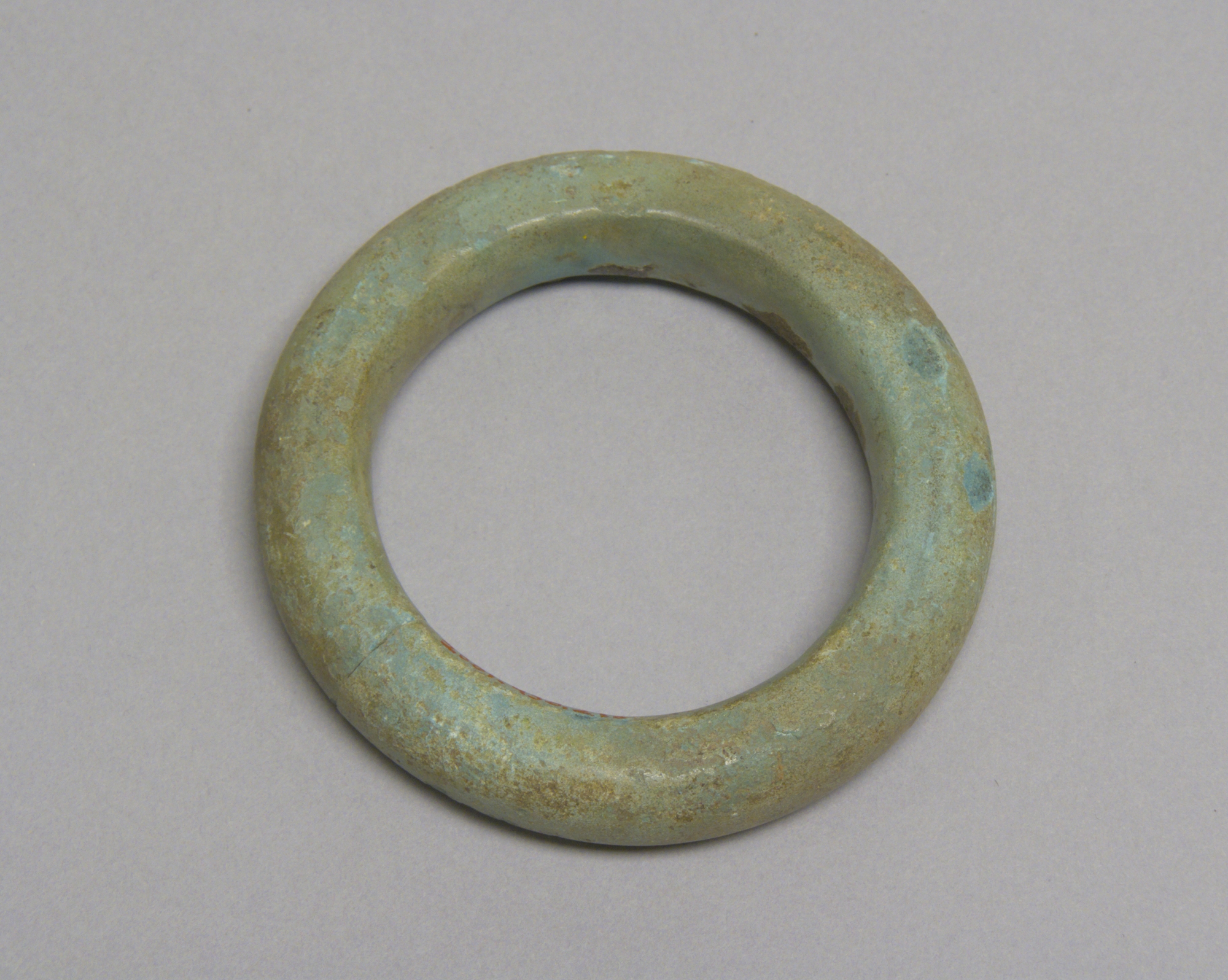
Archaeology of Form: The Thai Bronze Bracelet as a Node of Contained Power
Within the Natalie Fashion Atelier archive, the act of curation is not merely preservation but a dynamic dialogue between tectonic form and fluid silhouette. The subject of this technical analysis—a Thai bronze bracelet, circa 14th-16th century Sukhothai or Ayutthaya period—serves as a potent artifact for this discourse. Its materiality, bronze, is not a passive medium but an active participant in a historical narrative of sacred geometry, ritual containment, and metallurgical prestige. To understand its resonance for 2026, we must first deconstruct its classical elegance through the hermeneutic lens provided by our archive nodes: the Chinese scholar’s rock 《Rock in the form of a fantastic mountain》 and the ritual 《Jar in the shape of bronze container (hu)》. These two seemingly disparate objects collectively reveal a fundamental principle: the aesthetic and spiritual power of contained, abstracted nature within a defined, crafted boundary. The rock abstracts the monumental into a portable microcosm; the *hu* jar formalizes and sanctifies volume for ceremonial use. The Thai bronze bracelet operates within this precise conceptual framework—it is a miniature, wearable universe, a rigid band that contains and articulates the fluid essence of cosmic and natural order.
Technical Deconstruction: Rigidity, Volume, and the Patina of Time
The classical elegance of the bracelet is an exercise in paradoxical harmony. Its primary structure is one of uncompromising rigidity—a closed, circular form forged in bronze, a material chosen for its permanence and sonic properties (the faint resonance when struck). This rigidity establishes a clear, wrist-defining architecture. However, the surface treatment subverts this solidity. Through lost-wax casting, artisans created intricate repoussé motifs: undulating *naga* (serpent) scales, lotus petal borders, or flame-like finials. This introduces a secondary language of controlled volume and rhythmic texture. The play of light across the oxidized patina—a veritable landscape of malachite greens and azurite blues over the dark metal—further enhances this depth. The patina is not decay but a recorded narrative of interaction, a temporal dimension baked into the object. The elegance, therefore, lies in the tension between the armature’s fixed circumference and the dynamic, organic narrative playing across its surface—a direct parallel to the fantastic mountain rock’s static form embodying dynamic geological forces.
Hermeneutic Translation: From Ritual Armature to Silhouette Architecture
Informing the 2026 luxury silhouette requires a hermeneutic translation of these principles from artifact to anatomy. The 2026 silhouette, as forecasted by the Atelier’s research, moves beyond the deconstructed softness of recent years towards a new “Structured Fluidity”. The Thai bronze bracelet provides the archetype. Its closed circle is not merely a shape but a philosophy of defining a sacred space around the body. This translates into silhouette as a return to pronounced, yet non-constricting, armatures. We foresee:
1. The Cinched Volume Silhouette: Directly inspired by the bracelet’s principle of a rigid band containing complex inner form. This manifests in dresses and coats where a precise, sculpted bronze-like band (in leather, polished horn, or even actual patinated metal inserts) defines the natural waist or hip, from which volumes of faille, matte satin, or technical gazar are released. The volume is not billowing but controlled, its fullness mathematically calibrated like the repeating motifs on the bracelet, creating a jar-like containment of space around the legs or torso.
2. Articulated Sleeve Architecture: The bracelet’s role as a wrist-defining object evolves into sleeve concepts that treat the arm as a column to be articulated. Imagine sleeves constructed with internal boning or rigid frogging that creates a structured, cylindrical form, punctuated at the cuff or elbow with a "clasp" detail—a fastening that echoes the bracelet’s closure, often in a contrasting, patina-inspired finish. This creates a deliberate, almost ritualistic framing of the hands.
3. Surface Narratives and Patina-Finish Textiles: The most direct material translation lies in the pursuit of temporal depth in surface. For 2026, this means developing textiles that embody the bracelet’s narrative patina. This involves techniques such as: multi-layered silk burnout to create fossilized motifs; laser-etching on calfskin to replicate the depth of oxidized metal; and devoré velvets where the pattern emerges like bronze through verdigris. The color palette evolves towards mineralized neutrals: deep bronze-base, oxidized blue-green, and charcoal grey, always with a variegated, non-flat finish.
The 2026 Proposition: Contained Monumentality
The ultimate legacy of the Thai bronze bracelet for 2026 is the concept of “Contained Monumentality.” This is the synthesis of the archive nodes’ wisdom. From the fantastic mountain rock, we take the idea of wearing a monumental, abstracted landscape. From the *hu* jar, we adopt the solemnity of a vessel designed for significance. From the bracelet itself, we derive the precise scale and wearability. The resulting 2026 silhouette is one of powerful, calm assurance. It is architectural yet organic, rigid in its defining lines but fluid in its contained volumes. It speaks not of ephemeral trends but of enduring form, bearing the intellectual patina of deep research. A tailored coat, for instance, may stand away from the body in a gentle, jar-like curve, its collar structured into a single, unbroken bronze-wire-edged line, its surface a labyrinth of embossed texture recalling ancient wax-cast motifs. It is less a garment and more a mobile archive, a contemporary vessel carrying the profound elegance of contained power. For Natalie Fashion Atelier, this is the essence of true luxury for 2026: an elegance that is archaeologically resonant, technically impeccable, and philosophically profound—a wearable hermeneutic of history.