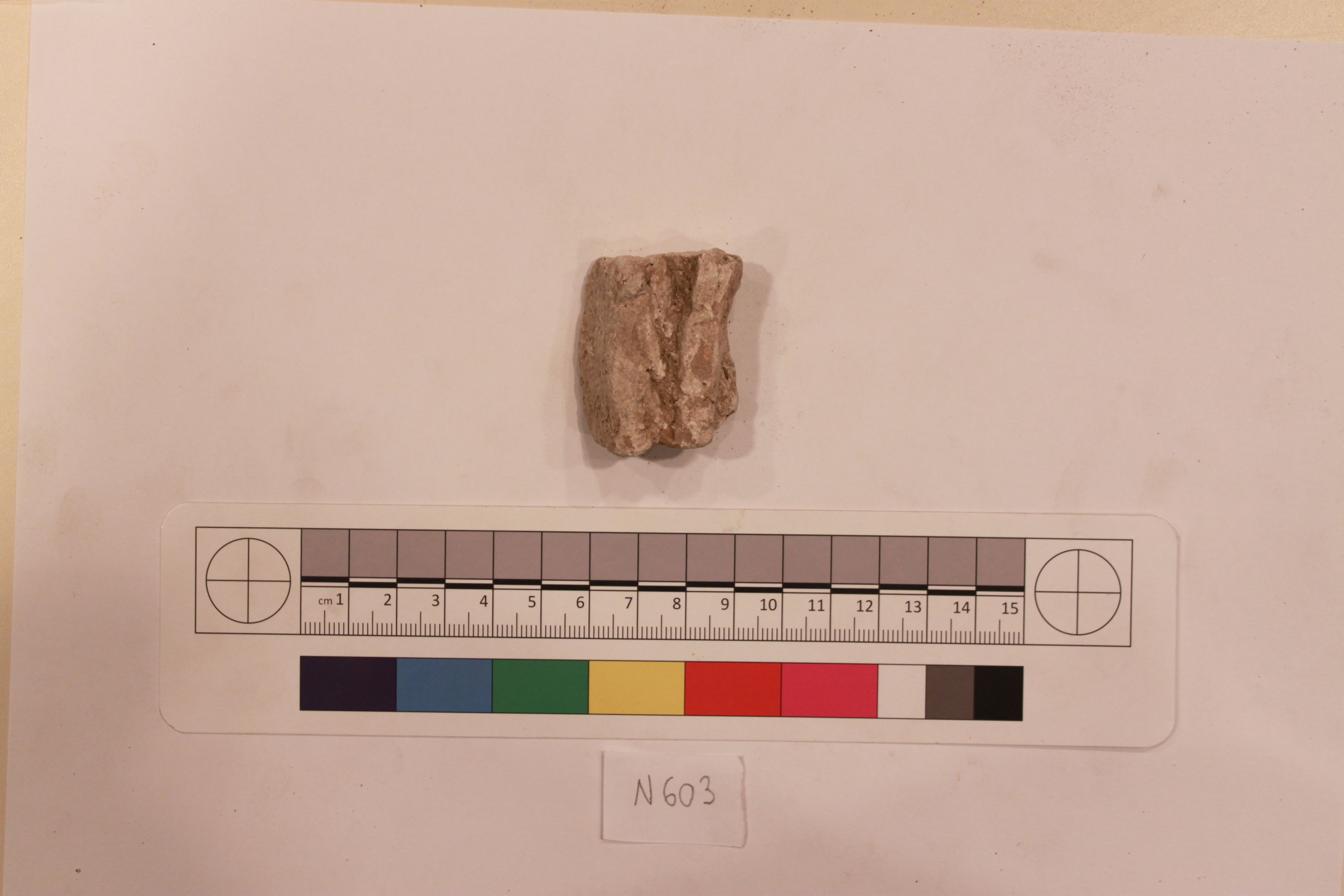
From Mineral Silence to Structural Poetry: The Stucco Fragment as a 2026 Couture Blueprint
Within the hushed archives of Natalie Fashion Atelier, the isolated study of a carved stucco fragment offers more than a nostalgic glance at classical decoration. It presents a rigorous technical dialogue between material permanence and ephemeral dress. Stucco—a composite of lime, sand, and marble dust—has historically been the medium of architectural transition, capturing the fluid drapery of Greco-Roman statuary in a state of arrested motion. For the 2026 haute couture season, this fragment is not a relic; it is a generative algorithm. It instructs us to reconsider how volume can be carved, how light can be absorbed, and how a silhouette can possess the weight of stone while maintaining the breath of silk.
Materiality as a Design Lexicon: The Physics of Carved Elegance
The technical mastery of stucco lies in its paradoxical nature: it is a liquid that becomes a solid, yet retains the memory of the hand that shaped it. When analyzing the fragment’s surface, we observe three distinct textural registers: the polished plane, the undercut groove, and the feathered edge. These are not merely decorative motifs; they are structural instructions for 2026 garment engineering.
In couture, we translate the polished plane into micro-sanded technical faille—a fabric that compresses light rather than reflecting it. The undercut groove, historically used to create shadow in relief, becomes a blueprint for negative-space tailoring. We are developing laser-cut seams that do not join fabric but instead create deliberate voids, allowing the skin or an inner shell to become the shadow. The feathered edge, where the stucco thins to a near-translucent membrane, informs our gradient-weight organza panels. These panels are not hemmed; they are thermally fused to dissolve into the body, mimicking the way the fragment’s edge dissolves into the wall from which it was torn.
Silhouette Architecture: The Column, The Torsion, and The Broken Pediment
The classical elegance of stucco relief is fundamentally vertical. It respects the column, the human stance, and the gravitational pull of drapery. For 2026, we are deconstructing this verticality into three distinct silhouette families, each derived from the fragment’s specific carving logic.
First: The Torsion Column. The fragment shows a spiral of fabric caught mid-twist, a hallmark of Hellenistic stucco work. Our 2026 interpretation uses bias-cut double-faced cashmere with a spiral seaming technique that wraps the torso in a continuous, unbroken line. The seam is not visible; it is internalized, creating a torque that makes the garment appear to have been twisted from a single block of material. This silhouette rejects the standard princess seam. Instead, it employs a helical gore construction, where each panel is cut on a 45-degree angle and then rotated 15 degrees relative to the previous one. The result is a dress that holds its shape like carved stone, yet moves with the fluidity of liquid mercury.
Second: The Broken Pediment. Stucco fragments often arrive incomplete, their edges jagged and asymmetrical. This imperfection is a luxury in 2026. We are designing the asymmetric shoulder mantle, where one side of the garment is fully structured with a high, sculpted neckline, and the other side falls away in a raw, unfinished cascade. The technical challenge is in the weighted bias: we embed a chain of oxidized silver within the hem of the falling side, not to weigh it down, but to create a controlled, gravitational drape that mimics the way a broken cornice hangs in space. This silhouette speaks to the beauty of the ruin, the intentional incompleteness that defines modern luxury.
Third: The Stratified Relief. The fragment’s depth is not uniform. It rises and falls in layers, creating a topographical map of light and shadow. Our 2026 eveningwear translates this into layered tulle and micro-pleated silk, but with a critical twist: each layer is treated with a different finish. The base layer is matte, absorbing light. The middle layer is semi-lustrous, deflecting light. The top layer is high-gloss, reflecting light. As the wearer moves, the garment performs a kinetic light show that is entirely dependent on the viewer’s angle. This is not embellishment; it is material choreography, a direct homage to the way stucco’s relief changes character as the sun moves across a facade.
Technical Craftsmanship: The Atelier’s Translation Protocol
To translate a carved mineral into a wearable garment, the atelier must adopt a new protocol of negative-space pattern making. Traditional pattern making is additive—we add seams, darts, and panels. The stucco fragment demands subtractive design. We begin with a full block of fabric, often a horsehair-reinforced wool crepe, and then we remove material to create the silhouette. This is achieved through laser ablation, a process that vaporizes fabric in precise, micrometer-controlled increments. The result is a garment that feels as if it has been excavated from a larger mass, rather than assembled from parts.
Furthermore, the fragment’s carved lines are not straight. They are organic, flowing, and responsive to the underlying form. Our pattern makers are now using 3D body-scanning data to map the client’s unique topography, then projecting the stucco fragment’s carving lines onto that map. The garment is then cut to follow the body’s natural contours, creating a bespoke fit that is indistinguishable from a sculpted second skin. The internal structure is equally critical. We use molded thermoplastic corsetry that is heated and shaped over a replica of the client’s torso, then covered with the outer fabric. This provides the architectural rigidity of stucco without sacrificing comfort or mobility.
The 2026 Couture Client: Wearing Archaeology
The 2026 client is not merely purchasing a garment; she is acquiring a fragment of cultural memory, re-contextualized for the contemporary moment. The stucco fragment teaches us that elegance is not about ornamentation, but about material integrity and structural honesty. A garment must not pretend to be something it is not. If it is heavy, it should drape heavily. If it is light, it should float. This principle of tactile veracity is the cornerstone of our 2026 collection.
In practice, this means we are rejecting the trend of hyper-lightweight, disposable luxury. Instead, we are championing garments that possess a sense of gravity—not in weight, but in presence. A stucco-inspired gown for the 2026 gala season will have a deliberate, measured fall. It will not flutter. It will land. The shoulders will be sharp, not padded, but carved. The waist will be defined not by a belt, but by a subtle inward curve of the fabric itself, achieved through differential shrinkage—a technique where we treat different zones of the fabric with heat and moisture to create a permanent, three-dimensional form.
Conclusion: The Eternal Fragment in a Transient Industry
The stucco fragment, in its isolated beauty, offers a profound counter-narrative to the fast-paced, image-driven world of contemporary fashion. It reminds us that true luxury is slow, deliberate, and rooted in a deep understanding of material behavior. As we move toward 2026, Natalie Fashion Atelier is not looking forward. We are looking backward, into the mineral silence of a carved surface, to find the future of the silhouette. The fragment is not a source of inspiration; it is a technical specification. Its grooves are our seams. Its shadows are our volumes. Its permanence is our promise. The 2026 collection will not be a collection of dresses. It will be a collection of wearable architectures, each one a quiet, elegant rebellion against the ephemeral.