From Ceramic Lineage to Couture Architecture
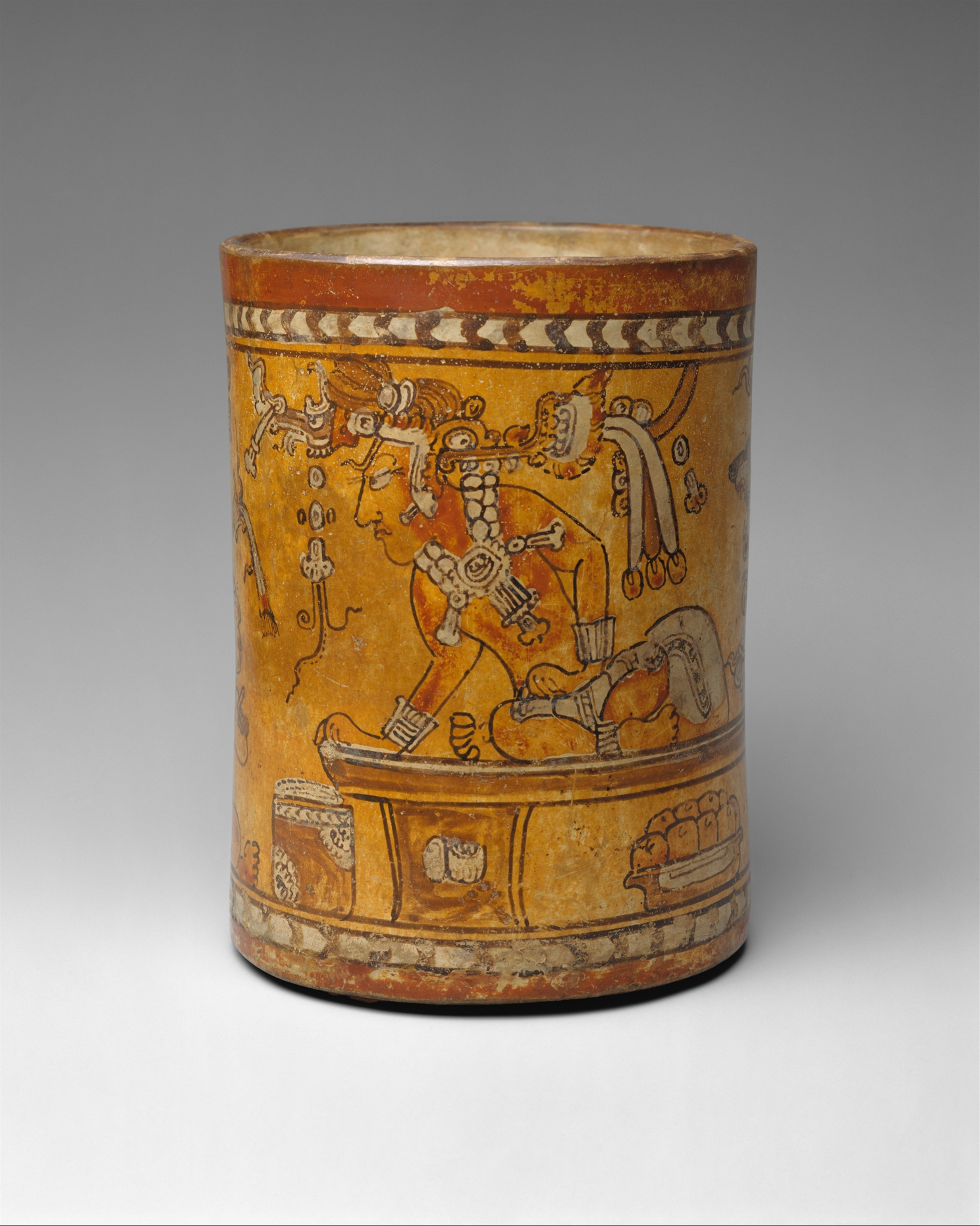
The Maya vessel, a ceremonial object of fired clay and liquid slip, is not a relic of a distant past but a living blueprint for the 2026 luxury silhouette. In the quiet of the archive, isolated from the noise of colonial interpretation, this object reveals its true aesthetic archaeology: a study in controlled tension, narrative compression, and the deliberate orchestration of surface and void. For Natalie Fashion Atelier, the vessel with its throne scene is not merely an inspiration—it is a technical masterclass in how to construct volume, dignity, and narrative within a single, unbroken form.
I. The Throne Scene as Structural Metaphor
Hierarchy of Line and the Vertical Axis
The throne scene, incised and painted with mineral slips, establishes a rigid vertical hierarchy. The seated ruler occupies the apex, the horizon line of the throne bisecting the composition into a terrestrial base and a celestial crown. In 2026 couture, this translates into a renewed obsession with the architectural shoulder and the elongated torso. The silhouette is not draped; it is erected. We propose a jacket with a high, structured collar that mimics the throne’s backrest, while the bodice narrows into a sharp, inverted triangle—a direct reference to the ruler’s seated posture. The skirt, in contrast, flares from a suppressed waist, echoing the vessel’s stable, bulbous base. The result is a garment that speaks of inherent authority, where every seam is a line of power, not a gesture of softness.
Negative Space as Royal Presence
Critically, the Maya artist left the background of the throne scene unadorned, a field of raw ceramic slip. This negative space is not empty; it is a charged silence that amplifies the ruler’s figure. For the Atelier, this principle dictates the 2026 evening gown. We will construct a gown in double-faced duchesse satin, where the front panel is a blank, unbroken expanse of ivory, and the back panel carries the entire narrative—a hand-embroidered sequence of geometric throne motifs in black jet and obsidian beads. The wearer becomes the vessel; the front is the serene, unreadable surface, and the back is the hidden court, revealed only in motion. This is narrative asymmetry, a deliberate imbalance that creates a magnetic, regal presence.
II. Materiality: The Logic of Slip and Ceramic
Liquid Slip as a Draping Principle
The slip—a liquid clay suspension—was applied in layers, creating a surface that is both matte and luminous, smooth yet tactile. It is a material that refuses to shine but demands to be touched. Translating this to haute couture, we reject the high-gloss satins of previous seasons. Instead, the 2026 collection will feature bonded matte crepes and sanded silk organza, treated with a proprietary finish that mimics the dry, mineral touch of the ceramic. The garment will not reflect light; it will absorb it, creating a velvety depth that is distinctly non-industrial. This is a return to the primacy of touch over spectacle, a Parisian rebuke to the digital gloss of fast fashion.
The Weight of the Vessel
A ceramic vessel has a specific gravity, a felt presence that is both grounding and imposing. Our couture must carry this weight. We will introduce internal ceramic-beaded weighting along the hems and internal seams of coats and capes. This is not for movement, but for stillness. The garment will fall with the deliberate, slow finality of a vessel settling onto a stone floor. The 2026 silhouette will not flutter; it will descend. This is a radical departure from the airy, ethereal trends of the past decade, offering a new luxury rooted in gravitas and physical permanence.
III. Deconstructing Classical Elegance
The Geometry of the Throne
The throne scene’s composition is based on a strict frontal plane, with the ruler’s body rendered in profile but the face in full view—a sophisticated, multi-perspectival approach. This informs our pattern-cutting methodology. We will develop a series of asymmetric, multi-panel constructions where the front of the garment is cut on the straight grain, the side panels on the bias, and the back on the cross-grain. This creates a garment that, like the Maya image, reveals different truths from different angles. From the front, it is severe and columnar; from the side, it curves with unexpected softness; from the back, it opens into a train that mimics the vessel’s flared lip. This is kinetic classicism, a silhouette that is never static, always in a state of quiet transformation.
Color as Slip, Not Paint
The Maya palette—cream, sienna, charcoal, and a deep, almost black red—is not applied as decoration but as integral layers of the clay. Our 2026 color story will follow this logic. We will use piece-dyed yarns before weaving, so that the color is absorbed into the fiber’s core, not printed on the surface. The resulting hues will be irregular, tonal, and deep, with subtle variations that echo the hand-applied slip. We will avoid pure black or pure white; instead, we will use bone, ash, and burnt umber, creating a monochromatic spectrum that is rich in nuance and entirely devoid of synthetic brightness.
IV. The 2026 Silhouette: A Technical Manifesto
The Vessel Coat
The signature piece of this research is the Vessel Coat. It is constructed from a single, continuous piece of camel hair and ceramic micro-fiber blend, cut in a circular form that is then folded and seamed to create a hollow, cylindrical body. The collar is a high, rolled band, reminiscent of the vessel’s rim. The sleeves are set in at a low, dropped angle, allowing the coat to hang like a bell, with no visible shoulder seam. The hem is weighted with a hidden chain of oxidized silver, ensuring the coat falls with the absolute stillness of the ceramic original. This is not a garment; it is a portable monument.
The Throne Gown
For evening, the Throne Gown reinterprets the scene through structural embroidery. Using a base of black silk gazar, the throne is built in three dimensions using crinoline and horsehair braid, creating a raised, bas-relief effect on the bodice. The ruler’s figure is abstracted into a series of geometric gold and jet beads, placed to catch light only when the wearer moves. The skirt is a column of matt jersey, unadorned, allowing the bodice to carry the entire narrative weight. The gown’s power lies in its extreme concentration—all visual energy is focused on the chest, the seat of authority, leaving the rest in silent, powerful repose.
V. Conclusion: The Eternal Vessel
The Maya vessel with its throne scene is not a historical curiosity but a perennial source of formal intelligence. Its lesson for 2026 is clear: true luxury is not found in ornamentation but in structural clarity, material honesty, and narrative depth. By deconstructing its classical elegance—its vertical hierarchy, its negative space, its ceramic weight—Natalie Fashion Atelier proposes a silhouette that is both ancient and radically new. The 2026 woman does not wear a dress; she inhabits a vessel. She is the throne, the ruler, and the sacred object, all contained within a single, impeccable line. This is couture as archaeology, and archaeology as the future.