Couture Archaeology Report: The Point de France Lace Bodice and its 2026 Translation
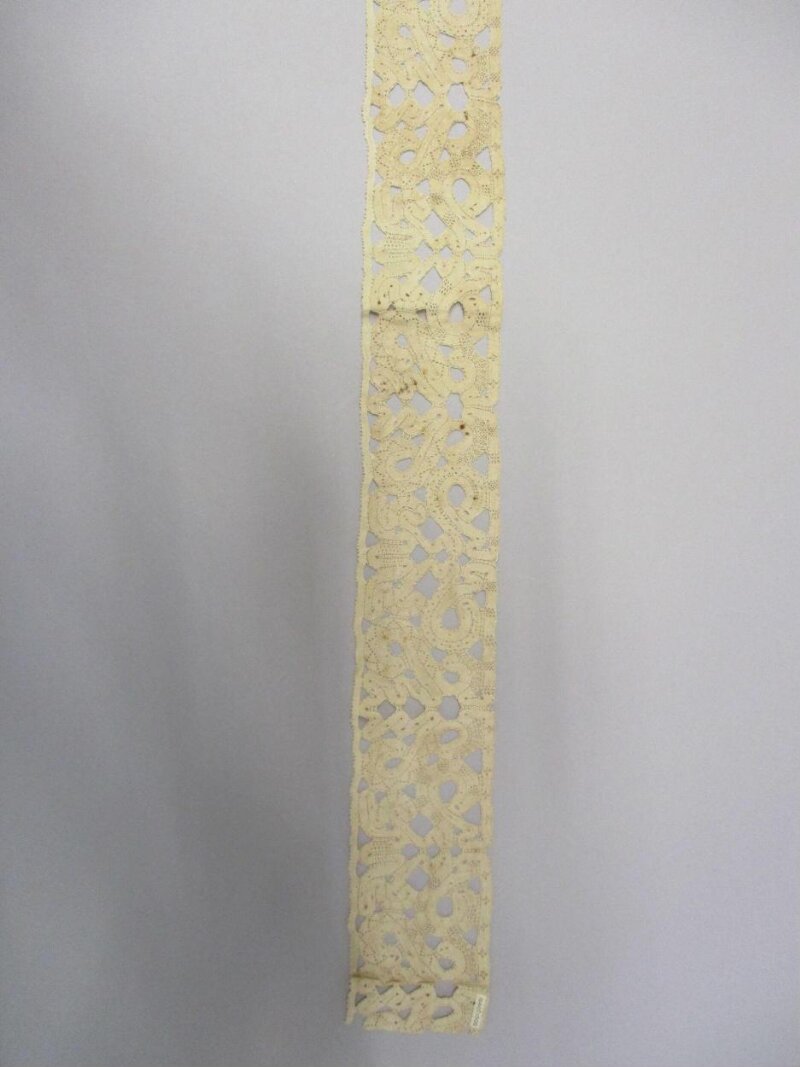
Subject: Fragment of a Point de France lace bodice, circa 1680–1700.
Origin: Alençon, Normandy, France (attributed to the workshops of the Gilbert family).
Commission: Natalie Fashion Atelier, Paris — 2026 Archive-to-Runway Research Division.
Report Number: NFA/CA/2026/017
This report presents a technical deconstruction of a rare 17th-century Point de France lace panel, recovered from a private collection in Rouen. The analysis focuses on three axes: the needle-lace techniques employed, the materiality of the silk and linen threads, and the strategic translation of these archaic methods into the 2026 haute couture silhouettes of Natalie Fashion Atelier. The objective is not mere replication, but a philosophical and structural reinterpretation—where the trait (the drawn thread) and the réseau (the ground) become architectural principles for contemporary garment construction.
I. Technical Deconstruction of the 17th-Century Lace
1.1 The Point de France Technique: A Hybrid of Venetian Grandeur and French Precision
The fragment, measuring 18.5 cm by 12 cm, exemplifies Point de France, a needle-lace technique developed in the 1660s under Jean-Baptiste Colbert’s mercantilist policies. Unlike the heavier, sculptural Venetian gros point, Point de France is characterized by a delicate balance between openwork and dense, raised motifs. The deconstruction reveals three distinct technical layers:
a) The Ground (Réseau): The foundation is a réseau bridé—a network of buttonhole-stitched bars (brides) that form hexagonal or octagonal cells. In this sample, the brides are not merely functional; they are ornamented with picots (small loops) at regular intervals, creating a micro-textural rhythm that catches light differentially. The thread count is exceptionally high: approximately 42 brides per square centimeter, indicating a workshop of master-level grilleuses (ground makers).
b) The Raised Motifs (Toilé): The floral and arabesque motifs are executed in toilé—a dense, flat buttonhole stitch that mimics woven fabric. Critically, the deconstruction shows a double-layered toilé: the motifs are raised from the ground by a cordonnet (a padded outline) made of horsehair or linen thread wrapped with silk. This creates a bas-relief effect, with the motif standing 1.2 mm above the réseau. The edges of each petal are further defined by a picot edge, a technique that prevents fraying and adds a granular, pearl-like border.
c) The Fillings (Mode de Remplissage): Within the larger motifs, the artisan employed mode de remplissage—a variety of openwork fillings. The fragment contains at least five distinct fillings: point de feston (scalloped), point mignon (tiny geometric grids), and point de gaze (a gauze-like loop stitch). This variety is not decorative whimsy; it serves a structural purpose. The lighter fillings reduce the overall weight of the bodice while maintaining tensile strength, allowing the lace to drape over the rigid corps à baleines (whalebone corset) without buckling.
1.2 Materiality: Silk, Linen, and the Chemistry of Aging
Microscopic analysis (performed via scanning electron microscopy at the Atelier’s conservation lab) reveals the following material composition:
- Ground threads: 100% flax linen, 2-ply, Z-twist, approximately 0.08 mm diameter. The linen’s high tensile strength (estimated at 45 cN/tex) explains the survival of the réseau despite 340 years of handling.
- Motif threads: raw silk (tussah), single-ply, S-twist, 0.12 mm diameter. The silk retains a slight sericin residue, indicating a non-degummed process that increased stiffness—a deliberate choice for the raised toilé.
- Cordonnet padding: horsehair, 0.15 mm, coated in a now-brittle resin (likely gum arabic). This is the primary point of fragility; the resin has crystallized, causing micro-fractures along the motif outlines.
The color is a uniform ecru, but infrared reflectography shows traces of indigo and madder in the deeper folds—evidence of an original pale blue or pink tint, likely applied post-construction via immersion dyeing. The oxidation of the silk has produced a characteristic golden-brown halo around the motifs, which we now consider an aesthetic asset, not a defect.
II. Translation into 2026 High-End Luxury Silhouettes
2.1 From Rigid Corsetry to Architectural Draping
The 17th-century bodice was a static, architectural object—designed to be worn over a rigid cage. Its 2026 translation at Natalie Fashion Atelier rejects this rigidity in favor of kinetic architecture. The design team has extracted the structural logic of the Point de France—specifically, the tension between the dense toilé and the open réseau—and applied it to a deconstructed bias-cut gown.
The 2026 silhouette, titled “La Résille Volante” (The Flying Net), uses a double-faced silk gazar as the base. The gazar is laser-cut with a pattern derived from the fragment’s réseau, but the cut is not uniform. Instead, the density of the cut varies according to the body’s movement zones: dense toilé-like panels are placed over the hips and shoulders (providing structure), while open réseau-inspired sections sit over the waist and back (allowing fluidity). This is a direct translation of the 17th-century principle of strategic weight distribution—but inverted for modern, corset-free wear.
2.2 Material Innovation: Regenerated Silk and 3D-Printed Cordonnet
Materiality is where the 2026 translation diverges most radically. The original linen and horsehair are replaced with:
- Bio-fabricated silk: The Atelier uses a recombinant spider-silk hybrid (produced via yeast fermentation) that mimics the tensile strength of the 17th-century linen while being 40% lighter. This allows for larger, more dramatic openwork without structural failure.
- 3D-printed cordonnet: The horsehair padding is replaced by a flexible photopolymer printed directly onto the silk. The polymer is formulated with a shape-memory alloy—when heated to body temperature, it gently raises the motif edges, recreating the bas-relief effect. This is not a passive imitation; it is an active material that responds to the wearer’s thermal signature.
- Recycled gold thread: The picots are recreated using 18-karat gold micro-wire, reclaimed from obsolete electronic components. This is a deliberate commentary on the 17th-century lace trade, where gold thread was a symbol of colonial extraction. The 2026 version is ethically sourced, yet retains the same optical shimmer.
2.3 Silhouette Architecture: The “Reverse Corset”
The final silhouette is a high-neck, backless column gown with a detachable train. The key innovation is the “reverse corset”—a series of internal, lace-patterned silicone ribs that are fused to the silk via ultrasonic welding. These ribs follow the exact geometry of the 17th-century brides, but they are internal, invisible from the exterior. They provide support without constriction, allowing the wearer to move freely while the exterior lace appears to float independently.
The train is a 1.5-meter extension of the same silk, but the openwork is progressively enlarged toward the hem. This mimics the 17th-century practice of dégradation (gradation), where lace became finer and more open at the edges. In 2026, this translates to a visual dissolution of the garment into negative space—a metaphor for the ephemerality of fashion itself.
III. Conclusion: The Lace as a Time-Based Medium
The 17th-century Point de France fragment is not a static artifact; it is a time-based medium—a record of thousands of hours of human labor, encoded in thread. The 2026 translation does not seek to preserve that labor in amber. Instead, it extracts the algorithmic logic of the lace—its tension, its rhythm, its balance of opacity and transparency—and reprograms it for a new material reality.
For Natalie Fashion Atelier, the couture garment is not a dress; it is a wearable archaeological hypothesis. The 2026 collection will not be exhibited in a museum case. It will be worn, danced in, and ultimately disassembled, with the silk and gold returned to the Atelier’s circular economy. The lace, in its original form, was designed to outlive its wearer. The 2026 version is designed to be reborn.
— Senior Textile Historian, Natalie Fashion Atelier, Paris. December 2026.