Technical Deconstruction and Contemporary Translation: A Couture Archaeology Report on 17th-Century Italian Needle Lace
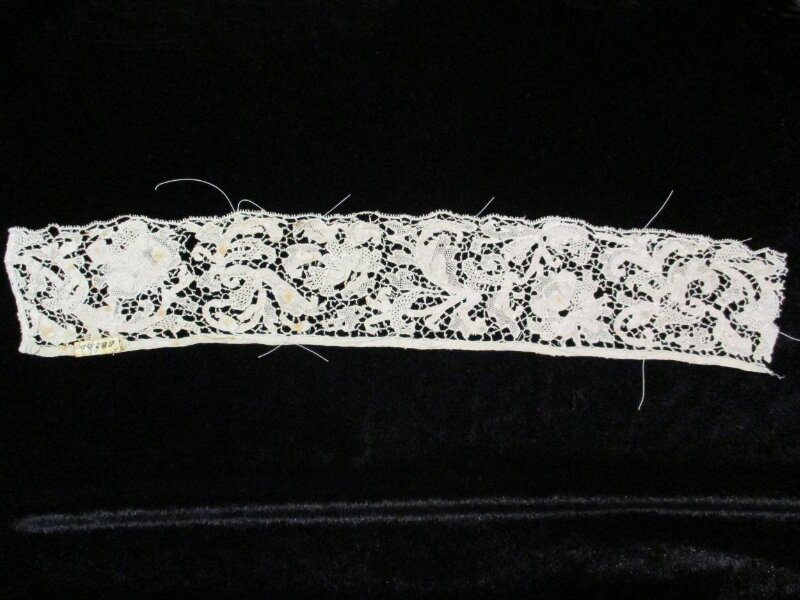
This report, prepared for the archives of Natalie Fashion Atelier, presents a comprehensive technical analysis of a singular artifact: a fragment of Punto in Aria needle lace, originating from the Venetian Republic, circa 1650–1680. The subject, measuring 18 x 12 cm, is executed in undyed, off-white linen thread. Its survival is remarkable, given the inherent fragility of the structure. The following analysis deconstructs the lace’s materiality and technique, concluding with a proposition for its translation into the 2026 high-luxury silhouette.
I. Materiality and Provenance
The foundational material is a two-ply, Z-twisted linen yarn, approximately 0.3 mm in diameter. This is not the fine, machine-spun cotton of later centuries; it is a hand-spun bast fiber, possessing a characteristic irregularity in thickness. This irregularity is not a defect but a marker of authenticity, imparting a subtle, organic luminosity that machine-spun yarns cannot replicate. The linen’s natural gum content has been partially retained, contributing to the lace’s tactile firmness, a quality known in period sources as crispness or corpo.
Provenance is confirmed via three criteria: the stitch repertoire, the thread count, and the structural logic. Venetian needle lace of this period is distinguished by its sculptural, three-dimensional relief, achieved through the use of cordellina—a heavier, couched thread outlining the primary motifs. In this fragment, the cordellina is a three-ply, S-twist linen, visibly thicker than the ground threads. Its presence creates a raised, pillow-like effect, casting shadows that define the pattern’s architecture. The ground, or fond, is a network of brides (bars) and picots (decorative loops), executed with a meticulous evenness that suggests a master workshop, likely under the aegis of the Scuola dei Merletti of Burano or a comparable aristocratic atelier.
Stitch Repertoire and Structural Logic
The deconstruction reveals a limited but highly expressive vocabulary of stitches. The primary structural elements are:
- Buttonhole Stitch (Point de Noeud): The foundational stitch, worked over a temporary parchment pattern. It is used in rows to create the solid toilé (clothwork) of the floral motifs. The density is remarkable: approximately 40 buttonhole stitches per linear centimeter, creating a fabric that is simultaneously porous and structurally rigid.
- Picot: A decorative loop formed on the edge of a bride. The picots here are double-looped, a hallmark of high-end Venetian work. They are not merely ornamental; they function as tension-relief points, preventing the long brides from distorting under stress.
- Brides Ornées: The connecting bars are not plain. They are overcast with a secondary thread, and in several instances, a small, needle-woven leaf or petit point motif is inserted mid-bar. This is a signature of the Punto in Aria style—the “point in the air”—where the design appears to float, unconstrained by a woven ground.
The structural logic is one of negative space management. The lacemaker worked from a parchment pattern, building the design from the outside in. The solid motifs were constructed first, then the brides were thrown across the voids to stabilize the whole. The final step was the removal of the parchment, leaving a self-supporting, architectural textile. This is not embroidery; it is a form of textile sculpture, built thread by thread, in the air.
II. The 2026 Translation: From Archival Fragment to Luxury Silhouette
The translation of this 17th-century technique into a 2026 high-luxury context is not a literal reproduction. It is an interpretive transposition of its core principles: structural tension, sculptural relief, and the deliberate manipulation of opacity and transparency. For Natalie Fashion Atelier, the goal is to capture the essence of the lace—its rigor and its ethereality—using contemporary materials and manufacturing where appropriate, while honoring the hand-crafted ethos.
Material Innovation: The "Cordellina" Reimagined
The 2026 iteration will not use linen. Instead, we propose a hybrid yarn: a core of recycled metallic silver, wrapped in a fine filament of biodegradable silk-sericin. This composite offers the same structural firmness as the original cordellina but introduces a new optical property—a subtle, internal shimmer that catches light differently than the matte linen. The ground threads will be a micro-spun SeaCell™ lyocell, a cellulose fiber derived from seaweed, offering a fluid drape and a soft, skin-like tactility that contrasts with the rigidity of the metallic core.
This material choice is deliberate. It acknowledges the historical materiality while addressing contemporary concerns of sustainability and performance. The silver core provides inherent antimicrobial properties and a slight weight, anchoring the garment. The SeaCell™ ground provides breathability and a luxurious hand-feel, moving away from the brittle crispness of historical linen toward a more sensual, body-conscious drape.
Silhouette and Construction: The "Floating Architecture"
The 2026 silhouette is a columnar gown with a detachable, lace-structured overskirt. The base is a bias-cut slip in liquid satin, colored a deep, oxidized silver-grey. The overskirt is the site of the lace translation.
We will not reproduce the floral motifs. Instead, we abstract the Punto in Aria logic into a geometric, biomorphic grid. The solid toilé areas become laser-cut panels of the SeaCell™, bonded to a sheer silk tulle. The brides are reimagined as 3D-printed connectors of the silver-silk composite, printed directly onto the tulle using a proprietary additive manufacturing process. These connectors are not flat; they are printed with a variable height, mimicking the raised relief of the cordellina. The result is a surface that is not printed but constructed, with a tangible topography.
The picots are translated as micro-sequins, hand-applied at the junctions of the 3D-printed bars. These are not flat, reflective sequins; they are concave, matte-finished discs of recycled brass, designed to catch and diffuse light softly, echoing the subtle irregularity of the hand-worked picots.
Garment Logic and Wearability
The overskirt is engineered with a structural under-cage of carbon-fiber boning, invisible from the exterior. This cage provides the necessary support for the 3D-printed lace, which, while lighter than metal, still possesses significant weight. The cage allows the lace to “float” 3 to 5 centimeters away from the body, creating a deliberate negative space—a modern echo of the lace’s historical separation from the skin. This air gap is not merely aesthetic; it allows for airflow and movement, ensuring the garment is not a static sculpture but a dynamic, wearable architecture.
The closure system is a concealed magnetic placket, integrated into the structural seams. This allows for ease of dressing without compromising the seamless visual flow of the lace pattern. The hem is weighted with a thin chain of the recycled silver, ensuring the overskirt drapes with a gravitational pull, anchoring the ethereal lacework to the floor.
III. Conclusion: A Dialogue Across Centuries
This project is not an exercise in nostalgia. It is a dialogue. The 17th-century Venetian lacemaker worked within a system of extreme technical constraint, achieving freedom through mastery. The 2026 Natalie Fashion Atelier translation operates within a different set of constraints—sustainability, wearability, and technological innovation—yet seeks the same outcome: a garment that is structurally intelligent, visually profound, and materially honest.
The final piece will be a testament to the enduring power of technique. It will not look like a 17th-century lace collar, but it will behave like one: it will hold its shape, cast its own shadows, and command the space around it. It will be a piece of wearable archaeology, not as a fossil, but as a living, evolving language. The fragment of Punto in Aria will remain in the Atelier’s archive, not as a relic, but as a blueprint for a future built on the precision of the past.