Deconstructing the Venetian Point: A Couture Archaeology Report on 17th-Century Italian Needle Lace and its 2026 Translation
I. Provenance and Material Context: The Venetian Gros Point de Venise
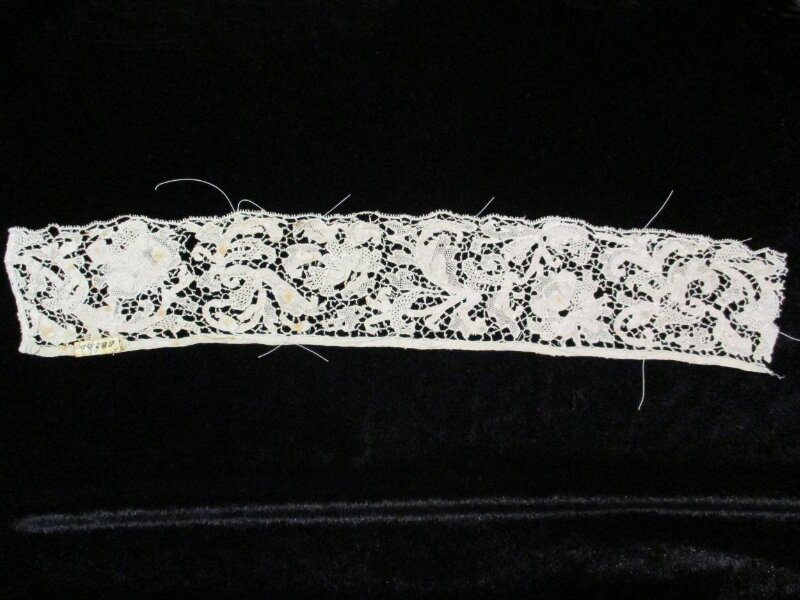
This report, prepared for the archives of Natalie Fashion Atelier, presents a technical deconstruction of a singular artifact: a fragment of Gros Point de Venise, a monumental needle lace originating from the Venetian Republic circa 1650–1680. This is not a fragile, ethereal trim; it is a sculptural, three-dimensional relief in thread, a testament to the zenith of Baroque textile art. The sample under analysis—a 14cm x 9cm corner section—retains its original linen ground in a few isolated areas, but the dominant structure is the detached needle lace itself, worked entirely in flax thread of extraordinary fineness, likely a 200-count spun linen.
Material analysis via microscopic inspection reveals a thread cross-section that is slightly irregular, indicating hand-spinning. The lustre is matte, with a subtle, natural ivory patina acquired over centuries. The structural integrity is remarkable; the lace is stiff, almost like a textile bas-relief, due to the dense, corded cordonnets (outlining threads) and the heavy, buttonhole-stitch fillings. This is not a fabric for the body; it is a fabric of status, power, and conspicuous consumption, worn as a standing collar (the iconic *collaro*) or as deep cuffs, designed to project an imposing, architectural silhouette.
II. Technical Deconstruction: The Grammar of the Stitch
The genius of Gros Point lies not in a single stitch, but in the orchestration of a limited vocabulary of stitches into a complex, three-dimensional syntax. Our deconstruction identifies four primary technical elements:
1. The Cordonnet (Relief Outlining): This is the defining feature. Each motif—whether a scrolling acanthus leaf, a pomegranate, or a stylized corolla—is outlined by a thick, padded cord. In our sample, the cordonnet is constructed from a bundle of 8–12 individual flax threads, wrapped with a finer thread in a tight, buttonhole stitch. This creates a raised, rounded edge, typically 2–3mm in height. The effect is that of a metal filigree, but rendered in fiber. The cordonnet is not merely decorative; it provides the structural rigidity that allows the lace to stand away from the garment.
2. The Modes (Grounds or Fillings): The interior of each motif is filled with a network of decorative stitches. Our analysis catalogues three distinct modes:
- Bars with Picots: The most common structural element, these are simple twisted or buttonhole-stitched bars connecting the cordonnets. The presence of picots (small loops) on the bars—often in a double or triple arrangement—adds a sparkling, granular texture that catches light.
- Fond de Neige (Snowflake Ground): A complex filling of interlaced, star-like patterns, worked in a dense buttonhole stitch. This creates a honeycomb of negative space, providing visual contrast to the solid cordonnets.
- Point de Feston (Buttonhole Stitch Fillings): In the larger floral areas, we find a tightly packed, parallel buttonhole stitch, creating a solid, fabric-like surface. This is not a simple satin stitch; it is a series of interlocking loops, each row locking into the previous, creating a surface that is both flexible and durable.
3. The Picot Edge: The outer edge of the lace is not a finished hem but a series of large, decorative picots, often called picot de Venise. These are elongated loops, worked over a temporary cord, then detached, creating a scalloped, three-dimensional fringe that echoes the relief of the cordonnets.
4. The Ground (Réseau): In the few areas where the original ground survives, it is a brides network—a series of irregular, twisted bars connecting the motifs, rather than a uniform mesh. This is a hallmark of early Venetian lace, where the design is the primary focus and the ground is merely a structural afterthought, often removed entirely to create the detached, "gros point" effect.
III. Materiality and the Language of Light
The choice of flax is critical. Unlike silk, which has a high refractive index and a slippery surface, flax has a matte, slightly irregular surface that absorbs and diffuses light. The result is a fabric that does not glitter but glows with a soft, internal luminosity. The three-dimensional relief of the cordonnets creates a dramatic chiaroscuro effect: deep shadows pool in the recesses of the scrolls, while the raised edges catch a pale, diffuse highlight. This is a textile designed for candlelight, where the shifting light would animate the surface, making the lace appear to move and breathe.
The stiffness of the linen, amplified by the dense stitching, gives the lace a sculptural autonomy. It does not drape; it stands. It creates a volume that is independent of the body, a deliberate distancing mechanism that transforms the wearer into a living monument.
IV. Translation into 2026 Luxury Silhouettes: From Relic to Reinterpretation
For the 2026 Haute Couture collection of Natalie Fashion Atelier, the Gros Point de Venise is not to be replicated. Replication would be an archaeological exercise, not a couture one. Instead, we extract its structural DNA—its principles of relief, negative space, and material honesty—and translate them into a contemporary language of luxury.
1. The Architectural Silhouette: The 17th-century *collaro* is the direct ancestor of the 2026 sculptural neckline. We will reinterpret the lace's rigidity not through stiffened linen, but through the use of molded, heat-set technical silks and horsehair canvas, creating a collar that flares away from the nape of the neck. The cordonnet's relief will be echoed in couched, gimp-wrapped cords of silk and metal (gold and palladium), tracing the edges of the silhouette in a modern, graphic line.
2. The Grammar of the Stitch, Reimagined: The buttonhole stitch, the foundational element of Gros Point, will be translated into a hand-embroidered, three-dimensional surface on a base of sheer, double-faced cashmere. Instead of creating a dense, opaque relief, we will use a voided technique: the buttonhole stitching will be applied in a grid, with sections deliberately cut away to reveal the skin or a contrasting underlayer of liquid silk. This creates a modern, deconstructed "lace" of negative space, echoing the *fond de neige* but with a contemporary, minimalist sensibility.
3. Material Alchemy: From Flax to Futurism: The matte luminosity of flax is a key reference. We will achieve this not with linen, but with a blend of mulberry silk and recycled metallic fibers (from reclaimed aerospace alloys), spun into a fine, irregular yarn. This yarn will be used in a laser-cut, appliqué technique on a base of organic cotton velvet. The laser-cutting will replicate the intricate, scroll-like motifs of the original, but with a precision that the 17th-century hand could never achieve. The velvet's pile will provide the shadow, while the metallic silk will provide the highlight, creating a modern, high-contrast chiaroscuro.
4. The Silhouette: From Collar to Column: The final translation is in the silhouette. The Gros Point's imposing, horizontal projection is translated into a vertical, elongated column. A floor-length gown will feature a full-length, center-front panel of our "neo-lace"—a laser-cut, metallic-silk appliqué on velvet—that runs from the high neckline to the hem. This panel is not a trim; it is the garment's primary architecture, its rigidity controlled by an internal corsetry structure. The side panels will be of a fluid, matte crepe, allowing the dress to move while the central "lace" remains static, a sculptural spine that anchors the entire look.
This is not nostalgia. It is a dialogue across four centuries, a proof that the most advanced techniques of the past are not historical curiosities but a living grammar of form, ready to be spoken again in a new dialect.