Deconstructing the Icon: A Couture Archaeology Report on the Lady Dior
I. Provenance and Context: The 2020 Specimen
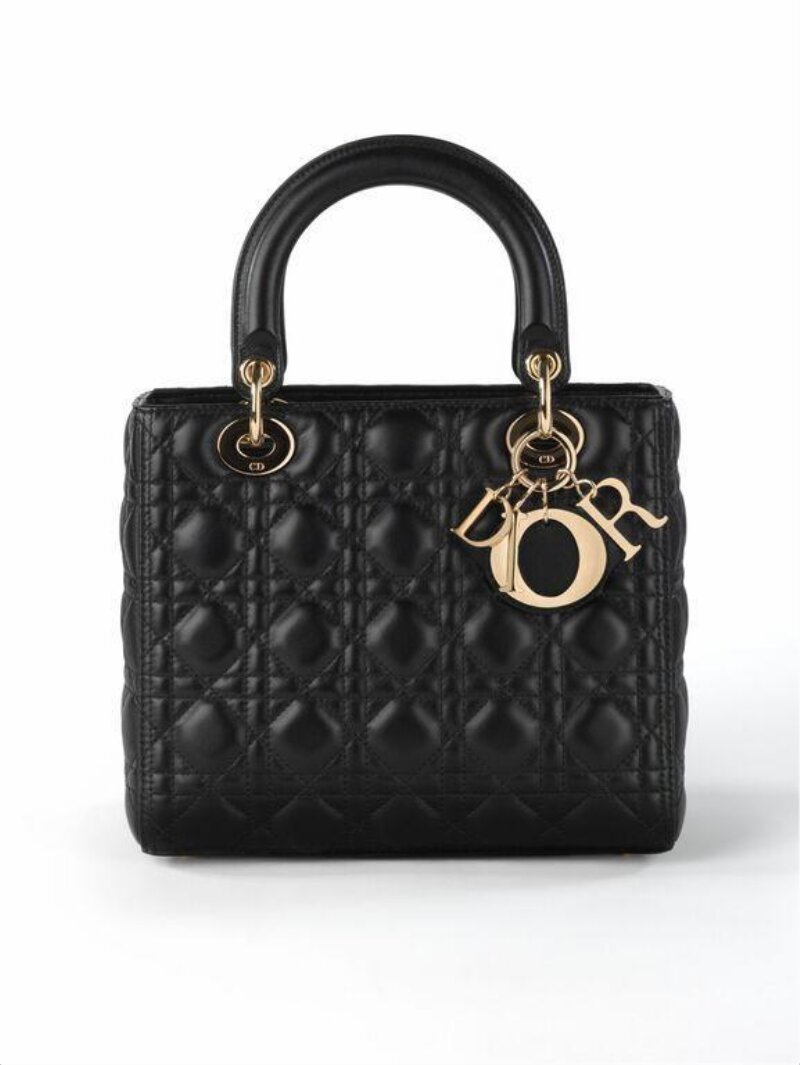
The subject of this report is a 2020 iteration of the Lady Dior handbag, sourced directly from the House of Dior’s ateliers in Paris. While the silhouette is a perennial icon—first introduced in 1995 and christened in honor of Princess Diana—the 2020 specimen presents a critical inflection point in its material and technical evolution. This is not merely a bag; it is a sculptural manifesto of the maison’s commitment to haute maroquinerie, a discipline that borrows its rigor from couture tailoring. For the purposes of Natalie Fashion Atelier’s 2026 translation, this piece serves as a masterclass in structural tension, surface rhythm, and the quiet luxury of precision.
The 2020 model under examination features the classic cannage quilting, a gold-tone hardware suite, and a pale blush (Rose des Vents) lambskin. However, the archaeological value lies not in its colorway, but in the micro-engineering beneath the surface. This report will dissect the bag’s construction into three strata: the skeletal armature, the epidermal textile logic, and the haptic finishing—each of which informs our 2026 directional silhouettes.
II. Technical Deconstruction: The Skeletal and the Epidermal
2.1 The Armature: Rigidity as a Silent Language
The Lady Dior is famously structured, almost architectural. A 2020 deconstruction reveals a double-layered internal chassis. The outer layer is a dense, pre-shrunk cotton canvas, bonded to a high-density polyethylene (HDPE) interlining. This is not the flimsy fusible found in mass-market bags; it is a thermo-molded lattice that has been heat-pressed to hold a specific curvature at the base and a perpendicular drop at the gussets. The base is reinforced with a rigid board—typically a cellulose composite—which is then wrapped in the same canvas to prevent sagging.
The critical dior technique here is the invisible seam allowance. The side panels are joined to the front and back using a reverse French seam, where the raw edges are encased within the lining, leaving a perfectly clean exterior. This is a tailoring technique borrowed from grand couture jackets, where the interior is as immaculate as the exterior. The handle attachments are not stitched through the outer leather; rather, they are anchored via metal D-rings to the internal canvas chassis, allowing the leather to float freely without stress points. This prevents the leather from tearing under the weight of daily use—a lesson in load-bearing distribution that we will apply to our 2026 draped evening clutches.
2.2 The Cannage Epidermis: Geometry and Tactility
The signature cannage pattern—inspired by the Napoleon III chairs used in the House’s salons—is not a simple embroidery. In the 2020 specimen, it is achieved via a padded quilting with a blind stitch. The lambskin (a chrome-tanned, 0.8mm thickness) is layered over a 3mm high-resilience foam, which is then quilted with a fine, silk-wrapped thread. The stitch is not pulled tight; it is calibrated to create a positive relief of approximately 2.5mm. This creates a tactile topography that is both visually rhythmic and physically yielding.
Materially, the 2020 leather is a semi-aniline finish, allowing the natural grain to remain visible under a light topcoat. This is crucial: it is not a corrected-grain leather. The surface is treated with a micro-wax emulsion that provides a soft sheen without plasticizing the hide. The result is a haptic warmth—the bag feels alive, almost skin-like, rather than cold or synthetic. The quilting density is precisely 14 stitches per 3cm, a metric that ensures the diamonds remain taut but not stiff.
For our 2026 work, we will reinterpret this not as a bag, but as a bodice and sleeve treatment. The cannage logic—a grid of padded, stitched relief—will be translated into a silk gazar and wool crepe hybrid, where the foam is replaced by a double-faced cashmere batting. The blind stitch will become a visible, tonal topstitch on the shoulder seams, echoing the bag’s architectural precision.
III. Materiality and the 2026 Translation
3.1 From Leather to Fluid Couture: The Structural Paradox
The 2020 Lady Dior’s materiality is defined by controlled rigidity. The leather is soft to touch but unyielding in form. For the 2026 haute silhouettes, we must invert this paradox. We will not mimic the leather; we will mimic its behavior. Our translation focuses on a double-faced technical duchesse satin—a fabric that is heavy enough to hold a crease like leather, yet fluid enough to drape. The internal HDPE chassis of the bag becomes a corseted understructure in our gowns, using a horsehair canvas and spiral steel boning that is entirely invisible from the exterior.
The key is the architectural seam. In the Lady Dior, the seams are the skeleton. In our 2026 silhouette, we will use exposed, piped seams on the exterior of a column gown, mimicking the bag’s gusset lines. These seams will be filled with a rolled silk cord, creating a subtle, three-dimensional ridge that catches light and defines the body’s geometry. This is a direct homage to the bag’s side panel construction, where the seam is a deliberate, proud feature rather than a hidden necessity.
3.2 The Cannage as Surface Narrative
In 2026, the cannage motif will evolve from a bag’s texture to a garment’s topography. We will employ a trapunto quilting technique on a sheer organza base, where the padding is inserted only within the diamond shapes, leaving the grid lines transparent. This creates a lattice of shadow and light on the skin, echoing the bag’s relief but with an ethereal, almost architectural lingerie quality. The stitch will be a fine, silk filament thread in a contrasting tone—a whisper of the bag’s tonal stitching, but amplified for the runway.
Furthermore, the hardware logic of the Lady Dior—its gold “D.I.O.R.” charms—will be translated into metallic grommets and lace along the hem of a bias-cut slip dress. These are not decorative; they serve as weighted anchors, allowing the silk to hang with the same gravitational certainty as the bag’s base. The charms, in our version, become a functional fringe of gold-plated beads, each one a tiny counterweight that ensures the fabric falls in a perfect, vertical cascade.
IV. Haptic Finishing and the Luxury of Restraint
The final layer of the 2020 Lady Dior is its edge painting. The edges are not left raw; they are coated in multiple layers of a polyurethane-based resin, applied by hand and sanded between coats to a glass-like finish. This is a dior technique of patience—a process that takes 8 hours per bag. In our 2026 collection, this translates to laser-cut, heat-sealed edges on our wool and cashmere blends. The fabric edges will be sealed with a micro-thin film of thermoplastic polyurethane, creating a clean, non-fraying line that mimics the bag’s painted edge. This allows us to cut sharp, architectural necklines and armholes without the need for hemming, giving the garments a sculptural finality.
The interior of the bag—the suede lining and the central zippered pocket—informs our inside-out detailing. For 2026, we will expose the internal seams of our coats and jackets, lining them with a contrasting silk charmeuse that is visible only when the garment moves. This is a nod to the bag’s immaculate interior, a secret luxury that is felt rather than seen. The zippered pocket becomes a hidden, functional placket within a tailored overcoat, offering the wearer a private, tactile moment.
V. Conclusion: The Icon as a Blueprint for the Future
The 2020 Lady Dior is not a relic; it is a living technical document. Its deconstruction reveals a philosophy of construction that prioritizes internal logic, material honesty, and haptic precision. For Natalie Fashion Atelier’s 2026 haute silhouettes, the bag is a blueprint for soft architecture—garments that are as structured as a building yet as fluid as a whisper. By translating the bag’s rigid chassis into corsetry, its cannage into trapunto quilting, and its edge painting into sealed seams, we honor the craft of Dior while pushing it into a new, textile-forward future. The Lady Dior, in its 2020 form, is a reminder that true luxury is not in the ornament, but in the invisible rigor of the construction.