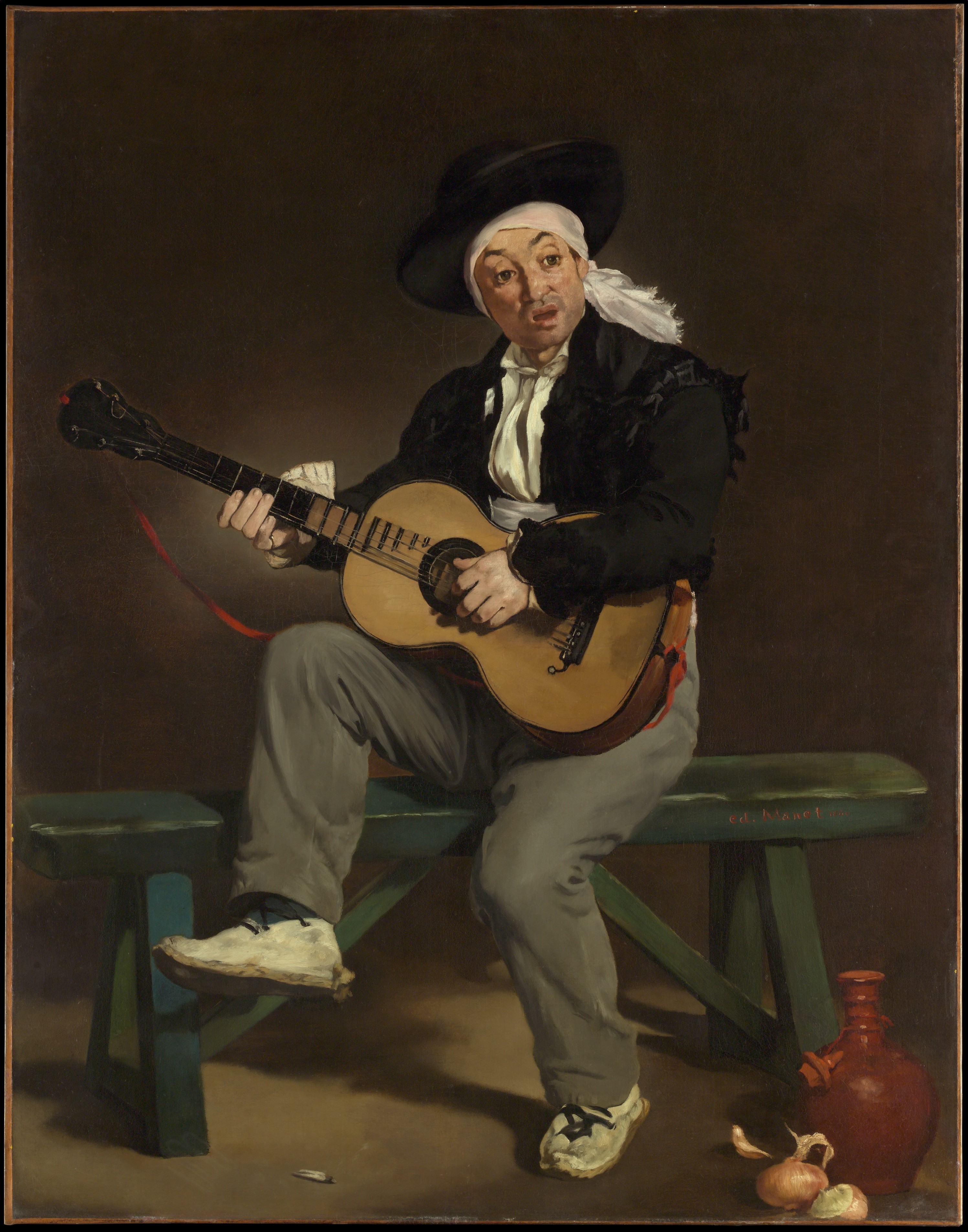
The Spanish Singer: A Study in Isolated Aesthetic Archaeology for 2026 Couture
Within the rarefied domain of haute couture, the act of creation is seldom an exercise in pure invention. It is, more precisely, a dialogue with the past—a disciplined excavation of visual memory, material culture, and gestural nuance. For Natalie Fashion Atelier, the 2026 collection begins not with a sketch, but with a singular artifact: The Spanish Singer, an oil on canvas whose provenance is less important than its isolated aesthetic resonance. Removed from the constraints of art-historical narrative, the painting functions as a pure archaeological find—a stratum of classical elegance waiting to be re-interpreted through the lens of contemporary luxury. This research artifact deconstructs the painting’s formal language to extract a blueprint for 2026 high-end silhouettes, translating painterly technique into structural innovation.
I. The Archaeological Lens: Decontextualizing the Canvas
To approach The Spanish Singer as an isolated artifact is to strip it of biographical and chronological noise. We do not ask who painted it, nor when; we ask instead what it performs. The canvas presents a figure of profound stillness—a singer, mid-phrase, whose posture suggests both vulnerability and formidable control. The materiality of oil on canvas is critical here: the medium allows for a luminosity that is not reflective but absorbent, a deep, internal glow that mimics the texture of skin, velvet, and shadow simultaneously. This is the first technical lesson for 2026: silhouettes must possess an internal light source, achieved not through embellishment but through the layering of matte and semi-matte fabrics that capture ambient light in a manner akin to glazed oil paint.
The figure’s attire—a romanticized vision of Spanish folk dress—is rendered with a deliberate ambiguity. The bodice is structured, almost architectural, while the skirt falls in heavy, unbroken folds that suggest weight and gravity. This duality—rigid containment above, fluid release below—forms the core structural thesis for our forthcoming silhouettes. The painting’s isolated context allows us to read this not as a historical costume, but as a pure formal opposition: the corseted torso versus the cascading volume. For 2026, we translate this into a new grammar of tailoring where the upper body is a sculpted exoskeleton, and the lower body is a study in controlled liquidity.
II. Materiality as Narrative: From Oil to Organza
The painter’s handling of oil paint offers a direct material index for fabric selection. Observe the brushwork on the singer’s face: it is smooth, almost porcelain, with a single highlight on the cheekbone that functions as a focal point. In contrast, the shawl draped over her shoulders is executed with thicker, more visible impasto strokes, creating a tactile roughness that invites the viewer’s eye to linger. This textural dichotomy is the second pillar of our 2026 research. We propose a material palette that mirrors this painterly range:
- For the “porcelain” zones: Double-faced cashmere bonded with a micro-thin layer of silk gazar, creating a surface that is simultaneously soft and unyielding—a fabric that holds its shape like a painted highlight.
- For the “impasto” zones: Irregularly woven wool bouclé, interspersed with metallic threads that catch light in scattered, non-uniform bursts. This fabric will be used for shawls, capes, and outer layers, providing a textural counterpoint that mimics the artist’s deliberate roughness.
- For the “shadow” zones: Matte, ultra-fluid crepe de chine in deep umber and sienna tones, dyed using a proprietary process that creates internal depth—a visual echo of the oil paint’s translucent layers.
The materiality of the canvas itself—its weave, its priming, its eventual craquelure—suggests a philosophy of imperfect perfection. For 2026, we will not pursue sterile, machine-perfect finishes. Instead, we will employ artisanal techniques such as hand-pleating, irregular shibori, and selective devoré to introduce a controlled “aging” into new garments. This is not nostalgia; it is a deliberate aesthetic strategy to create garments that feel as though they have always existed, even as they are being worn for the first time.
III. Silhouette Architecture: The Corseted Fluidity
The most potent extraction from The Spanish Singer is the silhouette’s underlying geometry. The figure’s torso is a narrow, elongated triangle, anchored by a defined waist and a high, proud bust. The skirt, however, expands into a wide, almost trapezoidal base, creating a visual pyramid that is both stable and dramatic. This is not the exaggerated dome of the 18th century, nor the rigid bell of the 1950s; it is a weighted volume that seems to obey the laws of gravity rather than those of crinoline.
Our 2026 silhouette, designated “La Cantante”, reinterprets this geometry through a contemporary lens. The bodice will be constructed using a molded corsetry technique—not with steel bones, but with a high-performance thermoplastic polymer that is heat-set to the wearer’s torso. This creates a seamless, second-skin shell that provides architectural support without visible seams or fastenings. The shell is then covered in the aforementioned cashmere-silk gazar, allowing the garment to read as both armor and flesh.
Below the waist, the silhouette breaks into a series of asymmetric, gravity-fed panels. These panels are cut on the bias and weighted at the hem with internal chain-stitched lead threads, ensuring that the fabric falls in deep, painterly folds that echo the oil canvas’s heavy drapery. The skirt is not full; it is voluminous in a specific direction, trailing to the floor at the back while rising to a sharp, ankle-revealing point at the front. This asymmetry creates a dynamic tension—the garment appears to be in motion, caught mid-song, even when the wearer is standing still.
IV. Chromatic Strategy: The Sienna-Umber Spectrum
The palette of The Spanish Singer is deceptively limited: warm siennas, deep umbers, a flash of ivory, and a single, piercing note of crimson in the singer’s sash. This restraint is a lesson in chromatic discipline. For 2026, we will not offer a rainbow. Instead, we will present a monochromatic spectrum that moves from pale bone to burnt umber, with a single accent color—a deep, blood-ruby red—reserved for lining, piping, or a single, strategic accessory.
This chromatic strategy serves a dual purpose. First, it emphasizes the silhouette and materiality, allowing the sculptural forms to take precedence over color. Second, it creates a sense of archaeological authenticity—these are the colors of aged pigments, of oil paint that has mellowed over centuries. The garments will feel like relics, yet their construction will be resolutely futuristic. This tension between ancient hue and modern form is the hallmark of the 2026 collection.
V. Gestural Embellishment: The Invisible Hand
Finally, we consider embellishment. In the painting, the only ornamentation is the singer’s jewelry—a simple cross and a pair of earrings that catch the light. The rest of the visual interest is derived from the play of light on fabric and skin. Our embellishment strategy for 2026 will follow this principle of gestural minimalism. We will employ hand-stitched micro-sequins in tonal colors, not to create a glittering surface, but to create a subtle, directional sheen that mimics the oil paint’s highlights. These sequins will be placed only where the painter would have placed a brushstroke: on the shoulder, the collarbone, the hip bone.
We will also introduce a technique we call “painted drapery”—a form of textile manipulation where panels of silk are hand-painted with a diluted resin, then pleated and heat-set to create permanent, sculptural folds that resemble the artist’s brushwork. These panels will be inserted into the garments as structural elements, not as decorations. The result is a garment that is already a painting, a wearable artifact that carries the memory of the canvas within its very construction.
Conclusion: A Living Archive
The Spanish Singer, in its isolated archaeological context, offers not a costume to be copied, but a method to be internalized. The painting teaches us about the relationship between structure and fluidity, between light and shadow, between the artist’s hand and the wearer’s body. For Natalie Fashion Atelier’s 2026 collection, this translates into a series of silhouettes that are at once ancient and futuristic, heavy and weightless, restrained and expressive. The oil on canvas becomes a blueprint for a new form of luxury—one that values depth over surface, gravity over flight, and the quiet power of a single, sustained note. This is the essence of aesthetic archaeology: not to resurrect the past, but to allow its forgotten wisdom to inform the future of couture.