Iron and the Architecture of Restraint: A Study in Material Memory
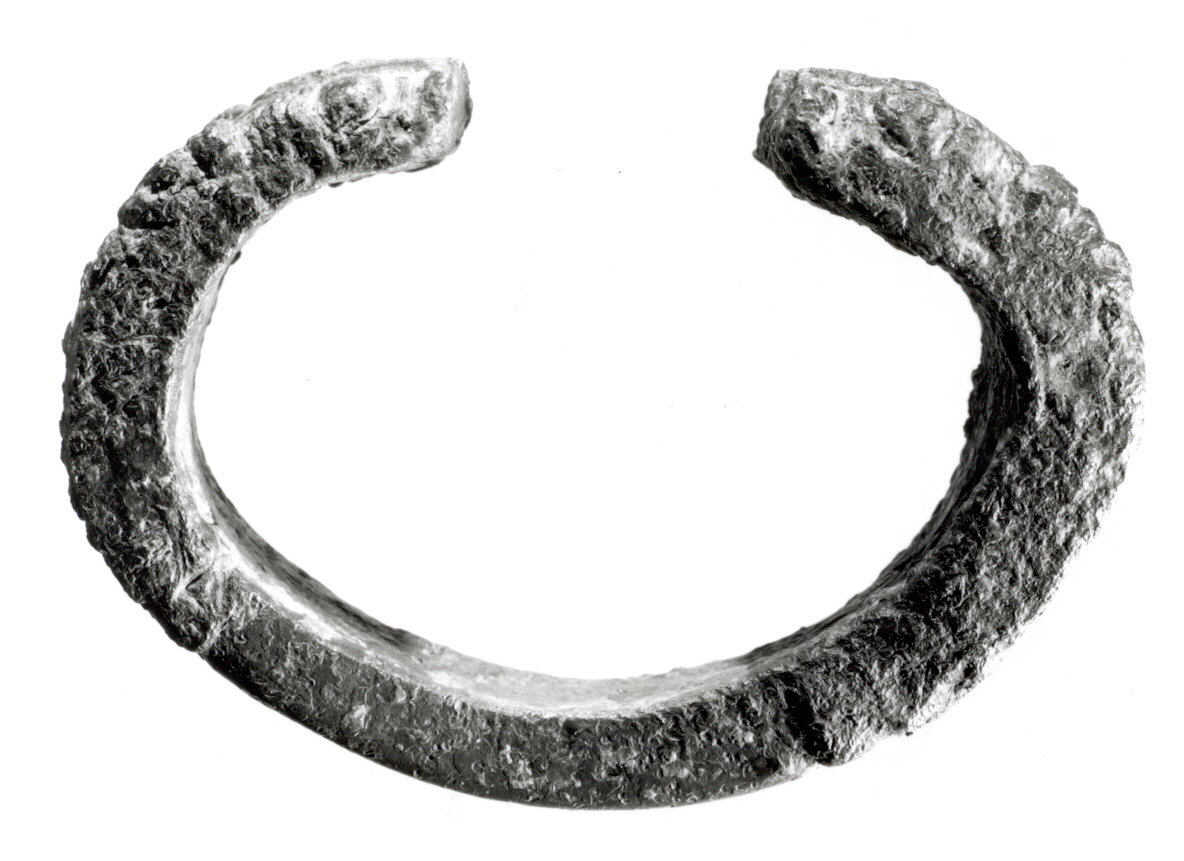
Within the isolated archives of Natalie Fashion Atelier, the study of a singular artifact—a forged iron bracelet from pre-Safavid Iran—offers a profound departure from the ornamental excess that often defines contemporary luxury. This is not a relic of delicate gold filigree nor a testament to gemological opulence. Instead, it is an object of stark, uncompromising materiality. Its presence in the archive, stripped of provenance and contextual narrative, forces a purely aesthetic and technical interrogation. For the 2026 haute couture silhouette, this iron band is not a historical footnote but a primary design informant, dictating a new lexicon of structural integrity, controlled volume, and the quiet power of negative space.
Deconstructing Classical Elegance: The Iron Dialectic
The classical elegance of this Iranian bracelet does not reside in ornamentation, but in its dialectical tension. It is simultaneously a weapon and a jewel, a tool of constraint and a symbol of status. The iron, likely smelted from regional ore, exhibits a surface that oscillates between matte, oxidized depth and the faint, almost imperceptible sheen of repeated handling. This is an aesthetic of patina as narrative, where time itself becomes the finishing agent. The form is a closed, rigid circle—uncompromising, complete. Its interior is smooth, worn by the friction of a wrist that no longer exists, while its exterior bears the micro-topography of hammer marks, each a record of the smith’s decisive gesture.
To deconstruct its elegance is to recognize that its beauty is derived from functional necessity and material honesty. There is no attempt to disguise the iron’s nature; no gilding, no enamel. The elegance is intrinsic, born from the purity of the circle and the gravity of the material. This challenges the Western couture tradition of mise en valeur—the embellishment of a base material. Here, the material is the message. The bracelet’s power lies in its refusal to be delicate. It is an architectural anchor, a statement of presence that does not whisper but resonates with a low, metallic hum of historical authority.
From Artifact to Silhouette: The 2026 Translation
The translation of this iron heritage into 2026 luxury silhouettes requires a methodological shift from replication to structural abstraction. We are not designing iron jewelry; we are designing garments that embody the principles of the iron band. The primary principle is that of the closed loop—a silhouette that defines its own boundaries with absolute clarity. For 2026, this manifests in a departure from fluid, indeterminate draping toward a new rigid fluidity. Jackets and bodices are conceived as architectural shells, their seams engineered to create a continuous, unbroken line around the torso, mimicking the bracelet’s circumference. The shoulder is no longer padded but forged, cut in a single, seamless sweep that terminates in a precise, unadorned cuff at the wrist—a direct nod to the artifact’s terminal finality.
This informs the “Iron Column” silhouette, a central thesis for our upcoming collection. It is a sheath dress constructed from a high-tensile wool and metal-infused technical silk, cut with zero ease. The garment does not cling; it encases. The waist is not cinched but defined by a structural seam that acts as a stress point, distributing the fabric’s tension like the forged band distributes pressure. The result is a silhouette of immense poise, where the wearer’s movement is not restricted but directed, creating a gait that is deliberate and commanding. This is the elegance of the iron: not freedom, but controlled, powerful restraint.
Materiality as a Design Language: The New Iron Age
Beyond silhouette, the materiality of the iron bracelet dictates a new palette and textural vocabulary for 2026. We reject the high-shine, mirror-polished surfaces of recent seasons. Instead, we embrace a “ferrous finish”—a treatment that mimics the bracelet’s oxidized, matte depth. Fabrics are developed with a dry, granular hand, such as a double-faced crepe with a mineral-infused coating that catches light with a dull, metallic glow. The color story is anchored in ferrous tones: deep graphite, shadowed gunmetal, and the warm, earthy brown of rust. These are not sad, somber colors, but rather a palette of grounded luxury, evoking the permanence of geological time.
This materiality extends to embellishment, which is redefined as structural accentuation. Instead of embroidery, we use topstitching in a contrasting, high-tensile thread to outline the garment’s architectural seams, echoing the hammer marks on the bracelet’s surface. Closures are not hidden but celebrated—large, forged metal clasps that serve as functional sculpture, anchoring the garment’s structure. The overall effect is one of assembled integrity, where every element is load-bearing, both visually and physically. The garment is not decorated; it is constructed with intent, each line a decision, each seam a boundary.
Negative Space and the Luxury of Absence
Perhaps the most profound lesson from the isolated iron bracelet is the power of negative space. The bracelet’s elegance is defined as much by the void it encircles—the absent wrist—as by the iron itself. For 2026, this translates into a radical exploration of cutouts and apertures. These are not playful reveals but architectural voids, strategic removals of fabric that define the silhouette’s boundary. A gown might feature a single, sweeping cutout from the shoulder blade to the mid-back, a void that mirrors the bracelet’s interior space. This is not about exposure; it is about definition through absence. The skin becomes the “negative space” that gives the garment its form, creating a dialogue between the solid fabric and the ephemeral body.
This principle also informs the collection’s layering strategy. We propose a new layering system based on discontinuous volumes. A rigid, iron-structured corset is worn over a fluid, sheer base, but they do not touch. A precise, 5-centimeter gap exists between the hem of the corset and the drape of the skirt, creating a visual “void” that separates and defines each architectural element. This is the luxury of absence, a sophisticated play of presence and withdrawal that demands a new kind of attention from the viewer. It is an elegance that is not overt, but deeply intellectual, requiring the observer to complete the form in their own mind.
In conclusion, the isolated Iranian iron bracelet serves as a masterclass in material integrity and structural purity. For 2026, Natalie Fashion Atelier translates its heritage not through imitation, but through the extraction of its core principles: the closed loop, the ferrous finish, and the power of negative space. The resulting silhouettes are not nostalgic; they are prophetic, offering a vision of luxury that is grounded, powerful, and deeply considered. They are garments for the modern individual who understands that true elegance is not found in excess, but in the confident, unadorned strength of a single, perfect line.