Deconstructing the Souvenir: An Aesthetic Archaeology of Gold, Enamel, and Diamond in the 2026 Silhouette
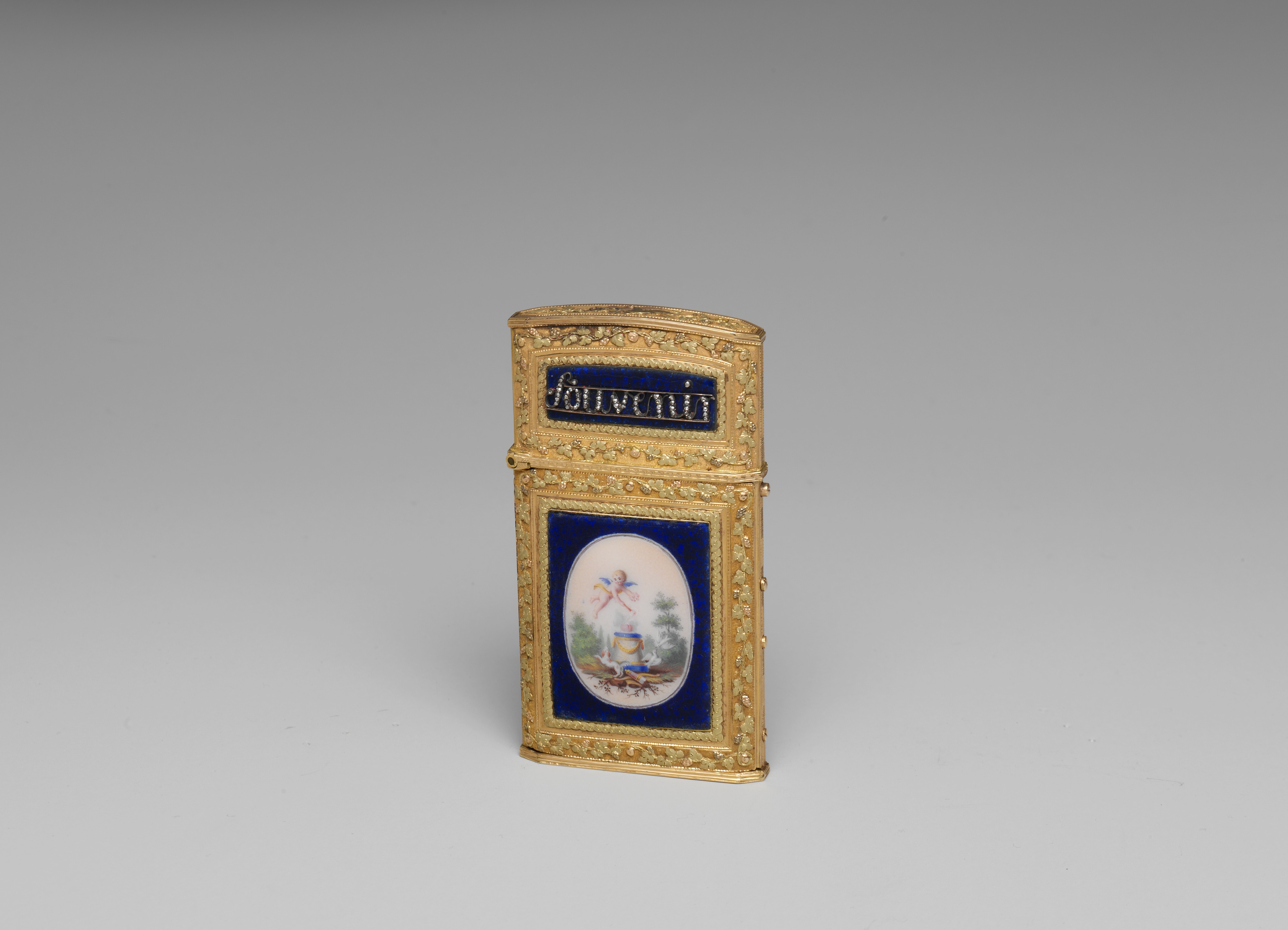
The concept of the souvenir, in its purest etymological sense, is an act of memory—a physical vessel for a transient emotion. Within the isolated archive of Natalie Fashion Atelier, we treat the souvenir not as a trinket, but as a compressed narrative of global heritage. Our current research artifact isolates the material triad of gold, enamel, and diamonds, stripping them of their conventional ornamental context to reveal their structural and philosophical DNA. This deconstruction is not a nostalgic return; it is an aesthetic archaeology that excavates the principles of permanence, luminosity, and chromatic tension, subsequently re-engineering them for the 2026 haute couture silhouette.
I. The Metallurgical Skeleton: Gold as Structural Memory
Historically, gold in global heritage—from Byzantine icons to Mughal miniatures—served a dual function: spiritual illumination and temporal wealth. In our archival isolation, we remove the monetary signifier and focus on gold’s physical properties of malleability and tensile strength. The 2026 silhouette borrows this metallurgical logic to construct what we term the armature interne—an invisible structural skeleton within the garment itself.
Instead of surface embroidery, we propose a woven gold filament infrastructure that defines the garment’s architecture. This is not a fabric; it is a metallic exoskeleton that allows for sculptural rigidity without the weight of traditional boning. The high-end silhouette thus adopts a fluid rigidity, where a jacket’s lapel can be folded like hammered gold leaf, holding a sharp, permanent crease that defies gravity. The color palette for 2026 shifts from gilded yellows to oxidized antique golds, reflecting the patina of age—a deliberate nod to the souvenir’s passage through time. This is a silhouette that does not drape; it remembers its form, echoing the way a relic retains its shape centuries after its creation.
II. Enamel as Chromatic Field: The Architecture of Surface
Enamel, particularly the cloisonné and champlevé techniques from global traditions, offers a unique study in controlled chaos. The artisan’s hand delineates a cell, and the molten glass fills it, creating a boundary that is both rigid and fluid. For the 2026 collection, we translate this into tactile surface geography on the silhouette’s outer layer.
We propose a departure from printed textiles toward enamel-infused resin panels that are appliquéd onto sheer technical silks. These panels are not decorative; they are architectural cutouts that alter the silhouette’s silhouette. Consider a column gown where the hip area features a deep, translucent enamel panel in a high-contrast bleu de Sèvres or vert émeraude. The enamel’s glossy, vitreous finish creates a visual weight that contrasts with the matte silk, effectively carving a new line into the body’s form. This is a study in negative space, where the enamel acts as a solid, colored volume that redefines the negative space around the wearer’s movement.
The 2026 silhouette, therefore, is not merely worn; it is enameled onto the body. The technique influences construction: seams are hidden beneath these vitreous panels, creating a seamless, almost ceramic appearance. This aligns with the global heritage of objets d’art—the garment becomes a wearable reliquary, its surface a testament to the artisan’s precision and the material’s permanence.
III. Diamond Light: The Physics of Disruption
Diamonds in historical artifacts were used to signal divine light or absolute power. In our isolated archive, we deconstruct the diamond’s refractive index—its ability to split white light into a spectrum. For 2026, we reject the concept of the diamond as a singular stone. Instead, we treat it as a micro-prismatic particle.
The high-end silhouette incorporates diamond-dust coatings applied to specific stress points—the shoulder peak, the wrist bone, the clavicle. This is not embellishment; it is optical engineering. When the wearer moves, these points catch the light and fracture the silhouette’s outline, creating a scintillating boundary that makes the body appear to shimmer at its edges. This technique, which we call éclat périphérique, is used sparingly to guide the viewer’s eye along the garment’s architectural lines.
Furthermore, the diamond’s hardness informs our structural finishing. We utilize diamond-tipped tools to cut the enamel panels and gold filaments, achieving tolerances of less than 0.1 millimeters. This precision allows for a micro-articulation in the garment—a sleeve that can pivot with the exactness of a jeweled mechanism. The 2026 silhouette is thus a kinetic sculpture, where the diamond is not a passive ornament but an active agent of motion and light, disrupting the classical, static elegance of couture with a dynamic, almost digital, precision.
IV. Synthesis: The 2026 Silhouette as a Living Relic
The convergence of these three materials—gold’s structure, enamel’s surface, and diamond’s light—produces a silhouette that is fundamentally paradoxical. It is heavy in concept yet light in application; it is ancient in technique yet futuristic in form. The 2026 haute couture line from Natalie Fashion Atelier does not borrow from the past; it re-engineers the past’s material logic to solve contemporary design problems of volume, movement, and identity.
The final silhouette is characterized by a defined, sharp shoulder (the gold armature), a sculpted, glossy torso (the enamel paneling), and fractured, luminous extremities (the diamond dust). This creates an hourglass that is not natural but constructed, a deliberate homage to the global heritage of ceremonial armor and devotional objects. The wearer becomes a custodian of memory, carrying a souvenir not of a place, but of a material’s ultimate potential.
In this isolated aesthetic archaeology, we have found that the souvenir is not about what was, but about what can be remembered into existence. The 2026 silhouette is that memory—a precise, luminous, and structurally sound artifact for the modern era, where elegance is defined by the intelligent, almost alchemical, transformation of gold, enamel, and diamonds into the very architecture of the garment itself.