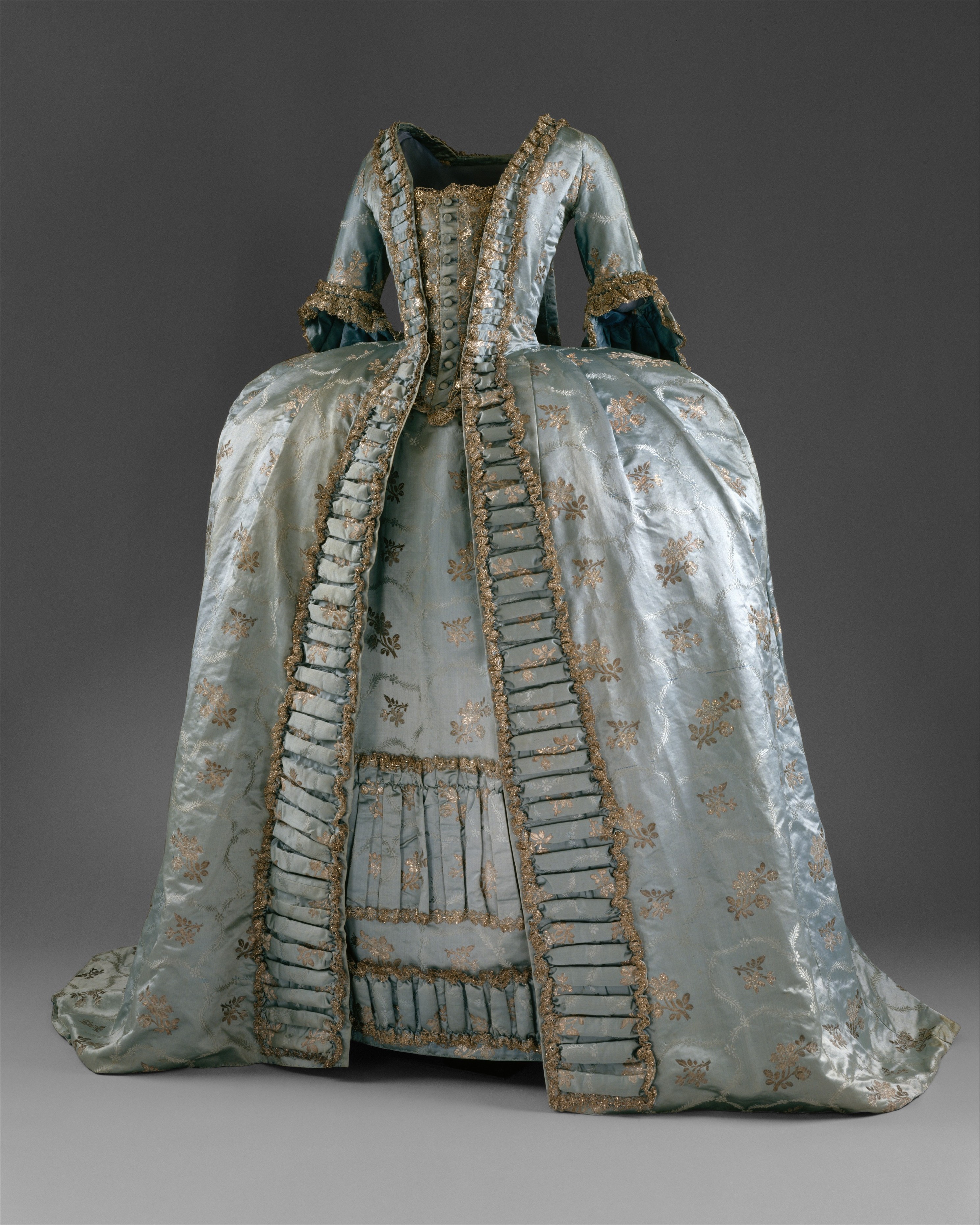
The Architectural Fluidity of the Robe à la Française: A Material Blueprint for 2026
The enduring allure of the Robe à la française lies not merely in its opulent aesthetic, but in its revolutionary approach to material comportment. For the 2026 collection at Natalie Fashion Atelier, we return to this eighteenth-century archetype not as a nostalgic replica, but as a technical thesis on the relationship between silk, gravity, and the female form. The historical garment—defined by its back pleats falling from the shoulders into a sweeping train—offers a masterclass in controlled volume. In the contemporary context, this translates into a sophisticated dialogue between structure and drape, where the fabric is not merely worn but engineered to perform.
Deconstructing the Silhouette: From Watteau Pleats to Kinetic Architecture
The defining characteristic of the robe à la française is the Watteau pleat, a continuous fold of fabric that descends from the neckline to the hem. Historically, this pleat was a marvel of textile engineering, allowing for an uninterrupted flow of silk that moved with the wearer, creating a living sculpture. In our 2026 analysis, we deconstruct this element to its core principle: uninterrupted material flow as a form of kinetic architecture.
Modern couture techniques allow us to reimagine the pleat using high-tensile silk organza and micro-elasticated taffeta. The goal is not to replicate the rigid grandeur of the 18th-century court, but to extract the logic of the pleat. By integrating laser-cut internal boning that mimics the historical paniers—yet is invisible to the eye—we achieve a silhouette that maintains a sleek, modern front profile while exploding into a dramatic, fluid back. This is the 2026 interpretation of asymmetric volume: the garment appears minimal from the frontal plane, yet reveals a majestic, architectural cascade upon movement. The silk is treated with a molecular-level finish that enhances its natural luster while providing structural memory, ensuring the pleat retains its form without the need for heavy interlinings.
Materiality as Narrative: The Silk Genome
The choice of silk is not arbitrary; it is a curatorial decision rooted in the heritage of European textile production. The robe à la française relied on the grande fabrique of Lyon, where silk weaving reached a pinnacle of technical perfection. For 2026, we source a 22-momme silk charmeuse and a double-faced silk gazar, each selected for their distinct behavioral properties. The charmeuse provides the liquid, sensual drape essential for the skirt panels, while the gazar offers the crisp, architectural rigidity required for the bodice and the structural pleats.
Our material research draws a direct line to the archive node referencing the 16th and 17th centuries—a period where objects and paintings served as silent witnesses to cultural collision and aesthetic fusion. The silk we employ is dyed using a technique that mimics the depth of pigment found in historical oil paintings, layering translucent dyes to create a chromatic depth that shifts with ambient light. This is not a flat color; it is a tonal gradient that evokes the patina of aged tapestries. The 2026 client is not purchasing a color; she is acquiring a material memory that resonates with centuries of artistic dialogue.
Translating Historical Craft into Modern Wearability
The primary technical challenge lies in translating the historical garment’s grandeur into a silhouette that meets contemporary standards of movement and comfort. The original robe was cumbersome, requiring extensive understructure. Our 2026 methodology employs a hybrid construction system. We utilize a micro-silicone grip layer at the waistline, invisible to the eye, which replaces the historical stays and lacing. This allows the silk to fall naturally without pulling or distortion, preserving the purity of the line.
Furthermore, the train—a symbol of aristocratic privilege—is reimagined as a detachable volumetric extension. Using magnetic closures embedded within the seam allowances, the wearer can transition from a dramatic, floor-sweeping silhouette to a sleek, cocktail-length column. This modularity is a direct response to the 2026 luxury consumer’s demand for versatility without compromising on artistic integrity. The construction process itself is a homage to the petites mains of the Parisian ateliers, with each seam hand-finished using a silk-wrapped cord technique that prevents puckering and ensures longevity.
The 2026 Silhouette: A Synthesis of Opposites
The resulting 2026 silhouette is a study in controlled tension. The bodice, cut with a high, sculptural neckline, evokes the modesty of the historical garment while utilizing a modern, corseted-free cut that follows the natural contour of the torso. The sleeves—historically the engageantes—are simplified into a three-quarter length, finished with a raw-edge silk fringe that adds a contemporary, deconstructed touch. The skirt, however, is where the historical resonance is most profound. It is cut on the bias to maximize the silk’s natural elasticity, allowing for a silhouette that is simultaneously voluminous and weightless.
This is the essence of our aesthetic archaeology: we excavate the structural principles of the past and recontextualize them within a modern framework of ergonomics and material science. The robe à la française teaches us that luxury is not static; it is a dynamic interplay between the garment and the body. In 2026, we honor this by creating pieces that are not merely worn but activated—garments that respond to movement, light, and the wearer’s intention. The silk, imbued with the ghost of the 18th century, becomes a conduit for a new form of elegance—one that is deeply rooted in history yet unequivocally of its time. The result is a couture offering that is both a technical marvel and a poetic homage to the enduring power of European craftsmanship.