Deconstructing the Classical: The Embroidered Linen Panel as a Blueprint for 2026 Silhouettes
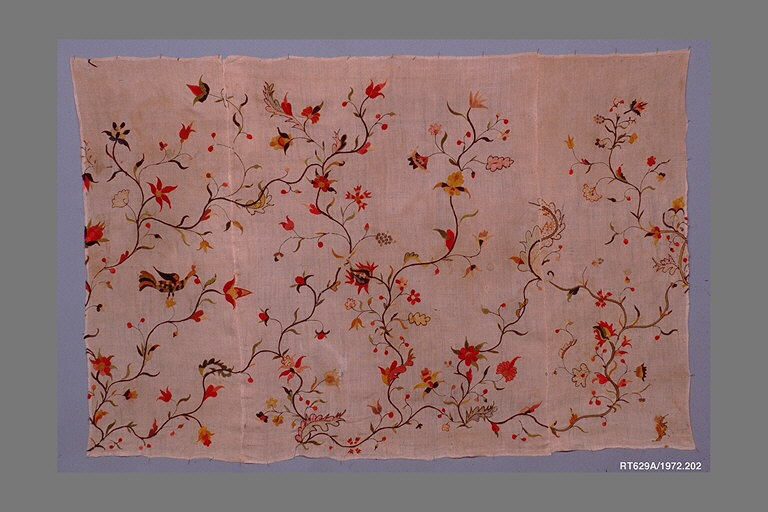
Within the hallowed archives of Natalie Fashion Atelier, the practice of aesthetic archaeology serves as our primary methodology for innovation. We do not merely observe historical artifacts; we excavate their structural logic, material intelligence, and cultural resonance. The subject of this research artifact—a singular embroidered panel of American heritage, composed of linen embroidered with wool—presents a compelling paradox. It is at once rustic and refined, utilitarian and ornamental. This document deconstructs the panel’s classical elegance and extrapolates its profound implications for the high-end silhouettes of 2026, translating its vernacular American roots into a Parisian lexicon of haute couture.
Material Dialectics: Linen and Wool in Tension
The panel’s foundational genius lies in its deliberate material opposition. Linen, a bast fiber derived from the flax plant, offers a matrix of crispness, tensile strength, and a distinctive, slightly irregular slub that captures light with a matte, mineral quality. Its thermal conductivity is inherently cool, promising a breathability that is both physical and visual. Wool, in contrast, is a protein fiber of animal origin, characterized by its natural crimp, elasticity, and hydrophobic resilience. When these two disparate natures are forced into a symbiotic relationship via embroidery, a new material reality emerges—one of structured tension.
From a technical standpoint, the wool thread does not merely rest upon the linen ground; it displaces it. The embroidery creates a topographical relief, a micro-architecture of raised loops, satin stitches, and knotted textures that interrupt the linen’s planar surface. This is not a decorative afterthought but a structural intervention. The wool’s inherent bulk adds localized weight and drape, pulling the linen in specific directions, thereby creating a fabric that possesses a dual nature: a crisp, cool base with warm, sculptural protrusions. For the 2026 silhouette, this dialectic informs a new approach to garment construction. We move away from flat, two-dimensional pattern-making toward a relief-based tailoring, where the fabric itself dictates the volume and the line, rather than the cut alone.
The Aesthetic Archaeology of the American Vernacular
To understand the panel’s classical elegance, one must situate it within its American heritage context. This is not the opulence of French court brocade nor the geometric precision of Byzantine silk. Instead, it speaks to a pioneering pragmatism—a beauty born of necessity and resourcefulness. The embroidery, likely executed by hand, carries the irregular rhythm of human labor. Its motifs, perhaps floral or geometric abstractions, are not rendered with machined perfection but with a charming, almost naïve, confidence. This is the aesthetic of the make-do, elevated to an art form.
This heritage informs 2026 luxury by reintroducing the value of imperfect singularity. In an era of hyper-digitized production, the hand-embroidered panel stands as a defiant artifact of the human touch. The classical elegance here is not about symmetry or gilding; it is about the authenticity of process. The visible stitch, the slight puckering of the linen where the wool has been pulled, the subtle variation in thread tension—these are not flaws but signatures. For the atelier, this translates into a design philosophy where the construction is the decoration. The 2026 silhouette will not hide its seams or its embroidery; it will celebrate them as narrative elements, making the garment a document of its own creation.
Translating to Silhouette: The 2026 Couture Imperative
The translation of this panel’s principles into high-end silhouettes requires a departure from conventional draping. We propose three distinct architectural directives for the Natalie Fashion Atelier 2026 collection, each derived from the panel’s intrinsic properties.
Directive One: The Asymmetric Cantilever
Inspired by the panel’s uneven distribution of wool embroidery, the first silhouette explores asymmetric weight distribution. Imagine a columnar gown in heavy, unbleached linen. The embroidery, executed in a dense, undyed wool, is concentrated on one shoulder and cascades diagonally across the torso, terminating at the opposite hip. This is not a flat print; it is a sculptural cantilever. The wool’s weight causes the linen to drape in deep, organically formed folds on the embroidered side, while the unadorned side remains taut and columnar. The silhouette becomes a study in controlled imbalance, a dialogue between tension and release. The wearer is not simply clothed; they are engaged in a kinetic relationship with the fabric, their movement altering the fall of the material.
Directive Two: The Relief-Constructed Bodice
The second directive focuses on the bodice, treating the embroidery as a form of integrated boning. Rather than using separate structural elements like whalebone or steel, the bodice is constructed from a single layer of linen that is densely embroidered with wool in a specific anatomical pattern. The wool acts as a flexible yet firm exoskeleton, providing support and shape without the rigidity of traditional corsetry. The embroidery follows the lines of the ribcage and the natural waist, creating a biomorphic armor that is both supportive and breathable. This results in a silhouette that is architectural yet fluid, hugging the form with a precision that is organic rather than mechanical. The 2026 aesthetic here is one of empowered softness, where structure is inherent to the material rather than imposed upon it.
Directive Three: The Textural Trompe-l’œil
Finally, the panel informs a silhouette that plays with perceptual depth. By utilizing wool embroidery in varying densities and stitch heights, we can create a textile that mimics the visual effect of layered garments or quilted padding without the associated bulk. A full-length coat, for example, could be constructed from a single layer of linen. The embroidery would be concentrated in specific zones—the upper back, the forearms, the hem—to suggest the presence of an under-layer or a padded lining. This is a textural trompe-l’œil, a deception that is both tactile and visual. The silhouette appears substantial and voluminous from a distance, yet upon closer inspection, it is revealed to be a masterful exercise in flat patterning and embroidery technique. This speaks to a new form of luxury: intellectual opulence, where the value lies not in the quantity of material but in the density of craftsmanship and the conceptual complexity of the design.
Conclusion: A Material Future Rooted in the Past
The embroidered linen panel, a humble artifact of American heritage, proves to be an inexhaustible source of technical and aesthetic innovation. Its classical elegance is not found in nostalgic imitation but in the timeless principles of material honesty, structural integrity, and the valorization of the handmade. For 2026, Natalie Fashion Atelier will not simply reference this panel; we will operationalize its logic. By embracing the tension between linen and wool, by celebrating the irregularity of the hand stitch, and by allowing material to dictate form, we forge a silhouette that is profoundly contemporary yet deeply rooted in the archaeological strata of craft. The future of luxury, we posit, is not in the new, but in the re-interpretation of the fundamental—a future where every garment is a studied artifact, and every silhouette is a thesis on the enduring power of material intelligence.