From Chalk to Couture: Deconstructing Classical Elegance for the 2026 Silhouette
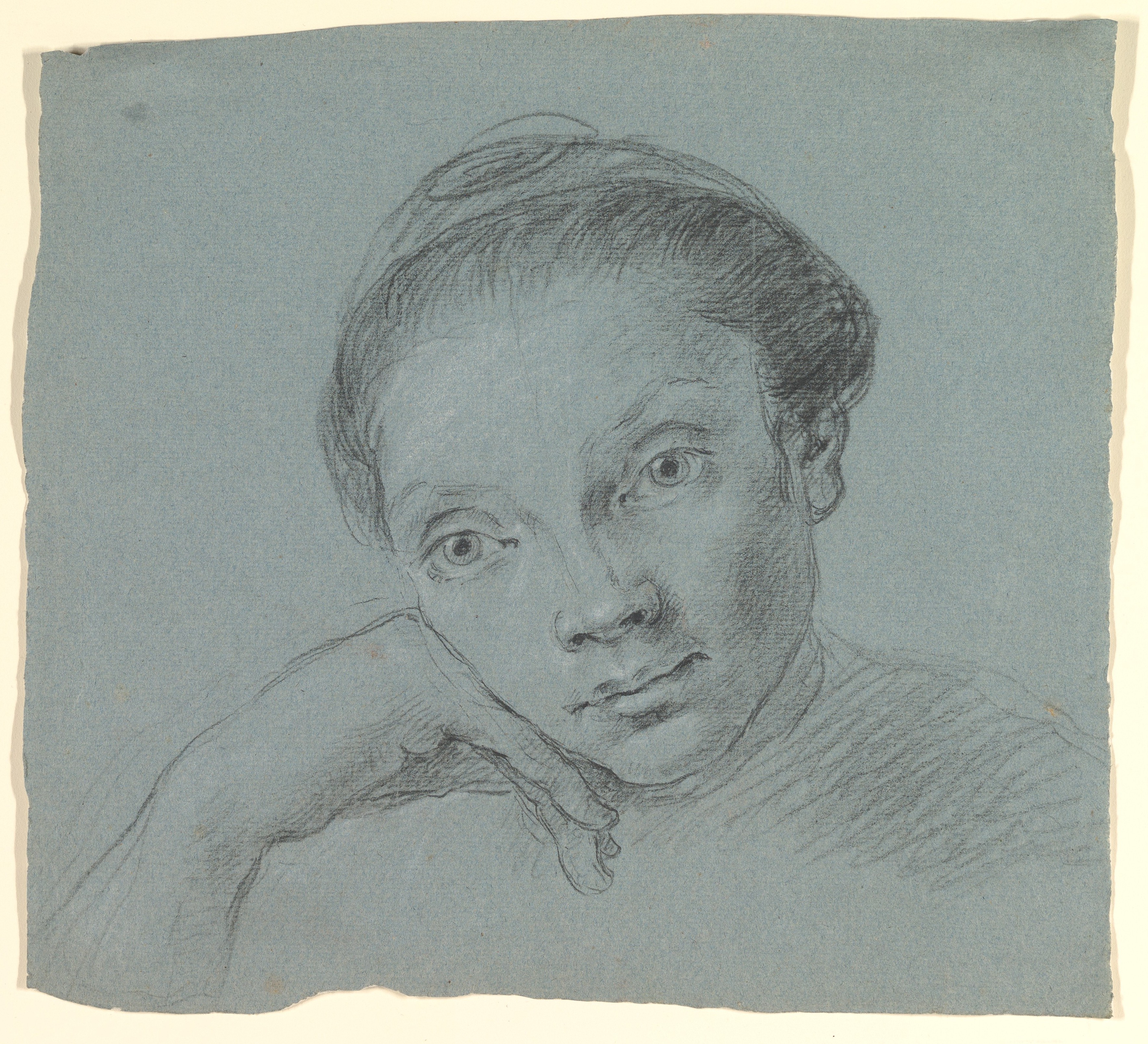
The study of a woman in bust-length three-quarter view, rendered in black and white chalk on blue paper, is not merely a preparatory sketch; it is a masterclass in restraint, proportion, and the architecture of the human form. Within the isolated context of aesthetic archaeology, this work functions as a pristine fossil of classical elegance—a distillation of the essential, unadorned truths that define feminine grace. For Natalie Fashion Atelier, this artifact is not a historical relic but a living blueprint. As we project toward the 2026 high-end collections, this drawing offers a radical counter-narrative to the prevailing digital maximalism, proposing instead a luxury founded on structural clarity, tonal subtlety, and the poetics of the unfinished. This paper deconstructs the drawing's formal language and translates its core principles into a concrete, technical directive for our forthcoming silhouettes.
I. The Architectural Grammar of the Three-Quarter View
The three-quarter pose is a deliberate spatial negotiation. It is neither the confrontational frontality of a portrait nor the evasive profile of a cameo. It occupies a liminal space, offering the viewer a dynamic tension between revelation and concealment. The sitter's form is caught in a moment of potential movement, a suspended breath that imbues the static image with kinetic energy. For the 2026 silhouette, this translates directly into our approach to garment construction and drape. We are moving away from static, two-dimensional flat patterns toward a three-dimensional, "sculptural drafting" methodology. The bodice, in particular, will be engineered to mimic this spatial complexity.
Consider the technical application: a bias-cut cuirass bodice that is anchored at the sternum but allowed to float slightly off the clavicle on one side, creating a deliberate asymmetry that echoes the drawing's off-axis composition. The internal structure will employ a hybrid of rigid horsehair canvas and flexible micro-mesh, allowing the garment to hold a defined shape while yielding to the body's natural micro-movements. The neckline—the primary focal point of the bust-length study—will be reimagined as a series of architectural planes. Instead of a simple scoop or V-neck, we propose a "chalk-line" neckline: a sharp, precise edge that is cut on a severe angle, mimicking the decisive stroke of the chalk. This edge will be finished with a hand-rolled, silk-organza piping, no more than 2mm in width, to provide a crisp, graphic definition that recalls the drawing's line quality.
II. Materiality as Metaphor: The Blue Paper and the Chalk's Voice
The choice of blue paper is the drawing's most profound conceptual gesture. This is not a neutral ground; it is an atmospheric field, a twilight zone between the stark black and the luminous white. This blue acts as a mediating tonal value, a third element that prevents the composition from becoming binary. It introduces a sense of depth, of air, and of a specific, melancholic mood. The black chalk provides the structural skeleton—the contours, the shadows, the definitive edges. The white chalk, applied with feather-light pressure, functions as the light source, catching the cheekbone, the brow, and the column of the neck, creating a sculptural relief that is almost palpable.
For 2026, this material dialogue is translated into our fabric and color philosophy. We are introducing a new textile system called "Chalk & Ground". The "Ground" is a signature fabric—a double-faced silk crepe that is piece-dyed in a range of nocturnal blues, from the deep indigo of a midnight sky to the softer, more ethereal "smoke blue" of dusk. This is not merely a background but an active participant in the garment's narrative. The "Chalk" is then applied as a surface treatment, not as a print, but as a three-dimensional embellishment technique.
Our atelier will employ a technique of micro-appliqué, where panels of ivory silk gazar and matte black silk organza are cut into razor-thin strips and hand-stitched onto the blue crepe base. The ivory strips, often no more than 3mm wide, are used to trace the lines of the body's light—along the collarbone, down the spine, and across the hip—mimicking the white chalk's caress. The black strips are used to create depth and shadow, layered under the ivory to create a subtle, tonal relief. The result is a garment that appears to be drawn onto the body, a wearable sketch that shifts and changes with every movement, just as the chalk marks on the paper catch the light differently depending on the viewing angle. This is luxury as process, not product—the finished garment is a testament to the hand that "drew" it.
III. The Aesthetic of the Unfinished: Negative Space and the 2026 Silhouette
The verso's summary sketch is perhaps even more instructive than the recto's more polished study. It is a rapid, almost impatient notation—a few swift strokes that capture the essence of the form without detailing it. This is the aesthetic of the unfinished, a celebration of the sketch over the final work. It privileges suggestion over description, and energy over perfection. For a luxury house, this is a radical and highly sophisticated proposition. It suggests a client who is confident enough to appreciate the beauty of a construction's internal logic, who values the intellectual rigor of a garment's "draft" over its superficial finish.
This principle manifests in the 2026 collection as a deliberate manipulation of negative space and transparency. We are designing garments with "sketch-like" openings—not merely cutouts, but intentional voids that reveal a glimpse of the body or a secondary layer of the garment. A floor-length column gown in the signature blue crepe will feature a sculptural "slash" from the hip to the mid-thigh, its edges bound with a raw, hand-knotted silk thread that mimics the broken, expressive line of the summary sketch. The gown is worn over a second, inner slip dress in a sheer, iridescent organza, creating a layered complexity that is revealed only in motion.
Furthermore, the "unfinished" look is applied to our outerwear and tailoring. A classic, double-faced wool coat is deconstructed at the shoulder seam, leaving the internal padding and canvas exposed in a deliberate, architectural manner. The exposed edges are treated with a clear, matte sealant to prevent fraying, creating a "frozen" moment of construction. This is not deconstruction in the 1990s sense of the term; it is a more refined, archaeological approach. It is as if we have excavated the garment's inner skeleton and chosen to display it as a precious artifact, a nod to the "isolated aesthetic archaeology" of our source material. The silhouette is thus defined not by its outer boundary alone, but by the dialogue between its finished and unfinished zones, creating a dynamic, intellectual tension that is the hallmark of true haute couture.
IV. Synthesis: A Collection of Quiet Power
In conclusion, the study of a woman in bust-length three-quarter view on blue paper is a profound source code for the 2026 Natalie Fashion Atelier silhouette. It is a manifesto against noise, against excess, and against the tyranny of the hyper-real. Our collection will be one of quiet power, where the drama is found in a precise line, the luxury in a subtle tonal shift, and the innovation in a return to the foundational principles of drawing and construction. The garments will be architectural, yet fluid; precise, yet suggestive; and above all, they will carry the unmistakable aura of the hand that made them—a hand that, like the artist with their chalk, understands that true elegance lies in the confident, deliberate, and beautiful stroke.