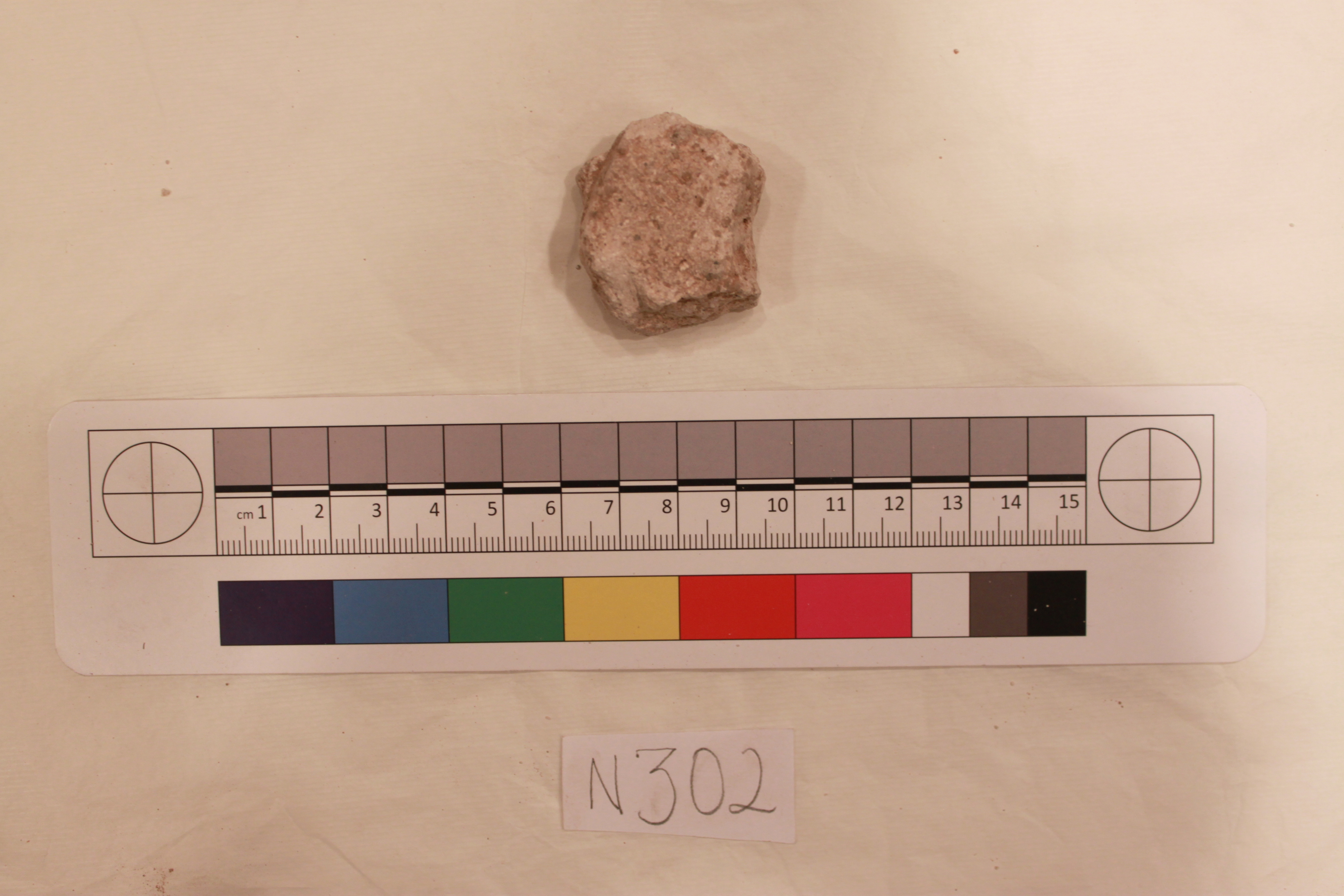
From Ornament to Architecture: The Stucco Fragment as a Blueprint for 2026 Haute Couture Silhouettes
The isolated study of a carved stucco fragment—detached from its original architectural context—offers a rare opportunity for aesthetic archaeology. Within the atelier, such an artifact is not merely a relic but a repository of proportional logic, surface tension, and sculptural intent. For Natalie Fashion Atelier, the stucco fragment serves as a masterclass in the dialectic between rigidity and fluidity, between ornamental excess and structural restraint. This research artifact deconstructs the classical elegance inherent in carved stucco and translates its core principles into a coherent design language for 2026 luxury silhouettes, where the garment is conceived not as a covering, but as a habitable sculpture.
I. The Material Dialectic: Stucco’s Inherent Contradiction
Stucco, in its carved form, presents a unique material paradox. It is a composite—typically lime, sand, and marble dust—that, when wet, is infinitely malleable, yet upon curing, achieves a stone-like permanence. This transition from plasticity to petrification is the foundational metaphor for our 2026 collection. The haute couture silhouette must emulate this process: it should appear as if the fabric has been poured, manipulated, and then frozen into a state of perfect, immobile elegance. The technical challenge lies in achieving this visual permanence while maintaining the wearer’s kinetic freedom.
From a craftsmanship perspective, the carved stucco fragment reveals a hierarchy of depth. High-relief elements capture primary light, while undercut areas create profound shadow. Translating this to fabric necessitates a mastery of structural draping and internal boning architecture. We are not merely tailoring cloth; we are carving negative space. The 2026 silhouette will therefore feature pronounced, almost geological shoulder lines, supported by internal corsetry that mimics the load-bearing capacity of a cornice. The fabric—likely a double-faced wool crepe or a compacted silk gazar—must possess enough body to hold a carved edge, yet be supple enough to suggest the original wet plaster.
II. Proportional Grammar: The Fragment’s Hidden Canon
Even in isolation, a stucco fragment retains the proportional grammar of its origin. Whether derived from a Hellenistic frieze or a Baroque ceiling, the fragment’s edges—though broken—suggest a larger, mathematical order. This is the essence of classical elegance: not symmetry, but a dynamic equilibrium of masses. For the 2026 collection, we reject the static symmetry of traditional evening wear. Instead, we adopt an asymmetrical volumetric balance, where a substantial, sculpted hip panel is counterweighted by a stark, minimal bodice.
The fragment’s carved lines—often acanthus leaves or fluted folds—are not arbitrary. They follow a Fibonacci-esque curvature, guiding the eye along a predetermined path. In our couture construction, this translates to seam lines that function as architectural grooves. These seams are not functional closures but decorative incisions that segment the garment’s surface, creating a play of light and shadow that shifts with the wearer’s movement. The 2026 silhouette will employ laser-cut leather appliqués that mimic the high-relief carving, applied onto a base of fluid matte jersey. The contrast between the rigid, stucco-like appliqué and the liquid base fabric is the contemporary interpretation of the fragment’s broken edge—a dialogue between the finished and the unfinished.
III. Surface Tension and Patina: A Study in Light Absorption
A carved stucco surface is never uniformly smooth. It bears the trace of the artisan’s tool—the subtle undulations of the spatula, the faint scoring of the chisel. This micro-topography is critical to its aesthetic power. In high-end fashion, this translates to a rejection of flat, digital prints in favor of tactile, three-dimensional surface treatments. For 2026, we propose a technique of plissé sculptural, where accordion pleats are heat-set at varying intensities to create a topographical map on the fabric’s surface. This is not a uniform pleat but a carved relief, where the density of the folds varies to capture or repel light.
Furthermore, the patina of age on the stucco fragment—the subtle yellowing, the micro-cracks, the accumulation of grime in the crevices—offers a chromatic palette. The 2026 color story moves away from pristine whites and stark blacks. Instead, we introduce “archaeological neutrals”: plaster grey, lime-washed ivory, oxidized bronze, and shadowed umber. These are not flat colors but are achieved through multi-step dyeing processes and hand-painted gradients that mimic the uneven aging of the plaster. The goal is a garment that feels ancient, as if it has been excavated from a lost civilization, yet is impeccably modern in its construction.
IV. Silhouette Architecture: From Cornice to Column
The most direct translation from stucco to silhouette lies in the manipulation of the garment’s outer edges. A carved stucco cornice projects outward with a sharp, decisive undercut. In 2026, we see the return of the extreme peplum and the cantilevered hip. These are not soft, draped flourishes but rigid, protruding structures, often reinforced with horsehair canvas and even thin metal hoops, echoing the architectural cantilever. The jacket silhouette becomes a “fragment of a frieze”—cropped severely at the waist, with a dramatic, carved collar that stands away from the neck, resembling a broken entablature.
Conversely, the columnar gown—a staple of haute couture—is reimagined through the lens of the fluted stucco pilaster. The gown’s verticality is emphasized by deep, sculpted godets that are pressed to a knife-edge, creating a series of parallel ridges and valleys. These godets are not sewn flat; they are attached at the hip and allowed to fall with a deliberate, weighted movement, mimicking the vertical drip of wet plaster. The hemline is not clean but deliberately “fractured”—cut at irregular, sharp angles to suggest the broken base of the fragment.
V. The Parisian Synthesis: Restraint as Luxury
For Natalie Fashion Atelier, the ultimate lesson of the stucco fragment is one of disciplined excess. While the carving is ornate, it is always contained within a structural logic. The 2026 silhouette will not be maximalist in the sense of overwhelming embellishment. Instead, it will be maximalist in structural complexity. The ornament is the architecture; the architecture is the ornament. Each seam, each dart, each fold is a deliberate, carved decision.
The Parisian atelier’s role is to refine this archaeological impulse into wearable luxury. This means a rigorous focus on inner construction. The external simplicity of a bias-cut silk gown is belied by an internal matrix of silk organza and micro-fusible interfacing that gives the fabric a “stucco-like” memory. The garment must hold its sculpted shape when placed on a mannequin, yet respond with fluidity when worn. This is the haute couture paradox: to be both monument and movement.
In conclusion, the carved stucco fragment, in its isolated state, is not a static object of the past but a dynamic blueprint for the future. For 2026, Natalie Fashion Atelier will produce silhouettes that are archaeological yet futuristic, heavy in visual mass yet light in physical presence. The collection will be a testament to the enduring power of classical proportion, reinterpreted through the lens of modern material science and Parisian savoir-faire. The stucco fragment teaches us that true luxury is not in the addition of material, but in the sculptural subtraction of space—a lesson that will define the most coveted silhouettes of the coming season.