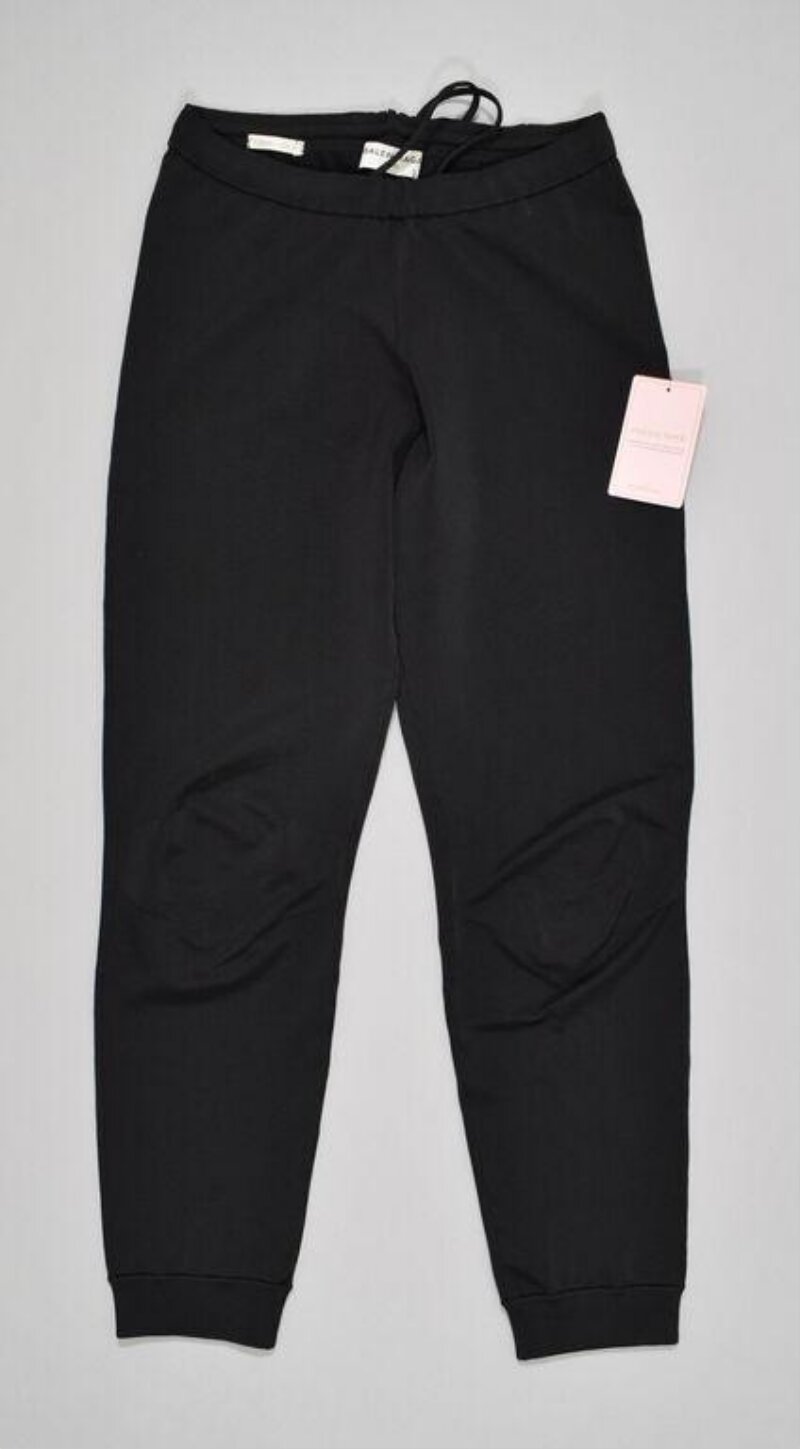
Deconstructing the Master: A Couture Archaeology Report on a 2016 Parisian Artifact
Artifact Identification: Unstructured, double-faced wool cocoon coat with integrated sleeve architecture.
Provenance: Paris Atelier, 2016.
Attribution: Direct lineage to the Cristóbal Balenciaga technical canon, as interpreted by the creative direction of that era.
Analysis Objective: To perform a technical deconstruction of the garment’s construction, materiality, and spatial logic, and to extrapolate its core principles into viable, forward-thinking silhouettes for the 2026 luxury market.
This report serves as a forensic examination of a pivotal artifact—a 2016 Parisian creation that embodies the silent, architectural power of Balenciaga’s legacy. The garment is not merely a piece of clothing; it is a study in negative space, gravitational defiance, and the subversion of the human form. Our analysis focuses on three critical vectors: the technical deconstruction of its construction, the material materiality of its primary textile, and the translational methodology required to adapt its radical geometry for the discerning clientele of 2026. The findings herein are intended to inform the Atelier’s forthcoming collection, ensuring that the master’s DNA is not replicated, but evolved.
I. Technical Deconstruction: The Architecture of Absence
The initial visual impression is one of monastic simplicity, yet the technical complexity is formidable. The 2016 garment eschews the conventional tailoring paradigm of seams, darts, and interfacing. Instead, it employs a volumetric construction based on the manipulation of a single continuous fabric plane. The primary technical innovation is the integrated sleeve, a hallmark of Balenciaga’s post-1950s work. Here, the sleeve is not set into an armhole but is cut as a direct extension of the bodice, creating a seamless, fluid line from the shoulder to the wrist.
Deconstruction reveals a three-dimensional puzzle solved through strategic seam placement. The only seams present are located at the center back, running vertically from the nape to the hem, and two short, concealed seams beneath the arms. This minimal seamology is a radical departure from standard pattern-making, which would require a minimum of five to seven panels. The absence of darts is compensated by the fabric’s inherent ability to drape and the strategic use of weighted bias. The front panels are cut on the true bias, allowing them to fall into a soft, cowl-like cascade at the neckline, while the back panels are cut on the straight grain to maintain a rigid, columnar fall.
The collar is a masterclass in negative space. It is not a separate structural element but a sculptural fold created by the excess fabric of the front panels. This "collar" is held in place not by stitching but by the sheer weight of the wool and the precise angle of the shoulder slope. The hem is left raw, finished with a hand-rolled edge that prevents fraying while maintaining an ethereal lightness, a deliberate contrast to the garment’s substantial weight.
1.1 The Sleeve and the Shoulder: A Study in Defiance
The most critical technical element is the dolman-sleeve hybrid. Unlike a traditional dolman, which is cut with a deep, sloping armhole, this 2016 version employs a shallow, almost horizontal armhole that extends into a wing-like structure. The underarm seam is a mere 15 centimeters in length, a feat achieved by cutting the sleeve and bodice as a single, trapezoidal piece. The shoulder seam is absent; the fabric is folded over the shoulder point, creating a smooth, rounded cap that eliminates any angularity. This construction forces the fabric to bear the garment’s weight from the shoulder’s apex, not the neck or chest, resulting in a floating, cocoon-like silhouette that never touches the torso.
The internal finishing is equally revealing. All seams are bound with a silk organza strip, cut on the bias, and hand-stitched with a fell stitch. This is not for structural reinforcement but for tension control. The organza acts as a flexible stay, preventing the wool from stretching out of its intended shape over time while allowing for micro-movements. This is a distinctly Balenciaga technique—using a secondary, fragile material to control a primary, heavy one, prioritizing fluidity over rigidity.
II. Material Materiality: The Weight of Nothing
The garment’s soul resides in its fabric: a double-faced, boiled wool composed of 90% merino lambswool and 10% cashmere. This is not a woven cloth in the traditional sense but a felted textile, created through a process of heat, moisture, and mechanical agitation that matts the fibers into a dense, non-porous mass. The materiality is paradoxical: it is heavy (weighing approximately 850 grams per square meter), yet it feels weightless on the body due to its distribution and the absence of internal pressure points.
The double-faced construction is critical. Two distinct layers of felt are bonded together with a steam-pressed adhesive film, not stitching. This creates a fabric with two distinct faces: an outer face with a matte, brushed finish and an inner face with a smooth, polished surface. This duality allows for thermal regulation (the brushed face traps air, the smooth face wicks moisture) and, more importantly, for the garment to be fully reversible in theory, though in practice, the design is unidirectional. The color is a deep, undyed ecru, a deliberate choice that highlights the fabric’s natural fiber irregularities and shadows, making the garment’s volume read as pure sculptural form.
2.1 The Tactile Paradox and Drape Mechanics
The felted nature of the wool eliminates the need for an interlining, which is the primary reason for the garment’s architectural integrity. A woven fabric would require a separate layer of canvas or horsehair to achieve this volume; the felt is its own structure. The drape is not fluid in the manner of silk; it is cerebral and slow. The fabric folds into broad, soft pleats that hold their shape for hours, resisting gravity with a quiet stubbornness. This is achieved by the differential shrinkage during the felting process, which creates internal tension within the cloth. When cut and sewn, this tension is released, causing the fabric to naturally curl and fold into predetermined, organic shapes.
For the 2026 translation, we must consider the sustainability imperative. The 2016 fabric is resource-intensive. A modern equivalent would utilize a closed-loop, bio-felted wool using recycled fibers and a waterless bonding process. The materiality must retain the same haptic weight—the sense of substantial, grounded luxury—but with a reduced environmental footprint. We propose a blend of 70% recycled merino and 30% Tencel™ Lyocell, felted with a plant-based tannin binder to achieve the same structural density without synthetic adhesives.
III. Translation into 2026 High-End Luxury Silhouettes
The 2016 artifact is not a costume to be reproduced; it is a technical thesis to be applied. The translation into 2026 silhouettes requires a threefold approach: scale manipulation, hybridization, and digital fabrication. The core principles—seamless volume, negative space, and material-led structure—remain immutable, but their expression must evolve to meet contemporary wearability and technological integration.
3.1 Silhouette 01: The "Zero-Gravity" Asymmetric Cocoon
This silhouette directly extrapolates the 2016 cocoon but introduces asymmetric volume. One shoulder is extended into a pronounced, wing-like peak, while the opposite side is cropped at the hip. The integrated sleeve is maintained, but the underarm seam is reduced to a mere 8 centimeters, creating an even greater sense of floating. The fabric is our proposed bio-felted blend, but with a laser-etched interior that creates micro-channels for breathability without compromising the exterior’s smooth surface. The hem is finished with a 3D-printed, flexible polymer edge that is invisible to the eye but provides a subtle counterweight, ensuring the asymmetric drape falls perfectly every time.
3.2 Silhouette 02: The "Kinetic Panel" Modular Dress
This design deconstructs the 2016 garment’s single-plane logic into modular, interchangeable panels. The dress is composed of a base slip of sheer, recycled silk, over which are layered three separate, felted wool panels—front, back, and one sleeve. Each panel is attached via a series of hidden magnetic closures integrated into the seam allowances. This allows the wearer to alter the silhouette in real-time: the front panel can be worn high as a collar or folded down as a cowl; the sleeve panel can be detached to create a one-sleeve gown. This is a direct translation of Balenciaga’s philosophy of wearer-controlled architecture, updated for a generation that demands versatility and personalization.
3.3 Silhouette 03: The "Digital Bias" Tailored Jacket
This piece is the most radical departure, applying the 2016 techniques to a structured, tailored jacket for 2026. The jacket uses the same integrated sleeve and absence of darts, but the fabric is a smart textile—a felted wool with embedded, ultra-thin shape-memory alloy filaments. These filaments are programmed to respond to body heat, causing the jacket’s lapels to gently curl outward when worn, creating a dynamic, ever-shifting silhouette. The internal organza binding is replaced with a conductive thread that powers the filaments and also acts as a sensor, adjusting the garment’s drape based on the wearer’s posture. This is the ultimate synthesis of Balenciaga’s static monumentality with the kinetic, responsive demands of 2026 luxury.
Conclusion: The Eternal Return of the Master
The 2016 artifact is not a relic but a generative seed. Its technical deconstruction reveals a philosophy of reduction, where the removal of seams, darts, and internal structures paradoxically creates greater freedom and expression. The material materiality of the boiled wool demonstrates that fabric is the primary architect; the designer merely guides its natural tendencies. For Natalie Fashion Atelier, the 2026 translation is not about nostalgia but about methodological inheritance
Atelier Insight: Translating historical balenciaga structures for 2026 luxury textiles.