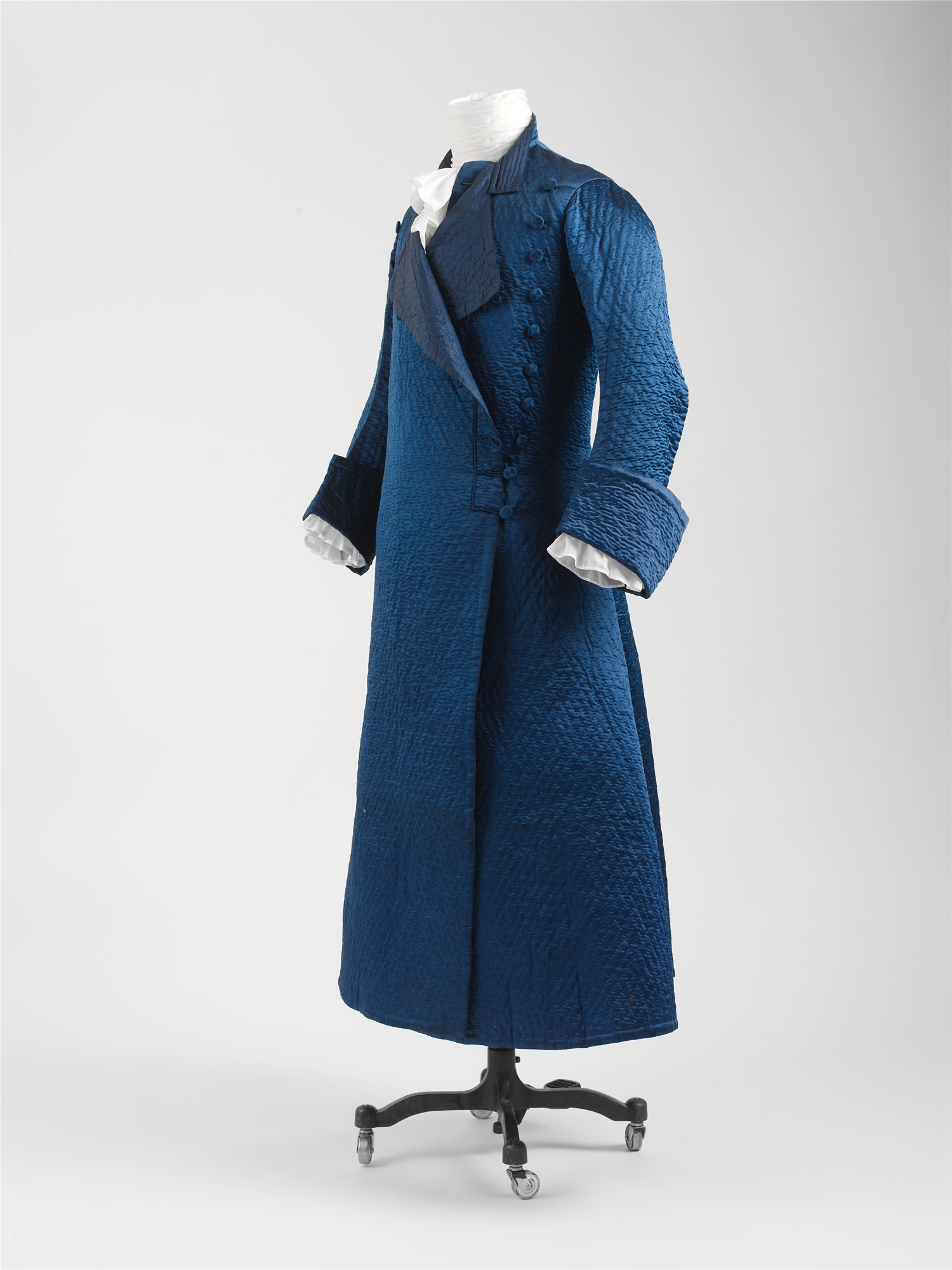
Deconstructing the Banyan: An Aesthetic Archaeology of Silk and Linen for 2026 Silhouettes
The banyan, a garment of profound historical resonance, offers a unique case study in the evolution of luxury dress. Originating as a loose-fitting robe worn by European elites in the 17th and 18th centuries, its form was paradoxically inspired by the flowing garments of the East, particularly the Japanese kimono and the Chinese changshan. For Natalie Fashion Atelier, the banyan is not merely a relic of colonial-era fashion; it is a blueprint for a new form of architectural drapery. This research artifact isolates the banyan from its broader historical narrative—an exercise in aesthetic archaeology—to extract its core principles of volume, asymmetry, and material honesty. By examining the interplay of silk and linen within this historical garment, we can formulate a technical lexicon for 2026 high-end silhouettes that prioritize fluidity over structure, and quiet luxury over overt ornamentation.
I. The Material Dialectic: Silk’s Luminescence and Linen’s Rigor
The banyan’s genius lies not in its cut, but in its material dialectic. Traditional banyans were often constructed in either rich, imported silks—typically Chinese damasks or painted silks—or in lighter, more domestic linens. The 2026 reinterpretation, however, demands a synthesis of these opposing forces. Silk, with its natural proteinaceous structure, possesses a unique drape coefficient that allows for continuous, unbroken folds. Its refractive index creates a surface that shifts between matte and luminous, depending on the angle of the wearer’s movement. Linen, conversely, is a bast fiber with a high tensile strength and a lower elasticity. It introduces a subtle, organic grain that prevents the silk from becoming overly saccharine or fluid. In our atelier, we propose a 60/40 silk-to-linen weave, where the linen acts as a structural warp and the silk as a lustrous weft. This creates a fabric that is simultaneously supple and resilient, capable of holding a sculptural fold while still responding to the body’s kinetic energy.
II. Silhouette Architecture: From Voluminous Negligee to Controlled Asymmetry
The historical banyan was defined by its voluminous, T-shaped construction—a radical departure from the fitted, corseted European garments of the same period. This absence of darts and waistline seams allowed the fabric to fall in unbroken vertical planes. For 2026, we deconstruct this geometry. The primary silhouette is no longer a simple rectangle; instead, we introduce a biomimetic asymmetry. The left panel of the garment retains the historical banyan’s generous width, cascading from the shoulder in a continuous, unseamed flow. The right panel, however, is truncated and integrated with a high side slit, exposing a secondary layer of pure, unbleached linen. This creates a dynamic tension between mass and void, a visual rhythm that echoes the classical Chinese principle of liu bai (留白), or "leaving blank space." The silhouette is not merely loose; it is strategically loose, with the volume concentrated at the back and the front offering a more streamlined, almost architectural profile.
III. The Closure System: The Invisible Fastening and the Art of the Wrap
The banyan’s traditional closure—a simple sash or tie—is a masterclass in functional minimalism. It relies on friction and gravity rather than buttons or zippers. In our 2026 iteration, we elevate this principle to a system of internal counterweights. Small, discreet silk-wrapped weights are sewn into the hem of the front panels. This allows the wearer to drape the garment without any visible fastening, the weight providing a subtle tension that keeps the fabric anchored. The sash itself is reimagined as a sculptural belt, woven from the same silk-linen blend but with a higher density of linen, giving it a more rigid, belt-like quality. The act of wrapping becomes a ritual of personalization; the silhouette is not fixed but is a result of the wearer’s gesture. This aligns with the 2026 luxury trend towards adaptive couture, where garments are designed to be manipulated and reconfigured by the individual, rather than conforming to a standardized fit.
IV. Surface Treatment: The Archaeology of Patina and Weave
In isolating the banyan from its original context, we must also isolate its surface. The historical garments often show signs of wear—fading, creasing, and subtle abrasions—which we now interpret as a form of aesthetic patina. For 2026, we do not replicate this aging artificially; instead, we design for it. The silk-linen blend is treated with a proprietary enzyme wash that softens the fibers and creates a micro-crinkle texture. This is not a distressed look; it is a pre-empted texture that will evolve with the wearer. The weave itself is a complex jacquard, featuring a subtle, tonal pattern inspired by the geometric lattices found on Ming dynasty porcelain. The pattern is not printed but woven, creating a raised, tactile surface that interacts with light in a manner reminiscent of moiré. This surface treatment serves a dual purpose: it enhances the fabric’s tactile luxury and, more importantly, it reinforces the garment’s structural integrity, preventing the silk from slipping on the linen base.
V. Integration into the 2026 Collection: The "Banyan Moderne"
The final synthesis of this research is the Banyan Moderne, a capsule within the larger Natalie Fashion Atelier 2026 collection. This piece is not a costume; it is a functional garment for the contemporary urban environment. It is designed to be worn over a simple, high-neck silk shell and tailored trousers, functioning as a lightweight overcoat or a dramatic evening layer. The silhouette is elongated to a mid-calf length, with the asymmetrical hem creating a dynamic line that elongates the figure. The internal counterweights allow for a variety of draping options: the wearer can choose to expose the left shoulder, cinch the waist with the sculptural belt, or let the garment hang open, revealing the linen underlayer. This versatility is key to its 2026 relevance, addressing the consumer’s desire for investment pieces that offer multiple sartorial expressions.
In conclusion, the banyan, when subjected to aesthetic archaeology, reveals itself to be a highly sophisticated system of material and spatial relationships. By deconstructing its classical elegance—its reliance on drape, its rejection of rigid tailoring, and its celebration of natural fibers—we have formulated a blueprint for a 2026 silhouette that is both historically informed and radically contemporary. The silk-linen dialectic provides the technical foundation, while the asymmetric, counterweighted construction offers a new paradigm of wearable architecture. The Banyan Moderne is not a revival; it is a continuation of a dialogue between East and West, between structure and fluidity, between the past and a future defined by intelligent, material-driven luxury.