The Silent Architecture of Silk: An Aesthetic Archaeology of the French Jacket
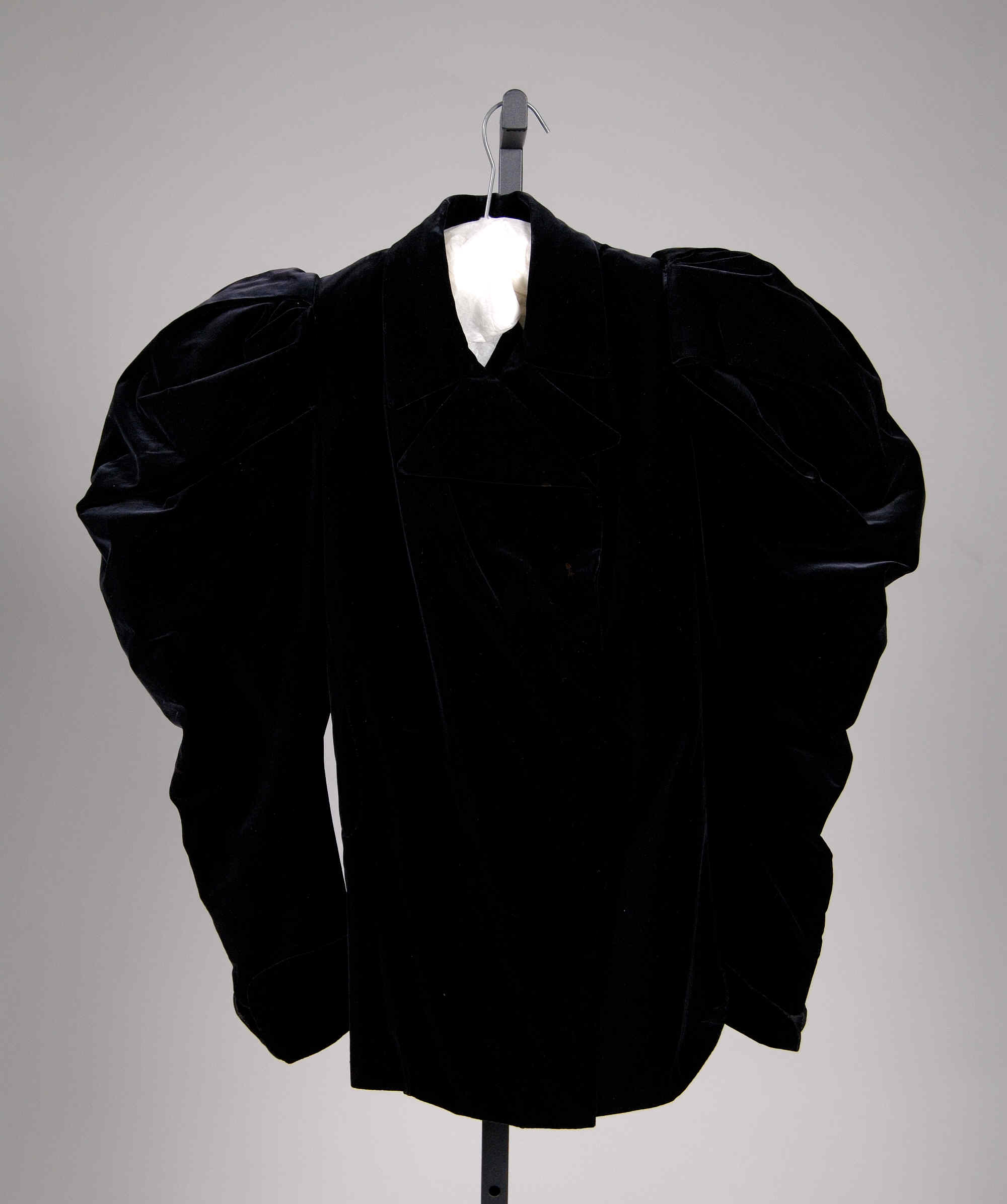
The jacket, in its most exalted French expression, is not merely a garment. It is a treatise on restraint, a study in the management of volume, and a dialogue between the body and the fabric that envelops it. At Natalie Fashion Atelier, our archival practice—what we term aesthetic archaeology—involves the systematic excavation of historical masterpieces to extract their foundational principles, not their literal forms. We do not seek to replicate the past; we seek to distill its intelligence. This research artifact isolates the classical French jacket, specifically its historical construction in silk, to decode the principles that will define the high-end silhouettes of 2026. The subject is not the garment itself, but the silent architecture it embodies—a geometry of elegance that remains perpetually relevant.
Deconstructing Classical Elegance: The Grammar of the Silhouette
The classical French jacket, from the tailored jaquette of the Belle Époque to the rigorous constructions of mid-century maisons, operates on a precise grammatical structure. Its elegance derives not from ornamentation, but from the tension between its internal structure and its external surface. The historical silk jacket, often lined in cotton or fine wool, was a marvel of negative space. The shoulder line, whether softly rounded or sharply defined, established a horizontal axis. The waist, cinched or gently released, created a secondary, opposing axis. The resulting silhouette was a study in controlled dynamism—a form that suggested movement while remaining perfectly static.
In our archaeological analysis, we identify three core principles from this heritage. First, the primacy of the seam. In historical French construction, seams were not merely junctions; they were the primary sculptural tools. The princesse seam, the tailleur seam, and the intricate curved seams of the col montant were engineered to follow the body’s topography with mathematical precision. Second, the discipline of the understructure. The historical silk jacket relied on a hidden framework—canvas, horsehair, and meticulous pad-stitching—to give the silk its shape. The silk was the visible expression, but the structure was the invisible architect. Third, the economy of the line. Every dart, every pleat, every edge was justified. There was no superfluous fabric. This economy is the hallmark of true luxury: the confidence to say more with less.
Materiality as Narrative: The Silk Substrate
Silk, in the French couture tradition, is not a passive material. It is an active participant in the design process. Its inherent properties—its lustrous surface, its remarkable tensile strength, its fluid drape, and its capacity for both crispness and softness—demand a specific approach to tailoring. The historical ateliers understood that silk does not conform; it collaborates. A silk jacket from the 1920s, for example, often utilized crêpe de chine for its fluidity, while a 1950s evening jacket might employ duchesse satin for its architectural rigidity. The choice of silk weave was a strategic decision, not an aesthetic whim.
For 2026, our materiality research focuses on the tactile intelligence of silk. We are not interested in the obvious luxury of a glossy surface. Instead, we are exploring the potential of silk gazar—a tightly woven, high-twist silk that offers unprecedented sculptural hold while maintaining a featherweight presence. This material allows us to construct a jacket that has the structural integrity of a tailored wool, yet possesses the ethereal luminosity of silk. The 2026 silhouette will not be defined by heavy padding or rigid canvases. It will be defined by the self-supporting nature of the silk itself, engineered through weave density and bias cutting to create a form that appears to float on the body. This is a direct evolution of the historical principle: the structure is not added; it is intrinsic.
From Archive to Future: The 2026 Silhouette Principles
Our aesthetic archaeology yields a clear directive for 2026 high-end silhouettes. We propose a departure from the prevailing trends of oversized, unstructured shapes and hyper-constructed, corseted forms. Instead, we introduce the “Fluid Architecture” silhouette—a synthesis of historical precision and contemporary ease. This silhouette is characterized by three distinct innovations.
First, the suspended shoulder. Drawing from the early 20th-century raglan and dolman sleeves, but re-engineered for the 21st century, the 2026 shoulder will not sit as a hard, padded shelf. It will be a continuous, fluid line that extends from the neck to the arm, creating a sense of weightlessness. The construction will utilize a single, continuous piece of silk gazar, cut on the bias to allow for natural movement, with the sleeve integrated into the body panel. This eliminates the traditional armhole seam, creating a silhouette that is both sculptural and supremely comfortable. The historical principle of the seam as a sculptural tool is thus inverted: the absence of the seam becomes the primary architectural gesture.
Second, the modulated waist. The 2026 jacket will not employ a cinched waist or a rigid peplum. Instead, it will feature a subtle, internalized waist suppression achieved through a series of concealed, curved darts that originate from the armhole and terminate at the center-back panel. This technique, reminiscent of the taille basse of the 1920s, creates a gentle, hourglass suggestion without any external constraint. The jacket will follow the body’s natural rhythm, but with a deliberate, almost imperceptible delay. The silk’s ability to hold a pressed crease is crucial here; the darts will be pressed with a sharp edge, creating a permanent, architectural fold that defines the waist without touching it.
Third, the redefined closure. The classical French jacket often relied on a series of small, covered buttons or a hidden hook-and-eye closure. For 2026, we propose the “invisible placket”—a closure system that is entirely hidden within the jacket’s structure. The front edge will be cut in a continuous, curved line that wraps around the torso, with the two panels meeting in a perfectly flush, zero-gap seam. This is achieved through a complex system of internal, magnetic closures encased in silk organza, allowing for a clean, uninterrupted front line. This design element speaks to the historical principle of economy: the closure is not a decorative feature; it is an integral part of the jacket’s architectural integrity. The result is a silhouette that is monolithic, elegant, and utterly modern.
Conclusion: The Enduring Logic of Elegance
The classical French silk jacket is not a relic. It is a repository of design intelligence. Its principles—the primacy of the seam, the discipline of the understructure, and the economy of the line—are not stylistic preferences; they are logical responses to the human form and the properties of exceptional materials. By isolating these principles through aesthetic archaeology, we can move beyond pastiche and create a 2026 silhouette that is both innovative and deeply rooted in heritage. The Fluid Architecture jacket, constructed in self-supporting silk gazar, with its suspended shoulder, modulated waist, and invisible closure, is the direct descendant of this lineage. It does not imitate the past; it continues its unfinished conversation. It is a testament to the fact that true elegance is not a trend, but a permanent, silent architecture that transcends time.