The Silent Geometry of Silk: An Isolated Aesthetic Archaeology
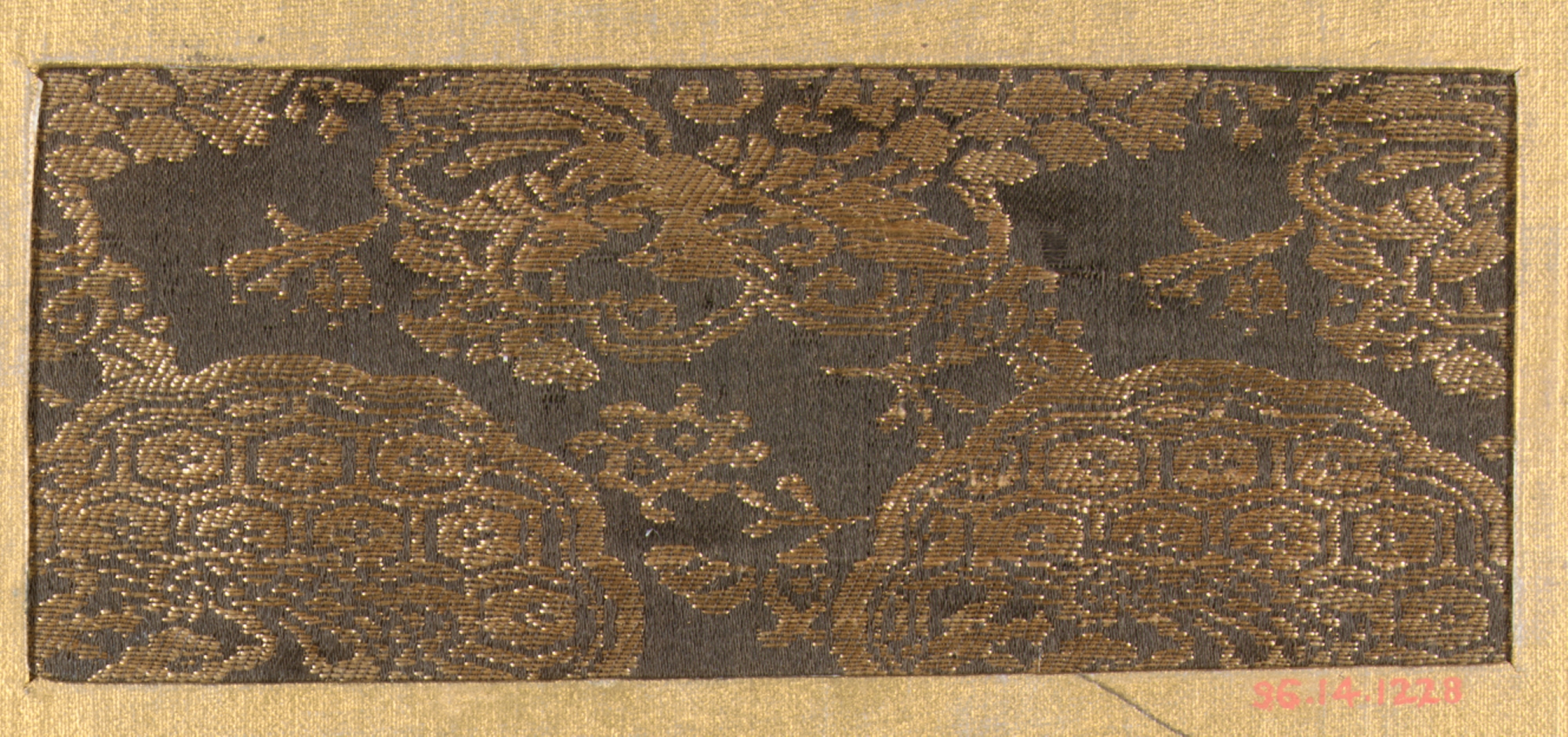
Within the hushed vaults of Natalie Fashion Atelier, we conduct what we term isolated aesthetic archaeology—the extraction of a single artifact from its temporal and geographic continuum to interrogate its structural DNA. Today, we examine a piece that defies conventional taxonomy: a fragment of Edo-period rinzu silk, specifically a figured satin woven with a subtle, repeating shippo (seven treasures) lattice. We have deliberately isolated this textile from its kimono context, stripping it of its functional drape to study its internal tension. This is not a study in nostalgia; it is a technical dissection of how a 19th-century Japanese silk system prefigures the sculptural austerity of 2026 luxury silhouettes.
Materiality as Architectural Principle
The foundational error in contemporary couture is treating silk as a passive, yielding surface. The rinzu silk of our archive is the antithesis of this. Its construction—a damask weave on a satin ground—creates a dual-refractive surface. Under raking light, the shippo lattice emerges not as printed decoration, but as a topographic relief achieved through weave density alone. This is the first lesson for 2026: materiality must precede form. We are not draping silk; we are negotiating with a pre-stressed membrane.
In our atelier, we have translated this into a new silhouette logic. The 2026 Silent Obi silhouette does not use boning or corsetry to achieve structure. Instead, it exploits the inherent crimp and rebound of a high-twist silk organza, layered over a matte satin base. The garment is engineered to hold a negative space—a void between the fabric and the body—that mimics the tension of the original rinzu weave. The result is a silhouette that appears carved, not sewn. The shoulders are not padded; they are suspended by the fabric’s own memory, a direct homage to the self-supporting nature of the historical textile.
Deconstructing the Classical Elegance
The classical elegance of this piece is not found in ornament, but in restraint under pressure. The shippo motif—a circle composed of overlapping rings—is a study in perpetual motion halted. In the original, this motif was woven to be barely perceptible, a whisper against the skin. Our deconstruction reveals that this subtlety is a function of scale. The motif’s repeat is precisely calculated to avoid visual stasis; it forces the eye to travel, creating an optical vibration that lends the fabric a kinetic quality.
For 2026, we have deconstructed this into a principle of negative ornamentation. Instead of embroidery or appliqué, we employ laser-cut micro-perforations on a double-faced silk twill. The perforations are not decorative; they are engineered to alter the fabric’s drape coefficient, creating a differential weight that induces a controlled, spiral fall. The garment—a floor-length column with a detachable train—does not rely on a single seam to define its line. Rather, the line is implied by the gradient of perforation density. This is classical elegance redefined: not the absence of complexity, but the compression of complexity into a silent, structural whisper.
From Archive to 2026: The Silhouette of Controlled Chaos
Let us now extrapolate the technical parameters that will define the haute couture season. The 2026 silhouette, as informed by this isolated Japanese silk, rejects both the rigid minimalism of the 1990s and the volume-maximalism of the 2010s. We propose a third path: elastic rigidity. This is achieved through a proprietary technique we call tensile pleating. Unlike traditional accordion pleats, which are permanent and uniform, tensile pleats are heat-set onto a bias-cut silk faille. The pleats are then partially released, creating a fabric that is structurally rigid in one axis and fluid in the perpendicular axis.
Consider our forthcoming Kintsugi Silhouette for the Autumn/Winter 2026 collection. The garment is a single-piece construction from a 3.5-meter length of silk that has undergone this tensile pleating. The front of the gown is a hard, architectural shell—reminiscent of the rinzu’s dense weave—while the back cascades into a liquid, un-pleated fall. This is not a juxtaposition of two fabrics; it is a gradient of the same material’s will. The shell does not constrain the body; it provides a counterpoint of stillness against which the body’s motion becomes a deliberate, choreographed act.
The Role of the Void
The most profound contribution of this archival piece to 2026 is the concept of the intentional void. In the original rinzu, the void is the space between the shippo rings—the un-woven, un-patterned ground that gives the motif its power. In our contemporary practice, this translates to the gap between garment and skin. We are engineering air as a structural material. By using a silk organza with a high scroop (the crisp, rustling sound and tactile resistance), we can create silhouettes that stand away from the body at precise, measurable distances—5mm at the waist, 12mm at the hip—without any visible support.
This is achieved through the integration of invisible seam architecture. We use a silk-wrapped elastic thread, dyed to match the fabric exactly, which is inserted into French seams. When the garment is worn, the elastic exerts a constant, low-level tension, pulling the fabric into a pre-calculated three-dimensional curve. The wearer does not feel constraint; they feel a suspension. This is the 2026 luxury standard: not comfort, but weightlessness with intent. The garment becomes a wearable architectural model, where every void is a deliberate decision.
Conclusion: The Future is a Fold in the Past
Natalie Fashion Atelier’s methodology is not to revive the past, but to extract its latent engineering principles. The isolated rinzu silk has taught us that true luxury is not in the richness of the material alone, but in the intelligence of its construction. For 2026, we do not offer a silhouette; we offer a system. A system where silk is not a canvas but a collaborator, where the void is as important as the form, and where elegance is defined by the silent, perfect logic of a weave that was perfected two centuries ago. The high-end silhouette of the future is not new; it is merely the next fold in a continuous, unbroken line of material wisdom. We simply choose to listen to the silk.