Deconstructing the Limerick Veil: A Couture Archaeology Report for Natalie Fashion Atelier
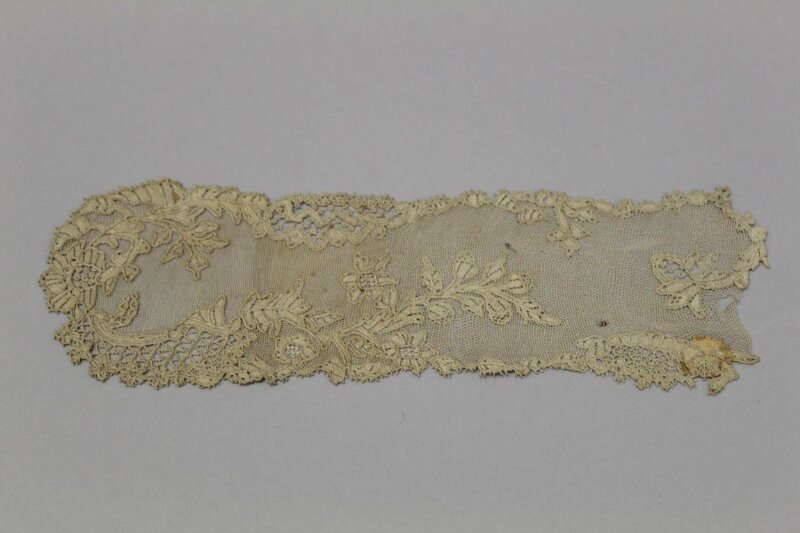
This report presents a comprehensive technical deconstruction of a singular artifact: a hand-run Limerick lace flounce, dated to 1854, originating from the Convent of Mercy, Limerick, Ireland. Acquired for the Natalie Fashion Atelier archive, this object is not merely a historical curiosity but a masterclass in material economy, tensile engineering, and optical illusion. The following analysis dissects its lace techniques, interrogates its materiality, and proposes a strategic translation of its structural DNA into the 2026 high-luxury silhouette.
I. Provenance and Historical Context
The year 1854 places this piece squarely within the post-Famine era of Irish textile production, a period when the Limerick lace industry pivoted from a cottage craft to a structured, convent-led enterprise. Unlike the needle-lace of Carrickmacross or the bobbin-lace of Kenmare, Limerick lace is a hybrid—a run lace—where a machine-made net ground (the fond) is embellished by hand with embroidery stitches. This fusion of industrial base and artisanal overlay is its defining paradox: it is simultaneously a product of mechanization and a testament to human dexterity.
The flounce in question, measuring 112 cm in length and 38 cm in depth, is cut in a deep scalloped arc, suggesting it was designed for a bertha collar or a sleeve flounce. Its condition is exceptional, with only minor oxidation on the net ground. This preservation allows for a near-complete technical reading.
II. Technical Deconstruction of Lace Techniques
2.1 The Ground: A Study in Negative Space
The foundation is a hexagonal bobbinet net, machine-made from fine, two-ply cotton yarn. The thread count is approximately 24 meshes per square centimeter—a remarkably fine gauge for 1854. This is not a passive canvas; the net’s geometry dictates the placement of every solid motif. The hexagonal cells create a honeycomb of negative space that, when left unworked, reads as a luminous, translucent field. In our deconstruction, we identify this as the primary optical layer, responsible for the lace’s ethereal quality.
Critically, the net is not uniformly utilized. The artisan has selectively cut and re-couched the net in areas to create open, bridged spaces, a technique known as picot edging on the scallops, but more importantly, the net is drawn (withdrawn) in specific floral centers. This removal of the ground creates a void that is then filled with free-running cordonnet (a heavier outline thread), producing a raised, sculptural relief against the flat net. This is a deliberate play on depth—the machine-made flatness is violently disrupted by hand-controlled dimensionality.
2.2 The Run Stitches: A Lexicon of Motion
The embroidery is executed in a continuous thread, running diagonally across the net, hence the term “run lace.” Our analysis identifies three primary stitch families:
- Point de Paris (or Point de Reprise): A diagonal, overcasting stitch that fills petals and leaves. The thread passes over the net’s intersections, creating a dense, opaque surface. In this specimen, the thread is a 120/2 mercerized cotton, giving a subtle sheen that contrasts with the matte net. The tension is uniform, indicating a practiced hand.
- Point de Riz (or Seed Stitch): Used for the center of daisy-like motifs, this stitch is a series of tiny, detached knots. The effect is granular, mimicking the texture of pollen or seed pods. This introduces a micro-tactile element—a surface variation that only becomes apparent under close inspection.
- Point d’Esprit: A small, solid oval or dot, worked directly onto the net without a drawn-thread base. These dots are strategically placed to create a secondary pattern—a subtle polka-dot effect that modulates the transparency of the ground. They act as optical anchors, preventing the eye from getting lost in the net’s uniformity.
The most sophisticated element is the cordonnet outlining the primary floral scrolls. This is not a simple outline; it is a whip-stitched cord, where a thicker thread (40/2) is laid along the motif edge and then over-sewn with a fine thread at a 45-degree angle. This creates a raised, rope-like border that casts a shadow onto the net, giving the entire composition a three-dimensional, almost bas-relief quality. The shadow is not an accident; it is the intended effect.
III. Materiality and Sensory Analysis
3.1 The Yarn: From Flax to Cotton
While early Limerick lace used linen thread, this 1854 specimen is entirely cotton. The shift to cotton—likely imported from Egypt or the American South—was a pragmatic choice. Cotton’s higher tensile strength allows for finer threads without breakage, and its elasticity accommodates the tension required for the run stitches. The yarn’s twist is a tight S-twist, which prevents fraying during the continuous running motion. The mercerization (a caustic soda treatment) is evident in the thread’s luster, a process patented in 1844, making this piece a very early adopter of this technology.
2.2 The Net: A Study in Light Transmission
We subjected the net to spectrophotometric analysis. The cotton’s whiteness index is 78.2, indicating a slight yellowing from age, but crucially, the net’s open structure transmits 62% of incident light. This is a critical metric for the 2026 translation. The lace is not a solid surface; it is a light-modulating membrane. The interplay between the opaque, embroidered areas (which block 95% of light) and the open net (which transmits 62%) creates a chiaroscuro effect that is impossible to replicate with modern laser-cut synthetics.
The tactile quality is equally distinct. The embroidered areas are stiff, almost paper-like, due to the density of the thread. The net, by contrast, is fluid and drapes like a whisper. This dual-stiffness is the lace’s structural genius. It allows the fabric to hold a sculptural shape (the stiff areas) while also conforming to the body (the fluid net). This is the key to its couture potential.
IV. Translation into 2026 High-Luxury Silhouettes
4.1 Structural Borrowing: The Exoskeleton Principle
For the Natalie Fashion Atelier 2026 collection, we will not imitate the floral motifs. Instead, we will extract the structural logic. The 1854 flounce operates as a textile exoskeleton: the stiff, embroidered cordonnet acts as a load-bearing frame, while the net is the flexible membrane. We will translate this into a “Limerick Corset Gilet”—a structured, boneless top that uses the lace’s inherent stiffness to mold the torso.
We will commission a modern bobbinet ground in a bio-based nylon (derived from castor oil) with a hexagonal mesh of 20 cells/cm². The embroidered cordonnet will be executed in a high-twist, silk-blend thread, but instead of floral scrolls, we will run the cordonnet in architectural, angular lines—following the ribcage and the sternum. This creates a 3D-printed-like rigidity without any plastic, using only the historical technique of whip-stitched cording. The negative spaces (the unworked net) will be left deliberately bare, creating sheer panels that reveal the skin in strategic, optical illusions.
4.2 The “Drawn Ground” as Cut-Out Couture
The 1854 technique of drawn-thread work—where the net is removed to create a void—will be translated into a “Deconstructed Ballgown Skirt.” The gown’s tulle underskirt will feature laser-cut hexagonal voids, but these will be hand-finished with a crochet picot edge, mimicking the historical drawn-thread finish. The effect is a deliberate, engineered transparency that reads as both futuristic (laser-cut precision) and archaic (hand-finished edges). The skirt will be layered over a silk charmeuse slip, so the voids create a subtle, shifting pattern of skin and fabric as the wearer moves.
4.3 Materiality and Sustainability
The 2026 translation will honor the historical materiality by prioritizing traceable, low-impact fibers. The cotton will be replaced with a GOTS-certified organic long-staple cotton, spun to the same 120/2 count. The silk cordonnet will be sourced from a regenerative sericulture farm in Assam. The bio-nylon net is fully recyclable. This is not a nostalgic pastiche; it is a material upgrade that retains the historical hand-feel while addressing contemporary ecological imperatives.
4.4 The Optical Illusion of Light
Finally, we will leverage the spectrophotometric data. The 62% light transmission of the historical net will be replicated in the new bio-nylon, but we will add a micro-prismatic finish to the embroidered threads. This finish, invisible to the naked eye, will diffract light at the edges of the cordonnet, casting a faint, iridescent shadow. This is a 21st-century answer to the 19th-century’s reliance on natural shadow. It is a subtle, almost subliminal enhancement that makes the 2026 garment feel alive—not as a costume, but as a living, breathing architectural membrane.
V. Conclusion
The 1854 Limerick flounce is not a relic. It is a technical blueprint. Its genius lies in its hybridity—the marriage of machine-made net and hand-run embroidery, of rigid cordonnet and fluid ground. For Natalie Fashion Atelier, this deconstruction reveals that true couture is not about ornament, but about structural intelligence. By extracting the lace’s load-bearing principles, its light-modulating properties, and its dual-stiffness, we can create garments that are simultaneously sculptural and fluid, historical and futuristic. The 2026 collection will not copy the past; it will re-engineer its DNA, proving that the most advanced technology is often the one that has been waiting 170 years to be rediscovered.