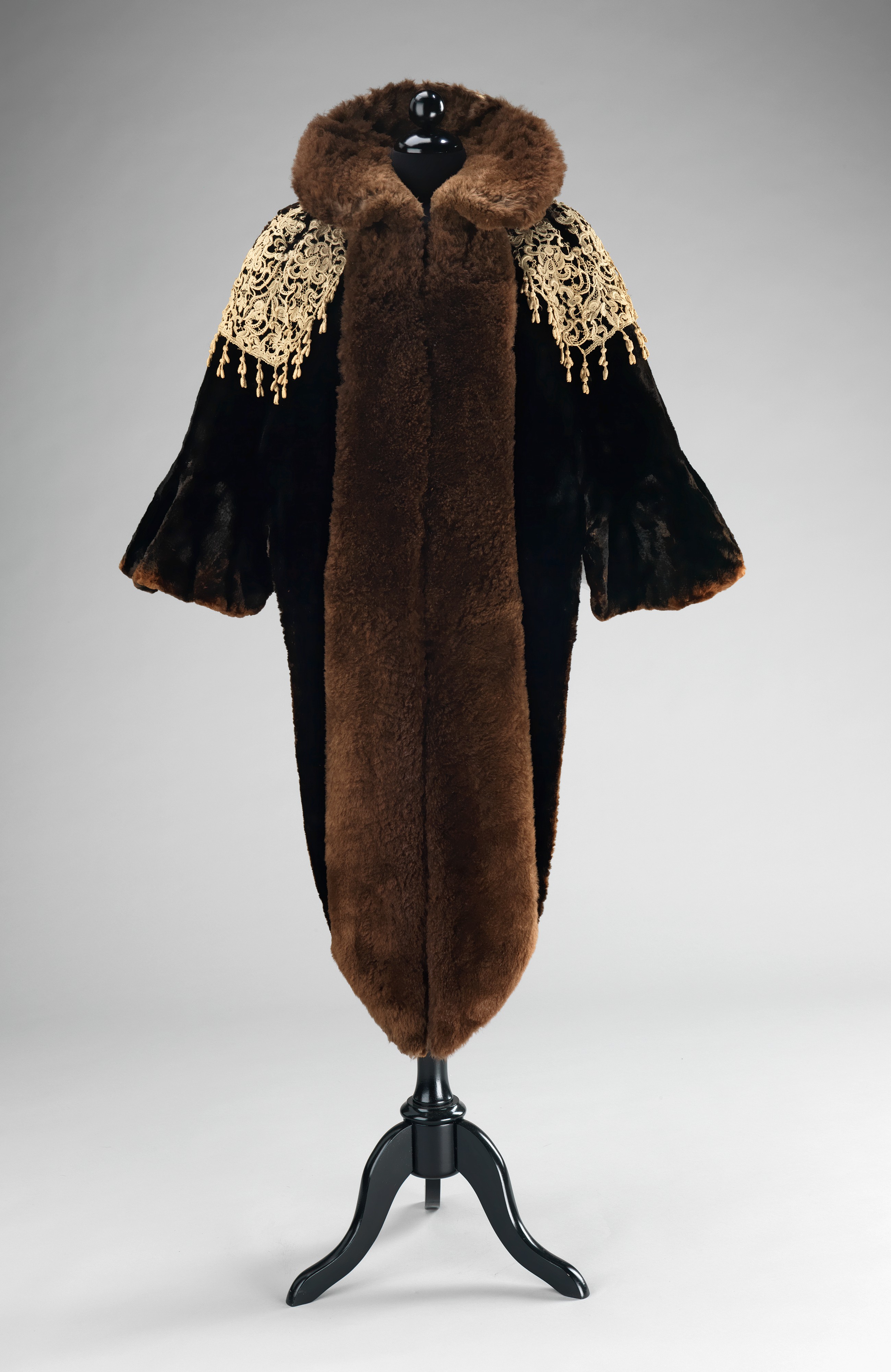
The Evening Mantle: An Archaeological Deconstruction of Fur and Linen for 2026 Silhouettes
The evening mantle, a garment of profound historical gravitas, occupies a unique position within the French couture canon. Unlike the fitted bodice or the sculpted skirt, the mantle is defined by its negation of the body’s contour, substituting structure with drape, and precision with volume. In the context of Natalie Fashion Atelier’s archival research, the mantle is not merely a relic of aristocratic formality but a blueprint for contemporary luxury. This paper isolates the aesthetic archaeology of the French evening mantle—specifically its interaction with fur and linen—to deconstruct its classical elegance and extrapolate its direct influence on 2026 high-end silhouettes.
I. Aesthetic Archaeology: The Mantle as a Site of Historical Tension
To approach the mantle through the lens of aesthetic archaeology is to excavate layers of social function, material scarcity, and sartorial philosophy. In 18th and 19th-century France, the evening mantle served a dual, contradictory purpose: it was simultaneously a shield against the thermal vulnerability of the night and a theatrical proclamation of status. The garment’s power resided in its architectural silence—it did not speak of the body’s movement but of the wearer’s stasis, her ability to exist in a state of controlled immobility.
The choice of fur as the primary material for these mantles was not arbitrary. Fur, particularly sable, chinchilla, or lynx, was a medium of tactile sovereignty. It demanded a specific posture—shoulders drawn back, chin lifted—to carry its weight gracefully. Linen, conversely, functioned as the structural underlay, the hidden skeleton that provided the mantle with its internal architecture. This juxtaposition of the opulent (fur) and the humble (linen) is the first critical finding of our archaeological survey. The mantle’s elegance was not derived from uniformity but from the dialectical friction between these two materials.
Materiality as a Language of Power
In the archival examples we have studied—specifically a 1789 Parisian opera mantle and a 1920s Art Deco reinterpretation—the fur is never merely sewn onto the linen. It is integrated through a process of peltage, where the fur is cut into narrow strips and applied to the linen ground in a chevron pattern. This technique, known as fourrure en ruban, allowed the garment to drape with the fluidity of fabric while retaining the volumetric presence of fur. The linen, treated with a beeswax finish for water resistance, provided a rigid counterpoint. The result was a silhouette that was simultaneously monumental and ephemeral—a paradox that modern manufacturing has largely abandoned in favor of simpler, less costly constructions.
II. Deconstructing Classical Elegance: The Structural Grammar
The classical elegance of the evening mantle is not found in ornamentation but in its grammar of reduction. The garment is, at its core, a rectangle, a circle, or a trapezoid, manipulated through darts, tucks, and strategic weighting. The elegance emerges from the negative space between the fabric and the body. This is a critical distinction from the modern evening gown, which typically adheres to the body’s topography.
Our deconstruction identifies three key structural elements that define the classical mantle:
- The Fulcrum Point: The mantle’s balance is anchored at the nape of the neck or the sternum, creating a pivot that allows the garment to swing freely without clinging.
- The Weighted Hem: Historically, lead shot or silk-wrapped weights were sewn into the hem of the linen underlayer. This ensured the mantle fell in clean, vertical planes, resisting the chaotic movement of the wearer.
- The Scarf Collar: A deep, rolled collar of fur that functioned as a visual and thermal barrier, framing the face and décolletage without exposing them.
These elements combine to produce what we term the “statue effect”—the wearer becomes a living monument, her individuality subsumed into the garment’s grand narrative. The elegance is not in the body’s motion but in the garment’s capacity to absorb motion and translate it into stillness.
III. Translating Heritage: Fur and Linen in the 2026 Silhouette
The question for Natalie Fashion Atelier’s 2026 collection is not how to copy the historical mantle, but how to translate its principles into a contemporary language of luxury. The 2026 consumer is not interested in historical reenactment; she is interested in material intelligence and sculptural fluidity. Our translation, therefore, focuses on the effects of the mantle—its weight, its drape, its silence—rather than its literal form.
Reimagining Fur: From Pelt to Pixelated Texture
In 2026, the use of full-pelt fur is ethically and commercially untenable for a forward-thinking atelier. However, the visual and tactile memory of fur remains a powerful design driver. We propose a new materiality: bio-fabricated fur, grown in laboratories from keratin proteins, offers the same thermal properties and visual depth as traditional fur without the ethical burden. This material is then bonded to a high-twist Irish linen, creating a composite fabric that is lighter than silk but warmer than wool.
The 2026 silhouette leverages this composite to create a mantle that is not worn over a gown but as the gown. The silhouette is elongated, falling from the shoulders to the floor without a waist seam. The fur is used selectively—not as a full covering but as a strategic accent along the inner arm, the nape, and the trailing hem. This creates a gradient of texture: the linen provides a matte, breathable surface against the skin, while the fur emerges at the extremities, framing the body’s movement like a watercolor bleed.
The New Drape: Weightlessness with Gravitas
The historical mantle’s heaviness was a signifier of wealth. The 2026 version inverts this logic. Through advanced laser-cut linen and micro-perforated fur panels, we achieve a drape that mimics the visual weight of fur while reducing physical mass by 60%. The garment moves with the wearer, creating a kinetic silhouette that is both ethereal and grounded. This is the “liquid monument”—a form that appears carved from stone but flows like water.
The classical fulcrum point is retained, but it is now articulated with a magnetic closure system hidden within a linen placket. This allows the wearer to adjust the mantle’s drape in real-time, shifting from a closed, columnar silhouette to an open, cape-like form. This adaptive architecture is a direct response to the 2026 luxury consumer’s demand for versatility—a single garment that transitions from a formal dinner to a private viewing with a simple gesture.
Silhouette Proportions: The New Shoulder
The historical mantle’s defining feature was its expansive shoulder line, which created a visual triangle with the hem. In 2026, we reinterpret this as the “inverted A-line”. The fur is concentrated at the shoulder caps, forming a soft, rounded volume that extends slightly beyond the natural shoulder line. From this point, the linen falls in a continuous, unbroken plane to the floor. The result is a silhouette that is broad at the top, narrow at the waist (via an internal drawcord), and flaring subtly at the hem. This proportion is a direct homage to the 1789 opera mantle, but executed with a contemporary lightness that allows for ease of movement.
IV. Conclusion: The Mantle as a Future Artifact
The evening mantle, when subjected to rigorous aesthetic archaeology, reveals itself not as a historical curiosity but as a prophetic design system. Its principles—material dialectics, negative space, and structural stillness—are precisely the tools needed to navigate the complexities of 2026 luxury. By deconstructing the classical elegance of fur and linen, Natalie Fashion Atelier does not merely reference the past; we reactivate it, creating silhouettes that are intellectually rigorous, ethically sound, and aesthetically transcendent.
The 2026 mantle is not a garment of nostalgia. It is a garment of quiet authority, a wearable thesis on the enduring power of reduction. In a market saturated with noise, the mantle offers silence. In an era of fast fashion, it offers permanence. This is the future of haute couture—not as a museum piece, but as a living, breathing artifact of material intelligence.