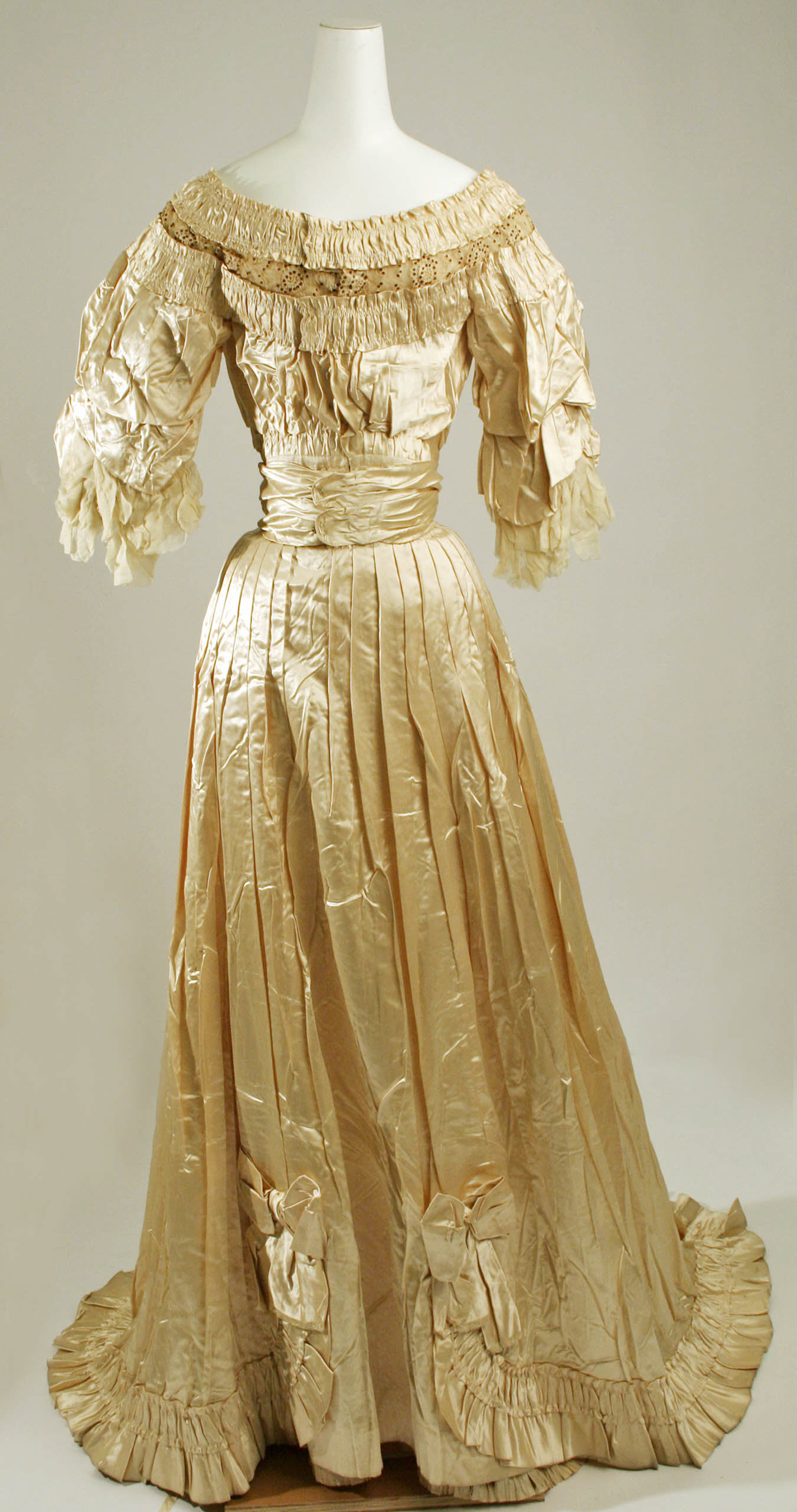
Silk as Archive: A Technical Deconstruction of the French Ball Gown
Within the isolated field of aesthetic archaeology, the French ball gown stands not as a mere relic, but as a complex anatomical system. For Natalie Fashion Atelier, this isolation is a methodological imperative, allowing for a pure, technical dissection of form, structure, and material intelligence, divorced from transient narrative. The object of study is a specific convergence: the mid-19th century Second Empire ball gown, constructed almost exclusively in pure silk—taffeta, faille, satin, and organza. This analysis deconstructs its classical elegance not as a romantic ideal, but as a series of calculated technical solutions to problems of volume, movement, and light. These solutions, when decoded through a contemporary lens, provide the foundational algorithms for the 2026 luxury silhouette, where heritage is not quoted but computationally re-engineered.
Anatomy of Opulence: Structural Deconstruction of the Silhouette
The classical silhouette is a tripartite architectural feat. First, the bodice, engineered through internally boned seams and tightly woven silk coutil, acts as a foundational plinth, creating a rigid, geometric torso that serves as a stable platform for extravagant volume. Second, the skirt system, a hierarchical assembly of understructures—crinoline, horsehair petticoats—over which the primary silk is tensioned. This creates the iconic dome, a shape defined by negative space and engineered support rather than sheer material mass. Third, the surface treatment: the silk itself. Here, materiality is active. The crisp crispness of silk taffeta provides acoustic and haptic feedback, its rustle an integral part of the garment's performance. The high-lustre satin is not merely decorative; its light-capturing quality was a deliberate tool for maximizing candlelight reflection, making the wearer a dynamic, luminous entity in a dim ballroom. Elegance, therefore, is revealed as a precise calibration of restraint (the rigid bodice) against excess (the volumetric skirt), all mediated by the intelligent behavior of silk.
Material Intelligence: The Behavioral Properties of Silk
This deconstruction pivots on understanding silk not as a passive substrate, but as a component with behavioral agency. In the archive, we observe four key properties leveraged as technical assets:
1. Structural Memory: Silk taffeta and faille possess a innate resistance to deformation, holding the sharp, sculpted lines of pleats, ruffles, and basques with minimal internal interfacing. This memory is a form of material data retention.
2. Light Modulation: The differing weaves—from the diffused glow of duchesse satin to the granular sparkle of silk organza—act as optical filters. The gown was designed with an understanding of how these surfaces would interact with specific, low-frequency light sources.
3. Acoustic Signature: The distinct frou-frou of stiffened silk is a biometric of authenticity and movement, a sonic aura that preceded the visual.
4. Thermal Regulation & Weight: Despite its volume, a silk gown is remarkably lightweight and breathable, a critical performance feature for hours of dancing. This combination of substantial presence with physical lightness is a paradox that defines haute couture.
Algorithmic Heritage: Informing the 2026 Luxury Silhouette
The translation for 2026 lies in extracting these principles and re-contextualizing them through modern fabrication, construction, and lifestyle demands. The classical silhouette is disassembled into its core functions and recompiled.
The Volumetric Algorithm: The 2026 silhouette rejects the literal crinoline but embraces its logic. We see the emergence of the "soft dome" and "floating volume". Using engineered silk blends—perhaps silk fused with ultra-lightweight memory polymers or shaped with laser-sintered tulle—the silhouette achieves dramatic volume that is collapsible, adaptable, and weightless. The focus shifts from a fixed geometric shape to volumetric behavior: a skirt that expands with movement or contracts for passage, a direct application of the historical understanding of volume as controlled environment.
The Bodice as Exoskeleton: The rigid 19th-century bodice evolves into the technical bodice-as-architecture. Seamlines become functional, integrating flexible boning derived from aerospace materials or 3D-printed silk-filament lattices. This provides sculptural form and postural support (a modern imperative) while allowing for mobility. The silk used here may be a technically woven laminate, matte and tensile, mimicking the coutil's function but with seamless aesthetics.
Surface Intelligence & Luminous Data: This is the most profound translation. 2026 luxury will leverage advanced silk treatments for dynamic interaction. Silks may be finished with nano-coatings that alter sheen in response to ambient light or body heat, a direct evolution of the candlelight-reflective satin. Acoustic design returns—specific weaves and treatments creating a desired, subtle soundscape for the wearer. Furthermore, the concept of the gown as a luminous entity is literalized through the integration of biodegradable LED filaments woven into silk organza, creating a soft, emissive glow that is programmable and personal.
Conclusion: The Archaeology of the Future
For Natalie Fashion Atelier, this isolated aesthetic archaeology concludes with a clear strategic directive. The 2026 ball gown, informed by this deep technical deconstruction, will be a hybrid of biological and technological intelligence. It will utilize the innate, ancient properties of silk—its strength, its lustre, its sensual memory—as the foundational code. Upon this, a new language of construction is written: one of adaptive volume, responsive surfaces, and silent structural innovation. The resulting silhouette is neither retrospective nor futurist. It is, instead, deeply contemporary, solving modern problems of presence, performance, and personal expression with solutions mined from the very apex of historical craftsmanship. The elegance of the past was static and magnificent; the elegance of 2026, as decoded from the archive, will be magnificent and adaptive, a silent dialogue between the memory of silk and the logic of the future.