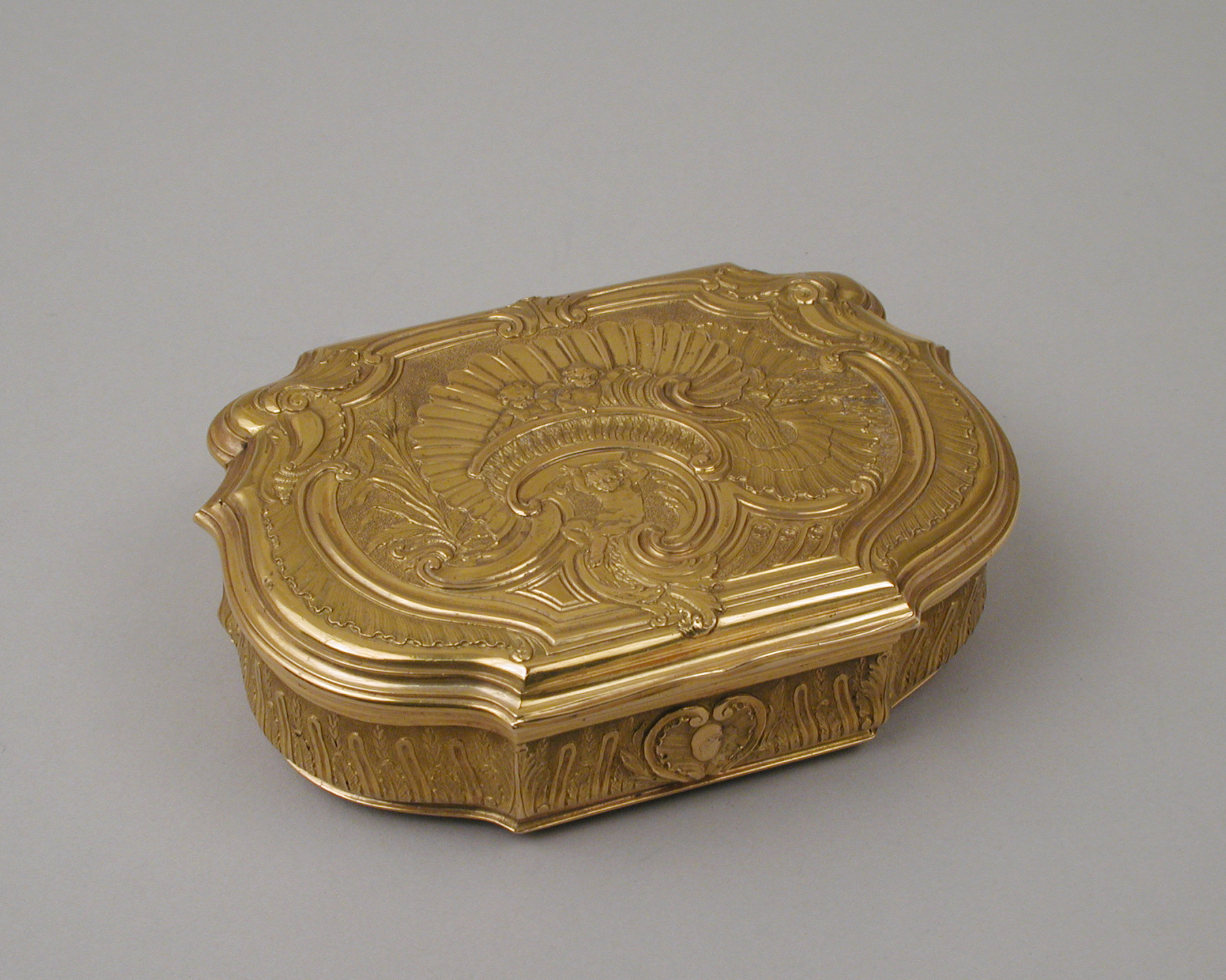
Archival Excavation: The Snuffbox as a Micro-Architecture of Power
The snuffbox, often dismissed as a mere accessory of aristocratic ritual, constitutes a profound artifact of aesthetic archaeology. Within the isolated archive of Natalie Fashion Atelier, the snuffbox is not viewed through the lens of social history, but as a compressed treatise on material discipline and spatial economy. Its dimensions—typically 5 to 8 centimeters—demand a mastery of proportion that translates directly to the macro-scale of haute couture. The object’s dual nature, a rigid gold shell containing a soft, precious interior (ivory), establishes a dialectic between structural containment and tactile release. For 2026, this dialectic informs silhouettes that are not merely draped but engineered, where the garment’s exterior presents an unyielding, polished facade, while the internal lining and movement offer a contrasting, sensuous fluidity.
Material Dialectics: Gold’s Rigidity Versus Ivory’s Patina
The materiality of the snuffbox—gold and ivory—presents a unique tension. Gold, in its alloyed forms, represents immutable permanence, a metallic skin that reflects light with a cold, authoritative precision. Ivory, conversely, is an organic, hygroscopic material that develops a warm, ambered patina over centuries. This is not a simple opposition but a chronological layering: gold is the eternal present, ivory is the recorded past. In the 2026 couture silhouette, this translates to a technical strategy of surface juxtaposition. We propose a jacket structure where the outer shell is constructed from a micro-laminate of metallic-coated technical silk, achieving the visual and tactile hardness of gold leaf, yet with a weightless drape. The interior, however, is finished with a sablé of matte, bone-toned cashmere, treated to mimic the subtle grain of ivory. The silhouette, therefore, is defined by its edge precision—sharp, uncompromising lapels that mimic the box’s hinge—while the body’s internal volume collapses into a soft, ivory-like cocoon, referencing the snuff’s hidden chamber.
Proportion and the Gilded Cage: Re-scaling the Miniature
The snuffbox’s genius lies in its micro-architectural proportion. The ratio of its height to its width, the curvature of its corners, and the precise placement of its hinge all obey a canon of classical restraint. To translate this to 2026 high-end silhouettes, we must abandon the human body as the primary generative force. Instead, the body becomes the exhibition plinth for a wearable architecture. The new silhouette is characterized by a compressed torso—a fitted, corseted basque that replicates the box’s verticality—which then releases into a sharply angled, A-line skirt or flared peplum, echoing the box’s flared base. This creates a visual paradox: the garment appears to be a scaled-up miniature, where every seam and dart is a deliberate, structural joint, not a mere concession to anatomy. The waist is not cinched; it is articulated, like the box’s lid, creating a clean break between upper and lower volumes.
Surface Treatment: The Grammar of Ornamentation
Historically, snuffboxes were not merely plain gold; they were engraved, chased, and set with miniature paintings. However, in our isolated aesthetic archaeology, we strip away the figurative ornamentation to reveal the underlying grammar of line. The 2026 application focuses on negative-space engraving—a technique where the fabric’s surface is manipulated through guilloché-inspired pleating or corded seams that create a subtle, rhythmic play of light and shadow, without any pictorial representation. The gold’s influence appears as linear piping in metallic thread, tracing the garment’s structural seams like the engraved borders of the box’s lid. The ivory’s influence is expressed through matte, unadorned panels that interrupt the metallic flow, offering a moment of visual silence. This is a luxury of absence, where the value is communicated through the precision of the void rather than the density of embellishment.
Technical Construction: The Hinge and the Closure
A critical element of the snuffbox is its hinge mechanism—a point of mechanical articulation that allows for a perfect seal and a smooth opening. In couture terms, this informs the development of invisible closures and articulated panels. The 2026 silhouette will feature a signature technical innovation: the Charnière seam. This is a structural seam running from the underarm to the hem, constructed with a series of interlocking, rigid yet flexible stays—reminiscent of gold hinges—that allow the garment to snap open and closed with a deliberate, architectural motion. This is not a zipper or a button; it is a mechanical joint that permits the wearer to alter the garment’s volume and silhouette instantaneously, transforming a closed, columnar form into a flared, open one. This mechanical interactivity is the ultimate luxury: the garment is not static but a kinetic sculpture, responsive to the wearer’s gesture.
Chromatic Restraint: The Palette of Precious Metals and Bone
The color story for this collection is rigorously limited to the artifact’s inherent palette. We propose a monochromatic spectrum of metallic gold—from pale, greenish-yellow to deep, reddish-amber—paired with the warm whites and ecrus of aged ivory. There is no black, no primary color. This chromatic discipline forces the eye to focus on texture and light refraction rather than hue. The silhouette’s impact derives from the interplay between the high-gloss, mirror-like surfaces of the gold-treated fabrics and the soft, light-absorbing qualities of the ivory-toned matte textiles. This is a study in optical weight: the gold appears heavy and substantial, the ivory appears light and porous, yet both are achieved with modern, lightweight technical fibers, allowing for a silhouette that is visually imposing but physically effortless.
Conclusion: The 2026 Silhouette as a Portable Reliquary
In conclusion, the snuffbox, isolated from its historical context, emerges as a blueprint for a new couture paradigm. The 2026 silhouette is not a nostalgic revival but a structural reinterpretation of classical elegance. It is a garment that functions as a portable reliquary, containing the body with the same precise, protective, and revelatory logic as the gold and ivory box contained its precious powder. The silhouette is defined by articulated volumes, metallic rigidity, and ivory-soft interiors, creating a wearable object of immense technical complexity and austere beauty. It speaks to a clientele that values intellectual craftsmanship over ostentation, and who understands that true luxury lies in the perfect calibration of material, proportion, and mechanism. The snuffbox, once a symbol of idle pleasure, is thus re-architected as a testament to the enduring power of disciplined design.