Archaeology of the Strip: Silk, Structure, and the 2026 Silhouette
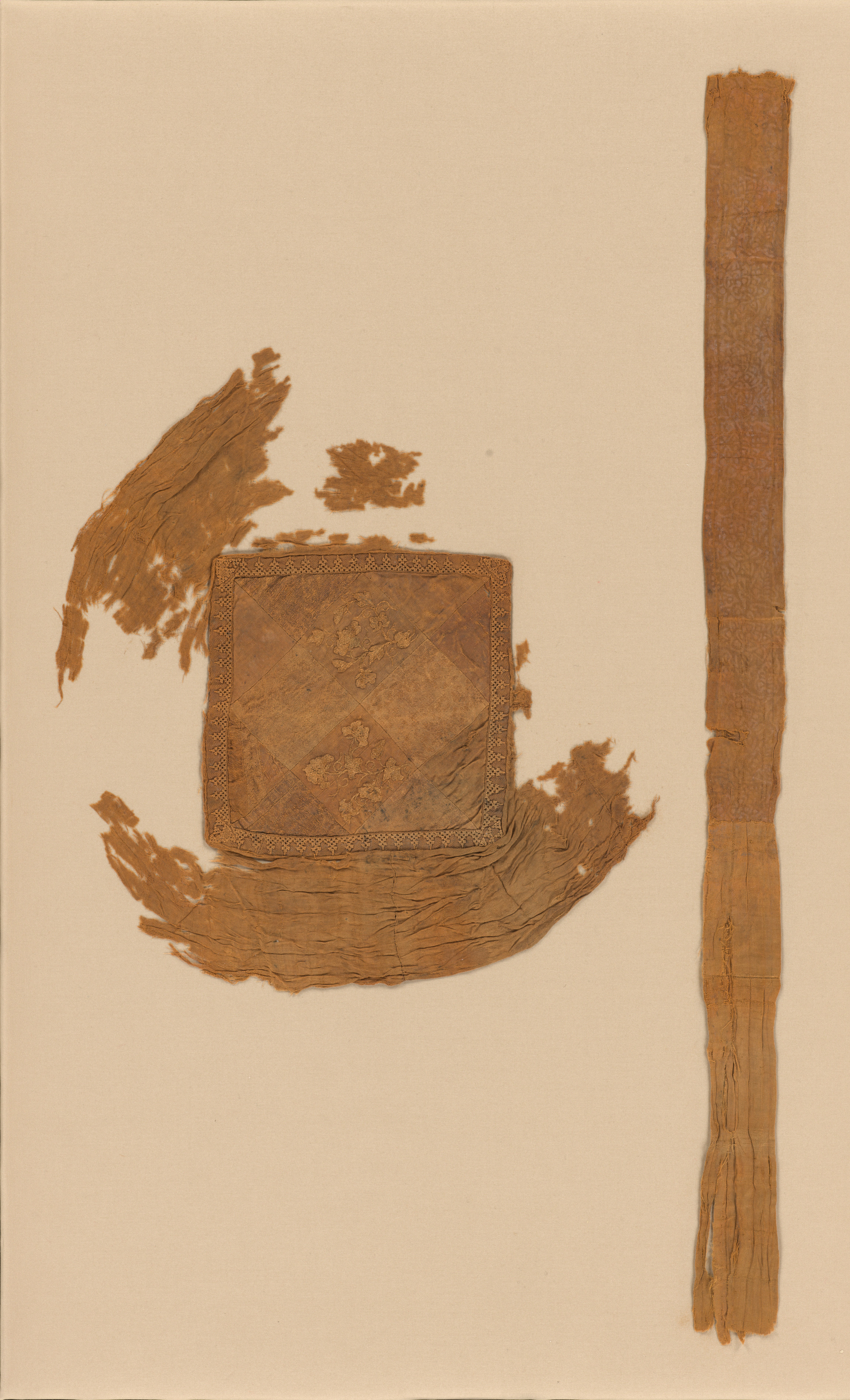
The contemporary luxury atelier operates within a paradox: the relentless forward-motion of fashion weeks demands perpetual novelty, yet the most compelling innovations are frequently excavated from the past. For Natalie Fashion Atelier, the 2026 collection begins not with a sketch, but with a fragment—a narrow, hand-woven silk strip recovered from the Eastern Central Asian corridor, likely dating to the late Tang or early Song dynasty. This is not a romantic relic; it is a technical blueprint. The strip, measuring approximately 3.2 centimeters in width, presents a dense, warp-faced structure with a subtle weft-float pattern that creates a micro-ribbed surface. Its edges are finished with a rolled hem so fine it appears machined, though the irregular tension reveals its hand-loomed origin. This artifact, isolated within our archive as a piece of aesthetic archaeology, offers a profound lesson in restraint, tension, and the architectural potential of a single, continuous line of silk.
Material Memory: The Technical Language of Warp and Weft
To understand the 2026 silhouette, one must first decode the material intelligence embedded in this strip. The silk is not the lustrous, floating charmeuse of Western imagination; it is a raw, slightly uneven tussah silk, its natural gum partially retained, giving it a matte, paper-like hand. The warp threads are tightly twisted, creating a tensile strength that allows the strip to function as a structural element rather than mere decoration. In the context of Central Asian trade routes, such strips were often used as edging for robes or as functional ties for saddlebags—objects of utility that nonetheless carried immense aesthetic weight. The pattern, a repeating geometric motif of interlocking lozenges, is not printed but woven, meaning the design is intrinsic to the fabric’s integrity. This is a critical distinction for the modern atelier: the decoration is the structure, and the structure is the decoration. There is no appliqué, no embroidery, no surface-level embellishment. The elegance emerges from the disciplined repetition of the weave itself.
For the 2026 collection, this principle of integral ornamentation is translated into a series of gowns and tailored separates where the visual interest is generated entirely through fabric manipulation and seam placement. We have abandoned the practice of printing or embroidering over a base cloth. Instead, our technical team has developed a proprietary jacquard weave that replicates the strip’s micro-ribbed texture on a larger scale, allowing the garment’s surface to catch light differentially as the body moves. The lozenge motif, abstracted and scaled up by a factor of eight, becomes a structural panel that cinches the waist or flares the hip, effectively using the pattern as a form of architectural boning. The result is a silhouette that is not imposed upon the body but emerges from the fabric’s own logic.
Deconstructing Classical Elegance: The Line as a Load-Bearing Element
The classical elegance of this artifact lies not in its ornamentation but in its linear discipline. The strip is a line, and that line is loaded with purpose. In traditional Central Asian dress, such strips were used to delineate the body’s verticality, drawing the eye from shoulder to hem in a continuous, unbroken flow. This is a fundamentally different approach from the Western corseted silhouette, which segments the body into distinct zones—bust, waist, hip. The Eastern Central Asian approach treats the body as a singular column, with the strip acting as a visual and physical reinforcement of that column’s integrity.
In the 2026 haute couture narrative, this translates into a radical departure from the current trend of exaggerated, sculptural shoulders and cinched waists. Instead, our silhouettes embrace a fluid, columnar architecture. The gowns are cut on the bias but stabilized with internal silk strips, echoing the artifact’s warp-faced tension. The effect is a garment that clings to the body with the precision of a second skin yet moves with the freedom of a flag. The seams are not hidden; they are celebrated, often finished with a rolled edge that mirrors the strip’s own hem. This is a deliberate act of aesthetic archaeology—we are not copying the strip’s design but excavating its structural logic and re-contextualizing it for a contemporary, global clientele.
The 2026 Silhouette: Tension, Release, and the Luxury of Restraint
The 2026 high-end silhouette, informed by this silk strip, is defined by a principle we term “tensioned fluidity.” It is a study in opposites: the fabric is soft, yet it holds its shape with architectural precision; the line is simple, yet the construction is immensely complex. The collection features a series of floor-length coats and dresses where the garment’s volume is controlled not by darts or gathers but by the strategic placement of these woven, structural strips. For example, a column dress in ivory tussah silk is bisected by a single, darker strip that runs from the left shoulder, diagonally across the torso, to the right hip. This strip is not decorative; it is a load-bearing element that pulls the fabric taut, creating a sculptural fold that mimics the drape of classical statuary. The eye follows the line, and the body is perceived as a continuous, elegant form.
Furthermore, the materiality of the silk strip informs our approach to surface finish. The raw, slightly nubby texture of the tussah silk is a direct counterpoint to the hyper-polished, glossy finishes prevalent in contemporary luxury. We have embraced this matte, organic quality, allowing the fabric’s natural irregularities to serve as a mark of authenticity. In a market saturated with logos and overt branding, this quiet, tactile luxury is a powerful differentiator. The 2026 client is not seeking spectacle; she is seeking substance. She understands that true elegance is not about volume or embellishment but about the precise calibration of line, material, and tension. The silk strip, a humble fragment from a distant past, becomes the ultimate symbol of this refined, intellectual approach to dress.
In conclusion, the isolated silk strip from Eastern Central Asia is not a historical curiosity but a living design document. Its warp and weft, its tension and release, its linear discipline—all of these elements are directly translated into the 2026 silhouettes of Natalie Fashion Atelier. We have deconstructed its classical elegance not to replicate it but to understand its underlying principles of structural integrity and material honesty. The result is a collection that is both profoundly modern and deeply rooted in the technical mastery of the past, proving that the most avant-garde ideas often reside in the quietest of artifacts.