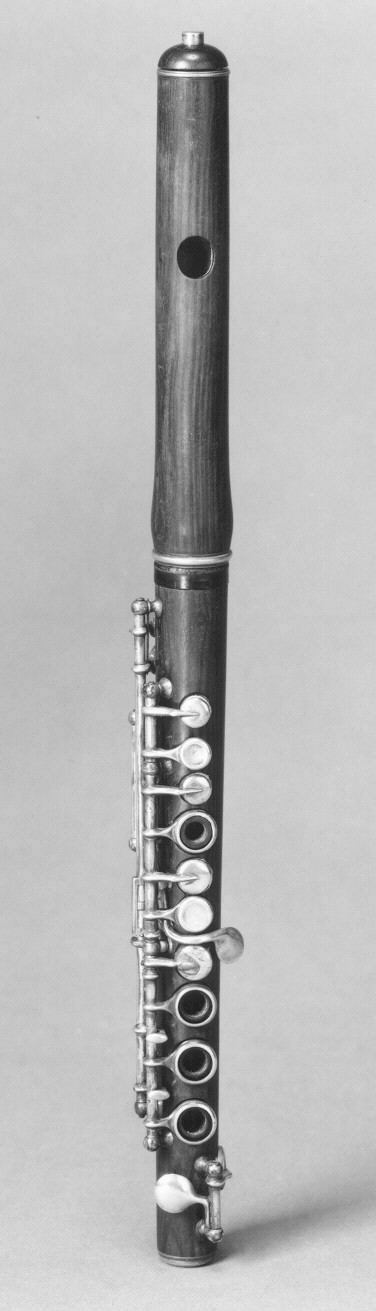
The Piccolo as Aesthetic Artifact: Material Memory and the 2026 Silhouette
Within the rarefied domain of aesthetic archaeology, the piccolo—an instrument of diminutive stature yet immense acoustic and visual authority—presents a compelling case study for the 2026 luxury silhouette. Removed from its functional orchestral context and isolated as a pure formal object, the piccolo offers a lexicon of restraint, precision, and paradoxical monumentality. For Natalie Fashion Atelier, the instrument’s French heritage, particularly its 19th-century Parisian refinement, provides a blueprint for constructing garments that speak to a new era of quiet opulence. This research artifact deconstructs the piccolo’s classical elegance through its dual materiality—wood and metal—and translates its structural grammar into contemporary haute couture.
I. The Architectural Grammar of the Piccolo
The piccolo’s physical form is a study in tension. Its cylindrical bore, typically crafted from grenadilla wood or, in modern iterations, metal, is a masterclass in linear discipline. The instrument’s length, rarely exceeding twelve inches, forces a concentration of proportion that is absent in larger instruments. This compression is not a diminishment but an intensification. Every curve, every key mechanism, every embouchure hole is a deliberate act of spatial negotiation.
A. The Vertical Axis and the Elongated Torso
For 2026, the piccolo’s verticality translates directly into a reimagining of the column silhouette. The instrument’s straight, unyielding line—when held vertically—echoes the architectural ideal of a French hôtel particulier facade: narrow, tall, and impeccably balanced. We propose a silhouette that abandons the exaggerated hourglass in favor of a “Piccolo Line”: a sheath dress with a high, structured neckline that descends without interruption to a mid-calf hem. The fabric, a double-faced wool crepe in charcoal or oxblood, must possess a metallic underlay, invisible to the touch but present in the drape, to mimic the piccolo’s internal resonance. The waist is not cinched but suggested, through a subtle bias cut that allows the fabric to fall with the same taut precision as the instrument’s bore.
B. The Embouchure Hole: Negative Space as Couture
The piccolo’s embouchure—the oval aperture where the musician meets the instrument—is a radical act of negative space. It is a void that generates sound, a cut that defines the surrounding material. In 2026, we interpret this as the “Resonant Cutout”. Unlike the decorative cutouts of previous seasons, this opening is functional in its aesthetic purpose: it frames the clavicle and the base of the throat, drawing the eye to the body’s own acoustic architecture. The cutout is edged with a hand-rolled hem of liquid metal thread, a nod to the silver or gold lip plate of the instrument. This is not a sensual reveal but an intellectual one—a deliberate exposure that mimics the piccolo’s sonic aperture, inviting the viewer to consider the silence before the note.
II. Materiality: Wood and Metal in Dialectic
The piccolo’s material composition is not a simple binary but a dialectic. The wood—dense, warm, organic—provides the tonal body. The metal—cold, precise, reflective—provides the mechanism of articulation. Their coexistence on a single instrument is a lesson in harmonious opposition, one that informs our fabric and embellishment strategy for 2026.
A. The Wood: Tactile Warmth and Structural Density
Grenadilla wood, also known as African blackwood, is prized for its density and its ability to hold a perfectly smooth finish. It is not a soft, rustic material; it is a hard, polished, almost petrified substance. For couture, this translates into a demand for “Petrified Textiles”—fabrics that have been treated to possess a woody, non-porous surface. We propose a technical jacquard woven with a high-twist viscose and a fine copper filament, then subjected to a heat-pressed calendaring process. The result is a fabric that feels cool to the touch, with a subtle, non-reflective sheen akin to polished ebony. This material is used for the primary shell of the garment, providing an architectural stiffness that holds its shape without internal boning.
B. The Metal: Articulation and Kinetic Precision
The metal keywork of the piccolo—typically silver, nickel-silver, or gold—is a marvel of miniaturized engineering. Each key is a lever, a fulcrum, a point of contact. In our 2026 silhouette, this is translated into “Jeweled Articulation”: a system of functional metal closures that are not hidden but celebrated. Instead of invisible zippers, we employ a series of small, cylindrical magnetic toggles, plated in palladium and set along the side seam of the garment. These toggles are not merely fasteners; they are interactive elements that require a deliberate, almost ritualistic movement to open and close. The placement is strategic—at the wrist, the hip, and the nape of the neck—mimicking the piccolo’s key placement, which is ergonomically designed for the human hand.
III. The 2026 Silhouette: A Synthesis of Restraint and Resonance
The 2026 collection, titled Petit Format, does not seek to replicate the piccolo’s form but to internalize its principles. The result is a wardrobe of “Compressed Grandeur”—garments that feel monumental despite their reduced scale. The shoulders are softly squared, not padded, echoing the instrument’s cylindrical top. The sleeves are cut in a single piece with the bodice, a tailleur technique that eliminates seams at the shoulder cap, allowing for a continuous, unbroken line from neck to wrist—a direct reference to the piccolo’s seamless bore.
A. The Concert Jacket
A centerpiece of the collection is the Concert Jacket, a bolero-length structure in petrified textile. Its front is entirely closed, with no visible buttons, secured instead by the internal magnetic toggles. The back, however, features a dramatic décolleté in the shape of an elongated oval, echoing the embouchure. This back cutout is lined with a single layer of sheer, metal-infused organza, creating a visual vibration that mimics the instrument’s air column. The jacket is worn over a simple, columnar dress in the same material, creating a monochromatic, monolithic presence.
B. The Articulated Skirt
The floor-length skirt is a study in kinetic sculpture. Constructed from alternating panels of petrified textile and a fine, mesh-like metal weave, the skirt moves with a stiff, rustling sound—a whisper of mechanical precision. The waistband is a solid, wide band of polished wood veneer, lacquered to a high gloss, serving as both a structural anchor and a tactile focal point. This is not a garment for passive wear; it demands a posture of uprightness, a discipline of movement that mirrors the piccolo player’s embouchure control.
IV. The Parisian Ethos: Quiet Authority
This aesthetic archaeology of the piccolo reveals a deeper truth about French luxury: true elegance is not loud but precise. It is found in the tension between materials, in the discipline of proportion, and in the respect for the object’s function. For Natalie Fashion Atelier, the 2026 silhouette is not a nostalgic revival but a forward-looking synthesis. It is a garment that carries the memory of a Parisian atelier’s workbench, the weight of a wooden instrument, and the clarity of a silver key. It is, in essence, a wearable sonata—structured, resonant, and utterly of its time.