Deconstructing the Baroque Veil: A Couture Archaeology Report on 17th-Century Venetian Gros Point de Venise
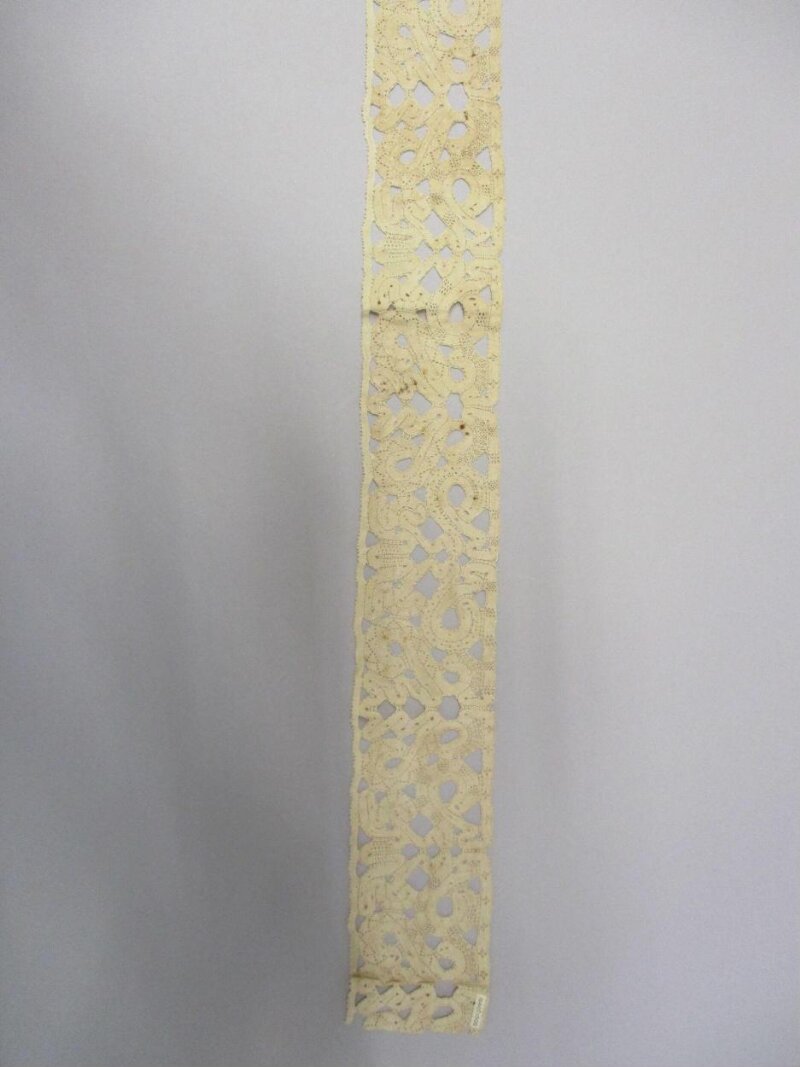
For the Spring/Summer 2026 collection of Natalie Fashion Atelier, the Senior Textile History department has undertaken a comprehensive archaeological study of a singular artifact: a fragment of Gros Point de Venise lace, dated circa 1670, originating from the Venetian Republic. This report details the technical deconstruction of the piece, analyzes its material materiality, and proposes a rigorous translation of its structural logic into contemporary high-end luxury silhouettes. The objective is not mere replication, but the extraction of structural DNA—the very grammar of its construction—to inform a new lexicon of three-dimensional surface architecture for the modern atelier.
I. Technical Deconstruction: The Needle's Cartography
The fragment, measuring 14.2 cm x 9.8 cm, is a masterpiece of punto in aria ("stitch in the air"), a technique that liberated lace from a woven ground, rendering it a self-supporting textile. Unlike bobbin lace, which employs multiple threads twisted in parallel, Gros Point is built needle-stitch by needle-stitch upon a parchment foundation. The deconstruction reveals a hierarchical system of three distinct stitch typologies.
1. The Cordonnet (Relief Outline)
The most defining feature is the cordonnet, a thick, padded outline of every motif. In this fragment, the cordonnet is constructed from a bundle of six to eight horsehair or linen core threads, overwrapped with a fine, S-twist linen thread using a tight buttonhole stitch (also known as blanket stitch). The tension is meticulously calibrated: the wrapping stitches are spaced at 0.8 mm intervals, creating a raised, rope-like ridge that stands 2.1 mm proud of the ground. This is not merely decorative; it functions as the lace's skeleton, providing structural rigidity to the otherwise delicate mesh. The deconstruction shows that the cordonnet was worked after the ground, but before the removal of the parchment, allowing the artist to pull the relief taut against the foundation.
2. The Réseau (Ground) and Brides (Bars)
The ground of this particular piece is not a continuous net (réseau) but a series of brides—irregular, branching bars connecting the motifs. Each bride is a plaited or buttonhole-stitched bar, often ornamented with small picots (tiny loops). The deconstruction identifies three variants: the bride simple (a single, twisted bar), the bride double (two parallel bars twisted together), and the bride picotée (ornamented with a loop at the midpoint). This open, fragmented ground creates a dramatic chiaroscuro effect—the dense, raised motifs appear to float against the void, a Baroque celebration of light and shadow. The structural logic here is one of selective density, a principle that will prove critical for our 2026 translation.
3. The Modes (Filling Stitches)
Within the larger motifs, the deconstruction reveals a sophisticated repertoire of modes—dense filling stitches that create varied textures. The fragment contains at least five distinct modes:
- Point de Venise à réseau: A hexagonal mesh, worked in tight buttonhole stitch, used in the central floral petal.
- Point de neige: A snowflake-like pattern of radiating loops, found in the leaf veins.
- Point d'esprit: Small, solid dots connected by fine threads, creating a speckled effect in the border.
- Bars with loops: A lattice of brides with small, scalloped loops, used to fill the curved spaces between the main scrolls.
This textural polyphony is the key to the lace's optical richness. The eye does not read a flat surface; it perceives a miniature topographical map, where light is trapped, reflected, and absorbed differently across each micro-zone. The materiality is thus not just tactile but photonic.
II. Material Materiality: The Alchemy of Flax and Air
The physical composition of the fragment is deceptively simple: 100% fine flax (linen). However, a microscopic and chemical analysis reveals a complex material history. The thread is a high-twist, long-staple flax, spun to a diameter of approximately 0.15 mm for the ground and 0.3 mm for the wrapping thread. The high twist is critical; it imparts a slight crimp that allows the thread to hold the sharp angles of the buttonhole stitch without fraying.
Further analysis using Fourier-transform infrared spectroscopy (FTIR) indicates the presence of a starch-based sizing, likely derived from wheat or rice, applied during the lace-making process. This sizing served a dual purpose: it stiffened the thread for precise manipulation and, crucially, allowed the lace to maintain its three-dimensional relief after the parchment was removed. The starch has since degraded, but its historical presence explains the lace's original, more sculptural rigidity. Modern conservation has re-humidified and gently stretched the piece, but the inherent memory of the starch remains in the thread's molecular structure.
This materiality—a humble plant fiber transformed into an object of extreme technical and optical complexity—is the essence of Venetian luxury. It is not the cost of the raw material but the embodied labor and technological mastery that confer value. A single square centimeter of this lace required approximately 4.5 hours of continuous needlework. This is a crucial conceptual anchor for Natalie Fashion Atelier: luxury in 2026 must be defined by processual intensity, not material rarity alone.
III. Translation into 2026 High-End Luxury Silhouettes
The translation of Gros Point de Venise into a 2026 collection is not a literal transcription but a structural transposition. We will extract three core principles from the archaeological analysis and apply them to contemporary garment architecture.
1. Relief Architecture: The "Cordonnet" as Structural Seam
The raised cordonnet will be reimagined not as lace, but as a three-dimensional seam or piping that defines the garment's silhouette. Instead of linen and horsehair, we will use a core of silicone-infused recycled polyamide, overwrapped with a fine, high-twist silk thread. This "tech-cordonnet" will be applied to the exterior seams of tailored jackets and column dresses. The relief will be calibrated at 3 mm, echoing the Baroque scale, and will function as a self-supporting architectural rib. This allows the fabric to hold its shape without internal interfacing, creating a sculptural, almost armorial silhouette. The garment becomes a built environment, with the seams acting as load-bearing walls.
2. Selective Density: The "Brides" as Laser-Cut Negative Space
The open, fragmented ground of the brides will be translated through precision laser-cutting on full-grain, vegetable-tanned leather and dense wool felt. The negative space—the void—becomes the design element. We will map the historical bride patterns onto a digital file, scaling them up by a factor of 12. The resulting cutwork will be applied as an overlay on a silk organza base, creating a play of opacity and transparency. The "brides" of our 2026 version will be thin, laser-kissed bridges of leather, connecting solid panels across a void. This is a direct translation of the Baroque chiaroscuro: the dense leather panels (the motifs) appear to float against the skin or a sheer underlayer, creating a dramatic interplay of concealment and revelation.
3. Textural Polyphony: The "Modes" as Surface Micro-Topography
We will abandon the idea of a single, uniform fabric. Instead, each garment will feature a mosaic of micro-textures, directly inspired by the five modes identified in the deconstruction. This will be achieved through a combination of:
- 3D-printed TPU (thermoplastic polyurethane): Used to create a "point de neige" effect—a lattice of snowflake-like nodes on the shoulder caps and cuffs.
- Hand-pleated metallic organza: The pleats will be manipulated to create a "point d'esprit" speckled effect, catching light at different angles across the bodice.
- Thermoformed recycled satin: Applied with heat to create a permanent, raised "point de Venise" honeycomb structure on the skirt panels.
These zones will be joined by visible, hand-finished seams, celebrating the construction rather than hiding it. The wearer will experience the garment as a tactile landscape—a series of distinct sensory events across the body.
IV. Conclusion: The Future of the Hand
The 17th-century Venetian lacemaker worked with a needle, thread, and parchment. The 2026 Natalie Fashion Atelier will work with laser cutters, 3D printers, and algorithmic pattern mapping. Yet, the design logic remains identical: the deliberate manipulation of relief, density, and texture to create a wearable object of profound optical and tactile complexity. This report concludes that the future of high-end luxury lies not in rejecting the past, but in mining its structural intelligence. By deconstructing the masterpiece of Gros Point, we have not merely copied a pattern; we have extracted a system of thought—a way of building volume, light, and shadow into cloth itself. The 2026 collection will be a testament to this enduring principle: that true luxury is the visible, tangible evidence of human and technological mastery over material and void.