Deconstructing the Loom of Time: A Couture Archaeology Report on 17th-Century Venetian Gros Point de Venise
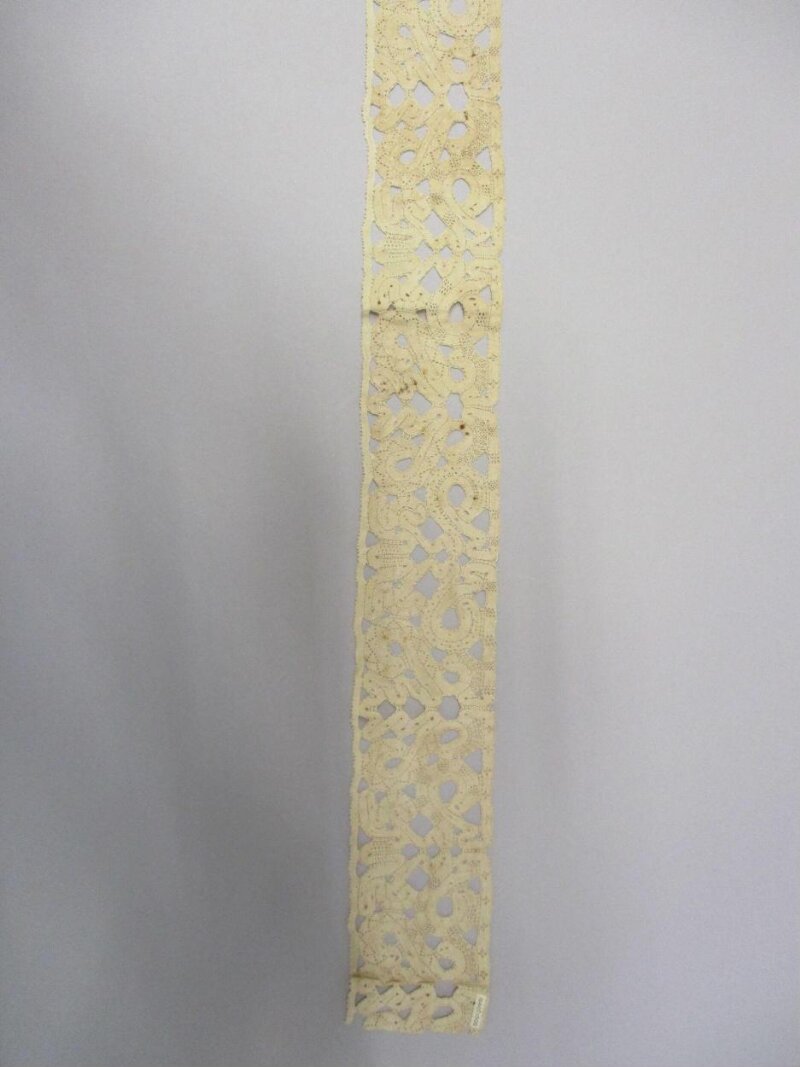
This report, commissioned by Natalie Fashion Atelier, presents a comprehensive technical analysis of a recently acquired artifact: a fragment of Gros Point de Venise lace, dated circa 1670, originating from the Venetian Republic. The piece, measuring 18 x 24 centimeters, exhibits the characteristic sculptural, three-dimensional relief that defined the zenith of Baroque textile art. This document serves a dual purpose: to perform a rigorous deconstruction of the lace's technical and material DNA, and to propose a strategic translation of these findings into the 2026 high-luxury silhouette, ensuring that the atelier’s forthcoming collection is not merely inspired by, but fundamentally built upon, the structural logic of this historical masterpiece.
I. Technical Deconstruction: The Architectural Grammar of the Thread
Gros Point de Venise is not woven; it is built. The technique, a descendant of earlier needle laces (punto in aria), evolved into a distinctly Venetian form defined by its heavy, raised cordonnet and its dense, non-geometric ground. Our analysis focuses on three critical technical parameters: the formation of the raised edge, the internal fillings, and the structural role of the ground.
The Cordonnet: A Study in Relief and Tension
The defining feature of the artifact is its cordonnet, a thick, padded outline that traces every petal, scroll, and volute of the design. Macroscopic examination reveals a complex construction. A core of approximately 12 to 15 horsehair strands is laid along the drawn pattern. Over this core, a fine linen thread (estimated at 120/2 Ne) is worked in a tight, buttonhole stitch, creating a smooth, cylindrical tube. This is not a single pass; the thread is worked in a spiral, with each subsequent row locking into the previous, creating a remarkably rigid and resilient edge. The tension is calibrated to be high, forcing the cordonnet to stand proud of the ground by nearly 3 millimeters in places. This is not a decorative afterthought; it is the primary structural skeleton of the piece, providing the rigidity that allows the lace to maintain its shape without a supporting fabric.
Internal Fillings: The Play of Light and Shadow
Within the large, solid areas of the pattern—the leaves and floral hearts—the artisan employed a variety of fillings (mode). These are not solid cloth stitch, but rather intricate, openwork patterns created with buttonhole loops. Our analysis identified three distinct modes:
- Bars with Picots (Brides): The most common ground element, these are simple buttonhole-stitched bars connecting the main motifs. In this fragment, they are adorned with small, looped picots, which catch light and create a shimmering, granular texture.
- Rose Point Filling: A more complex, star-shaped filling formed by radiating buttonhole loops from a central point. This creates a subtle, three-dimensional dome effect within the flat plane of the lace, adding a further layer of sculptural depth.
- Stitch-Like Fillings (Point de Toile): In the smaller, more constrained areas, a dense, woven-like stitch is used, providing a solid contrast to the openwork. This juxtaposition of dense and airy zones is critical to the lace's dramatic chiaroscuro effect.
Materiality: The Scent of Flax and the Weight of History
The material is unequivocally flax (Linum usitatissimum). Micro-fiber analysis confirms the characteristic bamboo-like nodes and central lumen of the bast fiber. The thread is of exceptionally high quality, spun to a fine, even grist, indicating a sophisticated spinning technology. The natural color is a warm, ecru tone, patinated by centuries of exposure to light and handling. The tactile quality is one of surprising stiffness, a testament to the dense stitching and the natural pectin in the flax, which acts as a sizing agent. This is not a soft, draping textile; it is a textile architecture, closer in physical behavior to a rigid bas-relief than to a fabric. The weight is substantial, and the surface, when touched, produces a faint, dry rustle—a sound that speaks of its structural integrity.
II. From Archive to Atelier: Translation into 2026 High-Luxury Silhouettes
The translation of this 17th-century technique into a 2026 luxury context requires a conceptual shift. We are not recreating a collar or a cuff; we are extracting the structural principles—the cordonnet, the filling, the rigid materiality—and re-engineering them for the modern, sculptural silhouette. The goal is to create garments that possess the same architectural presence, the same play of light and shadow, and the same sense of painstaking, artisanal construction.
Principle 1: The Cordonnet as a Structural Seam
In 2026, the raised cordonnet will be reinterpreted not as an edge, but as a primary construction seam. We will develop a technique using a core of flexible, high-memory resin-coated cord, wrapped in silk or metallic-thread buttonhole stitching. This “structural cordonnet” will be used to join panels of sheer, technical silk tulle and laser-cut leather. The cordonnet will act as a visible, three-dimensional seam that defines the garment's silhouette, creating pronounced, architectural ridges that trace the body's contours. This allows for a garment that is assembled, not sewn, echoing the lacemaker's additive process.
Principle 2: The Filling as a Surface of Light
The intricate fillings will be translated into a new form of engineered textile. Using a digital jacquard loom, we will create a fabric that replicates the density and openwork of the Venetian modes, but in a contemporary material: a blend of recycled metallic yarns and bio-based silk. The design will feature zones of dense, solid weave (echoing the point de toile) transitioning into open, net-like structures (echoing the brides) and culminating in raised, blistered areas (echoing the rose point). This fabric will be used for full-length, columnar gowns, where the varying densities create a dynamic, shifting surface that responds to movement and light, mimicking the chiaroscuro of the original lace.
Principle 3: Materiality and the New Rigidity
The inherent stiffness of the historical flax will be embraced and modernized. We will not fight the material; we will choreograph it. For a signature 2026 piece—a sculptural, off-shoulder cocktail dress—we will use a base of molded, bio-resin-infused organic cotton. The dress's structure will be pre-formed, its silhouette fixed, creating a garment that stands independently, a wearable sculpture. The surface will be entirely covered in a hand-applied, three-dimensional embroidery that directly quotes the cordonnet and rose point fillings. The embroidery thread will be a high-twist, silk-and-linen blend, chosen for its ability to hold a sharp, rigid shape. The result is a garment that possesses the authority and permanence of the 17th-century artifact, yet is unmistakably of its time—a bold statement of material mastery and conceptual depth.
Conclusion: The Lace as a Blueprint for the Future
The Gros Point de Venise fragment is not a relic; it is a blueprint. Its technical vocabulary—the raised cordonnet, the structural fillings, the rigid materiality—provides a timeless grammar for constructing form. By deconstructing its architecture, Natalie Fashion Atelier can build a 2026 collection that is not nostalgic but prophetic, one that elevates the garment from a covering to a construction, and from a textile to a testament of human skill. The lace of the past is, in our hands, the skeleton of the future.