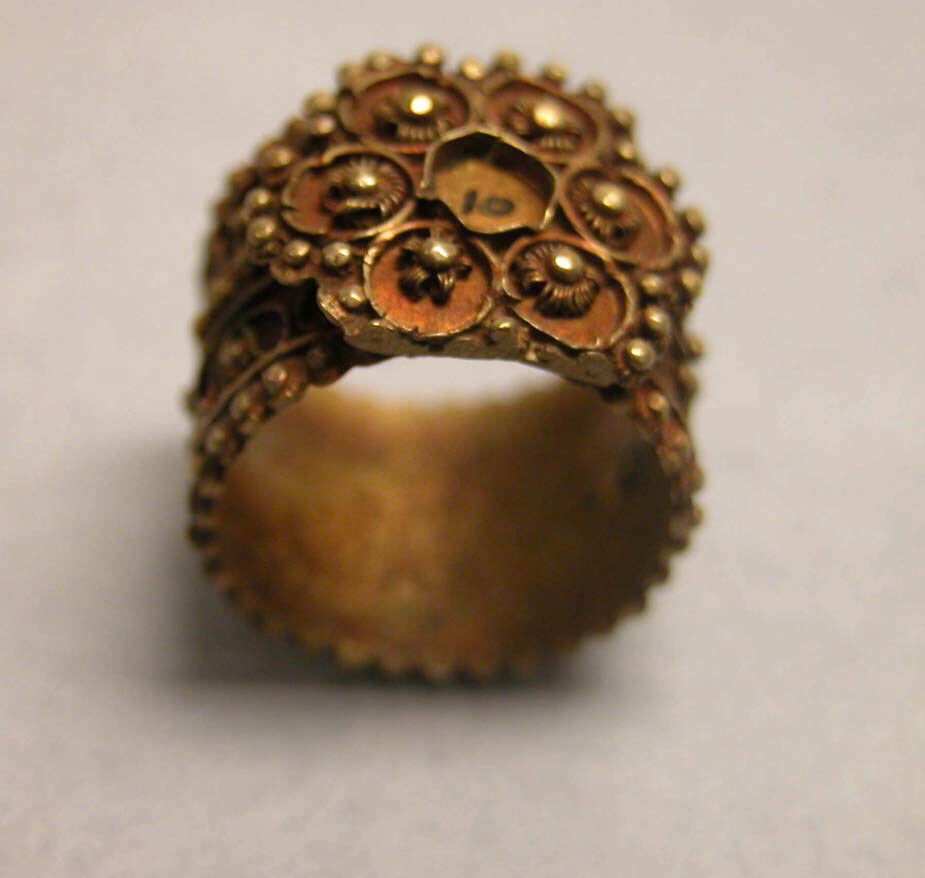
The Golden Dialectic: Deconstructing the Philippine Ring as a 2026 Silhouette Imperative
Within the hallowed archives of Natalie Fashion Atelier, the object of study is not merely an artifact of adornment but a philosophical proposition. The subject—a Philippine ceremonial ring, forged in high-karat gold—exists at a critical juncture of materiality and memory. Its resonance is amplified by our archive node: “一面是光洁银镜上以黄金镶嵌的纷繁棕叶纹,另一面是冰冷石棺板上以浮雕诉说的生命叙事” (on one side, a polished silver mirror inlaid with intricate golden palm-leaf patterns; on the other, a cold stone sarcophagus whose reliefs narrate a life’s story). This duality—the reflective present against the monumental past—is the precise tension that will define the 2026 luxury silhouette. This research paper deconstructs the classical elegance of the ring to extract a technical and aesthetic lexicon for our forthcoming haute couture collection.
I. The Material Dialectic: Gold as a Structural Narrative
The ring’s primary signifier is gold, but its value in our atelier is not predicated on mere bullion weight. In the Philippine context, gold is not a static metal; it is a living membrane that absorbs the heat of the body and the light of the environment. The artifact’s surface, likely achieved through a lost-wax process, exhibits a granular, almost organic texture—a stark contrast to the polished, sterile gold of Western Art Deco. This is the first architectural principle for 2026: tactile dimensionality over flat opulence. We must treat gold not as a color to be printed but as a structural element that can be pleated, crushed, and woven.
For the 2026 silhouette, this translates to a radical departure from the fluid, liquid-metal gowns of previous seasons. Instead, we propose a rigid yet responsive carapace. The silhouette will be constructed using a technique we term “Métal Fossile”—a process where 24k gold leaf is laminated onto a base of sculpted horsehair and micro-pleated silk organza. The resulting fabric behaves less like drapery and more like articulated armor, echoing the ring’s inherent solidity. The gold is not applied as a surface finish but is integrated into the weave, allowing the garment to catch light in fragmented, irregular bursts, mimicking the granular surface of the historical piece. This informs a silhouette that is architectural at the shoulder—sharp, defined, and almost brutalist—yet softens into a fluid, unconstructed column at the hem, mirroring the ring’s transition from hard metal to the soft flesh of the finger.
II. The Split-Leaf Motif: Translating the Palm into Volume
The archive node’s reference to the “纷繁棕叶纹” (intricate palm-leaf patterns) is the critical design DNA. In the original ring, these leaves are not merely decorative; they are a representation of the anahaw leaf, a symbol of resilience and victory in Philippine heraldry. The leaves are arranged in a radial, almost chaotic symmetry, creating a visual rhythm that is both frenetic and controlled. For 2026, we deconstruct this motif to redefine the sleeve and the train.
The classical elegance of the silhouette—a clean, elongated torso—will be disrupted by a new volumetric architecture. We are developing a technique called “Palma Scultorea”. Here, the split-leaf pattern is translated into three-dimensional, sculptural panels that emerge from the waist and spine. These panels are not flat appliqués; they are engineered to flare away from the body, creating negative space between the garment and the wearer. Each panel is a rigid, gold-infused structure that mimics the split of the leaf, with one edge remaining attached to the central seam while the other curves outward, creating a dynamic, asymmetric sweep.
This directly informs the 2026 silhouette by replacing the traditional, sweeping train with a fragmented, kinetic train. The garment moves with the wearer, but it also moves independently, the gold panels catching the light like the polished silver mirror of the archive node. The silhouette becomes a study in controlled chaos—a body that is simultaneously armored and exposed, echoing the ring’s dual nature of protection and display.
III. The Sarcophagus Resonance: Weight and the Architecture of Memory
The second half of the archive node—“冰冷石棺板上以浮雕诉说的生命叙事” (the cold stone sarcophagus narrating life through relief)—introduces a somber, monumental gravity to the design process. This is not a morbid reference but a profound lesson in material honesty and weight. The ring, though small, carries the visual weight of a monument. It suggests that true luxury in 2026 is not about lightness or ethereality, but about a grounded, substantial presence.
To translate this, we must reconsider the inner structure of the haute couture garment. The 2026 silhouette will feature an internal corset architecture inspired by the sarcophagus’s relief structure. This is not a restrictive Victorian corset; rather, it is a load-bearing exoskeleton that shapes the outer fabric without constricting the body. We will use a composite of molded carbon fiber and gold thread to create a rigid “plating” that sits beneath the outer layer of silk or crepe. This internal structure allows the outer fabric to appear as if it is carved, holding deep, permanent pleats and folds that would otherwise collapse under their own weight.
The aesthetic result is a silhouette that possesses a “frozen fluidity.” The gown appears as if it has been sculpted from a single block of metal and stone, yet it moves with the wearer’s breath. The outer layer, perhaps a heavy duchesse satin in a deep, burnished ochre, is draped over this internal relief, creating shadows and highlights that mimic the carved narratives of the sarcophagus. The hemline is weighted with a hidden chain of oxidized gold, ensuring that the garment falls with a deliberate, architectural finality. This is the antithesis of the fluttering, ephemeral gown; it is a garment of permanence and legacy.
IV. Synthesis: The 2026 Silhouette as a Wearable Archive
The synthesis of these elements—the tactile gold, the split-leaf volume, and the monumental weight—produces a definitive 2026 couture silhouette. It is characterized by a high, defined waist that acts as the fulcrum of the design. From this point, the garment bifurcates into two distinct philosophies. Above the waist, the silhouette is sharp, tailored, and reflective, echoing the polished silver mirror. The neckline is high and architectural, perhaps a mandarin collar that flares into the Palma Scultorea shoulder panels. Below the waist, the silhouette becomes heavy, grounded, and textured, echoing the sarcophagus. The skirt is a column, but it is a column that has been excavated, with panels of gold and silk that appear to have been layered over millennia.
This is not a nostalgic revival of Philippine dress. It is a techno-heritage approach that uses historical materiality to solve contemporary design problems. The ring teaches us that luxury is not about the absence of weight, but about the presence of meaning. The 2026 Natalie Fashion Atelier client does not wear a dress; she wears a portable monument. She embodies the archive node’s duality—she is both the reflective surface that captures the world’s gaze and the carved stone that tells her own story. The gold is not just a metal; it is a conduit for this narrative, and the silhouette is its vessel. Through this deconstruction, we elevate the classical elegance of the ring into a new, powerful, and profoundly modern form of haute couture.